

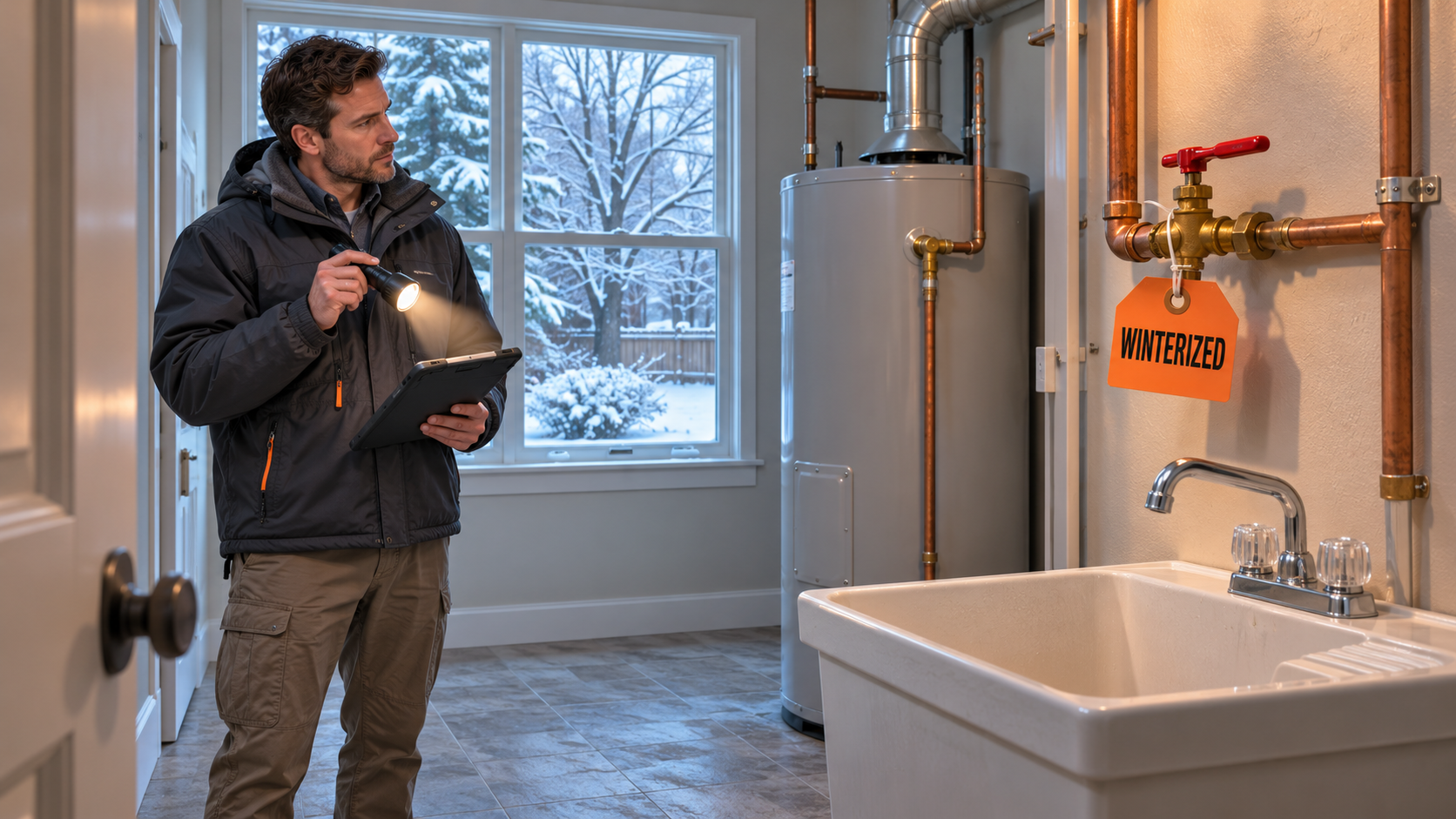
The buyer has an inspection appointment. The agent has the lockbox code. Then someone notices the winterization tag.
Can the inspector evaluate the plumbing? Who can authorize any service work? Will the visit answer the buyer's questions, or produce a report full of limitations?
On a short sale, an appointment is not the same as a property being ready. A little coordination before the visit can help the team identify unresolved questions while there is still time to address them.
Fast Answer
Before an inspection at a winterized short sale home, confirm the property's documented condition, access, the inspector's scope, who can authorize any necessary work and who will perform it. Record what can be inspected and what will remain limited. Do not treat the winterization label, a booked appointment or the mortgage servicer's short sale approval as confirmation that every system can be tested.
Do not turn services on or operate shut-down equipment based on an online checklist. Get the owner's authorization and any other required direction, and use qualified professionals for the actual work.
Start With the Winterization Record, Not Assumptions
Winterization is a property-protection measure. The label alone does not tell the transaction team exactly what was done, whether the property has changed since the work or what would be needed before a particular inspection.
Ask for the available service record, the date, the contractor or responsible contact and the systems affected. Note any reported damage, leaks or restrictions. A vacant home should not be treated as bank owned merely because a preservation company visited it. A short sale still requires the mortgage servicer to agree to the proposed sale, as the Consumer Financial Protection Bureau's short sale overview explains.
The agent's job is to organize the facts and route the questions. The label is not permission for an agent, buyer or inspector to perform restoration work.
Separate Three Different Appointments
A buyer's home inspection, the seller's lender valuation and the buyer's financing appraisal serve different purposes. Confirm which visit is being arranged before asking whether the property is ready.
Buyer home inspection: Ask the inspector what the agreement covers and what the property's current condition will prevent them from checking.
Seller lender BPO or other valuation: Confirm the assigned reviewer's access and assignment requirements. Do not assume that a BPO includes a full systems inspection. Our pre-BPO preparation guide explains how agents can organize access and condition evidence.
Buyer financing appraisal: Ask the buyer's lender about the applicable appraisal and property requirements. A professional opinion of value is not a substitute for the buyer's inspection. HUD makes that distinction in For Your Protection: Get a Home Inspection.
These are separate questions even when two visits happen during the same week. There is no universal rule that every short sale valuation requires identical utility conditions or testing.
Get a Written Readiness Reply Before the Visit
Send one short coordination request to the appropriate parties. The owner, authorized preservation contact if one is involved, contractor, inspector and relevant lender contact may each answer a different part.
Confirm:
Access: Who will provide entry, and are there known safety or occupancy restrictions?
Authority: Who can approve the proposed work? Is another party's permission or coordination required for this property?
Work: If preparation is needed, what will a qualified contractor do, and when can completion be confirmed?
Scope: What will the inspector actually evaluate in the expected condition? What will remain untested?
Responsibility: Who has agreed to arrange and pay for authorized work? Do not assume the mortgage servicer will cover it.
After the visit: Who will confirm any required property-protection work and report completion?
An inspector may not be responsible for bringing equipment back into operation. For example, the InterNACHI Standards of Practice exclude operating certain shut-down systems and valves from required inspection work. Those are association standards, not one nationwide rule for every inspector. Ask about the actual inspection agreement, applicable standards and local requirements.
The useful result is not six vague assurances. It is a clear record of who owns each unresolved task and whether the appointment can accomplish its purpose.
Keep Inspection and Approval Deadlines Separate
Track the purchase contract's inspection provisions separately from the mortgage servicer's written approval deadline. If preparation cannot be completed before the planned visit, notify the appropriate parties promptly and ask what written changes or further review may be needed.
A limited inspection does not automatically extend either deadline. Nor does a short sale approval settle every buyer-financing or property-condition question. Check the actual contract, approval and lender instructions, with the appropriate professionals answering legal or loan-specific questions.
This is one practical example of what can delay short sale approval and closing: a task can look scheduled while an important dependency is still unresolved.
If the Inspector Has Already Visited
Ask for the written report and its limitations. Identify what was inspected, what could not be evaluated and whether the inspector recommends another visit or specialist review. Share the relevant findings through the transaction's proper channels.
Then confirm the next action. A contractor's work, a follow-up inspection and a buyer lender's review are not interchangeable completion steps. Update the file with the actual result rather than marking the inspection complete merely because someone attended.
Selling as is does not remove the need to coordinate property access and the agreed inspection process. Our as-is short sale guide discusses that broader responsibility; winterized properties need the additional readiness check described here.
Common Questions
Can a buyer inspect a winterized short sale home?
An inspector may be able to evaluate accessible conditions, but some systems may remain outside the available scope. Confirm those limits before relying on the appointment to answer every inspection question.
Will the home inspector restore the utilities?
Do not assume so. Ask what the inspector is willing and qualified to do under the agreement. Any required preparation should have the proper authorization and a qualified person responsible for it.
Does short sale approval mean the property is inspection ready?
No. The servicer's sale decision, the buyer's inspection and the buyer lender's requirements are separate matters. Confirm each rather than treating one approval as proof of all three.
A Clear Handoff Beats a Wasted Appointment
Before the visit, the short sale coordinator should be able to identify who provides access, who authorizes any work, who performs it and what the inspector expects to evaluate. Anything unresolved belongs on the file's open-task list.
Crisp provides short sale processing and coordination support for agents and homeowners working through lender review and closing dependencies. Technical work belongs with qualified property professionals; organized communication helps the transaction team understand what still needs attention.