


Why Your Short Sale Is Stuck in “Under Review” (And How to Fix It Fast)
You submitted the full package.
The buyer is ready.
The seller is calling daily.
And the lender portal still says: “Under Review.”
Days turn into weeks. Weeks turn into silence. The buyer starts to panic. The agent starts to lose confidence. And the seller starts wondering if this whole short sale thing was a mistake.
Here’s the truth: “Under Review” does not mean what most people think it means. And in many cases, it’s completely fixable.
What “Under Review” Actually Means Inside the Bank
When a file hits “under review,” it usually means one of three things:
1. The file is incomplete (even if no one told you).
2. The negotiator hasn’t actually been assigned yet.
3. It’s sitting in a queue waiting for an internal valuation.
Most lenders won’t proactively tell you which one it is.
That’s where professional short sale processing makes a difference. A strong short sale negotiator knows how to pull status details that aren’t visible in the online portal. They know which departments to call and what questions to ask.
Because “under review” is often code for “no one is actively working this file.”
The #1 Hidden Problem: Silent Document Gaps
Banks rarely reject a file immediately. Instead, they mark it incomplete and let it sit.
Common missing items include:
- Expired bank statements
- Outdated hardship letters
- Incorrectly signed authorization forms
- Settlement statements missing prorations
- HOA estoppel not uploaded correctly
- Insurance declaration pages not included
And here’s the frustrating part: the system won’t always notify you.
If you don’t have someone overseeing short sale document prep and reviewing every upload like a checklist-driven machine, you can lose 30 days without realizing it.
This is exactly why many agents rely on a dedicated short sale processor instead of trying to manage lender portals while juggling listings and buyers.
Valuation Delays: The Other Silent Killer
Even if your file is technically complete, it may be waiting for a BPO (Broker Price Opinion) or internal appraisal review.
Here’s what most agents don’t realize:
- The valuation may already be completed but not uploaded to the negotiator’s system.
- The negotiator might be waiting on an internal second review.
- If the value comes in high, it can stall without explanation.
A proactive short sale coordinator doesn’t wait for portal updates. They call the valuation department. They confirm completion. They escalate internally when needed.
That’s how you close a short sale fast — not by waiting politely.
When the Negotiator Isn’t Really Assigned
Some lenders batch-assign negotiators only after a file hits a certain milestone.
So your file may technically exist in the system but not be on anyone’s desk.
If you don’t follow up consistently, it can sit untouched.
This is one of the biggest differences between passive and active short sale processing. Following up every 7–10 days is not enough at some banks. Sometimes it requires multiple department calls in a single week to get real movement.
It’s not aggressive. It’s strategic.
What Agents Should Check Immediately
If your short sale has been “under review” for more than 14 days, here’s what to verify:
1. Confirm negotiator assignment (get a name and extension).
2. Confirm the complete document list in writing.
3. Verify expiration dates on all financial documents.
4. Confirm valuation status and expected completion date.
5. Confirm there are no internal flags or second-lien holds.
If you’re unsure how to navigate those calls, this is where professional support makes the difference. We outline exactly how we manage these checkpoints inside our process here:
→ short sale support and oversight at /how-we-help
Why DIY Short Sales Stall
Short sales don’t fail because they’re impossible.
They stall because:
- No one is driving the file daily.
- Portals aren’t monitored properly.
- Internal bank notes aren’t reviewed.
- Escalation paths aren’t used.
Most agents are excellent at marketing, negotiating contracts, and serving clients.
But lender negotiation is a completely different skill set.
That’s why we focus exclusively on helping real estate agents close short sales faster — not replacing them, but supporting them behind the scenes. (You can see exactly who we partner with here: /who-we-serve.)
How to Restart a Stalled Short Sale
If your file has been stuck for 30+ days:
- Re-submit a clean, updated package.
- Refresh all financial documents.
- Request a supervisor review if valuation is complete.
- Confirm investor guidelines if it’s FHA, VA, or conventional.
- Ask whether the file needs to be re-escalated internally.
In many cases, a stalled short sale can regain traction within 7–10 days once the right department is engaged.
And if you’re feeling stuck, it may be time to bring in professional short sale assistance to push it across the finish line.
If you want to start the short sale process correctly from day one, here’s where that begins:
→ /start-short-sale
The Bottom Line
“Under Review” is not a death sentence.
It’s usually a communication gap.
The difference between a 30-day approval and a 6-month nightmare often comes down to:
- Precision document prep
- Relentless follow-up
- Strategic escalation
- Experience inside lender systems
Short sales don’t reward patience.
They reward persistence and process.
And when that process is handled properly, approvals move.

What Lenders Really Look for in a Short Sale Hardship Letter
A short sale hardship letter must tell the right story. We explain what lenders expect—clear hardship, proof of lasting financial impact, and consistent documentation—and why professional assistance prevents delays.
When a short sale stalls, it’s rarely because the offer is too low. It’s usually because the hardship letter didn’t tell the right story.
Banks don’t approve short sales out of sympathy. They approve them when the file clearly proves two things:
1) The hardship is real.
2) The hardship is permanent enough that foreclosure is the alternative.
If your hardship letter misses that mark, your short sale approval assistance just became a waiting game.
Let’s break down what lenders are actually looking for — and how a professional short sale processor structures this document to move files forward instead of sideways.
### The Hardship Letter Is Not a Sob Story
This surprises homeowners all the time. A hardship letter is not about emotion. It’s about documentation, clarity, and cause-and-effect.
**Lenders want:**
- A specific event (job loss, medical issue, divorce, death, business failure).
- A clear timeline.
- Evidence that income cannot reasonably recover.
- An explanation of why keeping the home is no longer sustainable.
**What they do not want:**
- Blame.
- Anger.
- Rambling narratives.
- Contradictions with bank statements or tax returns.
This is where professional short sale document prep becomes critical. The hardship letter must align perfectly with the financial package. If the bank sees deposits that contradict the hardship story, the file gets flagged. Delays follow.
### Lenders Look for “Involuntary” Hardship
Voluntary lifestyle changes don’t usually qualify.
**Examples lenders approve more easily:**
- Job termination or significant reduction in hours.
- Medical disability or major medical expenses.
- Divorce requiring sale of the home.
- Death of a borrower.
- Permanent relocation for employment.
**Examples that get pushback:**
- “We want to move.”
- “We don’t like the neighborhood.”
- “The market dropped.”
A seasoned short sale negotiator knows how to frame the hardship in lender language while staying truthful and compliant.
### The Numbers Must Support the Story
Here’s where most agents unintentionally sabotage approvals.
The hardship letter says income dropped.
But the bank statements show large cash deposits.
The letter says medical bills created distress.
But no medical statements are included.
The letter says unemployment is permanent.
But paystubs show new employment starting last month.
Lenders compare:
- Hardship letter.
- Paystubs.
- Bank statements.
- Tax returns.
- Financial worksheet.
If the story and numbers don’t match, you’ll get repeat document requests. That’s when short sale processing turns into a 6-month marathon. When we provide short sale assistance for realtors, this cross-checking happens before submission — not after a denial.
### Lenders Want Clarity and Brevity
Two pages maximum. Often one page is ideal.
A strong hardship letter:
- Opens with the hardship event.
- Explains the financial impact.
- States inability to reinstate.
- Confirms desire to cooperate with short sale.
- Ends respectfully.
No fluff. No drama.
Think business letter, not diary entry.
### Timing Matters More Than You Think
If foreclosure is already scheduled, the hardship letter becomes even more critical.
In late-stage files, lenders want reassurance that:
- The seller is cooperative.
- The offer is legitimate.
- The hardship is ongoing.
- Foreclosure will cost the bank more.
If you’re within weeks of a sale date, it’s critical to move quickly and ensure the entire file — including the hardship letter — is airtight before submission. That’s why homeowners often reach out to us through our [start the short sale process](/start-short-sale) page when time is tight.
### What a Strong Hardship Letter Looks Like (Structurally)
Here’s the structure we typically use when providing short sale approval assistance:
1. **Opening Statement**
- Loan number.
- Property address.
- Brief hardship summary.
2. **Detailed Explanation**
- What happened.
- When it happened.
- How income changed.
3. **Current Financial Position**
- Why reinstatement isn’t possible.
- Why modification won’t solve it.
4. **Resolution**
- Request approval of short sale.
- Acknowledge cooperation.
That’s it. Simple. Direct. Supported by documentation.
### Why Most DIY Hardship Letters Fail
Because they’re written emotionally. Or they’re copied from Google. Or they’re inconsistent with the financials. Or they lack the supporting documentation. And once a lender loses confidence in the file, every subsequent step becomes slower.
This is where having a dedicated short sale specialist behind the scenes changes the outcome. When we step in to provide structured short sale support, lenders recognize the file quality immediately. You can see how we assist with document prep and full-file review on our [how we help](/how-we-help) page.
### Agents: This Is Where Deals Are Won or Lost
Most listing agents are excellent at pricing, marketing, and negotiating offers. But short sale facilitation is a different skillset. Lender packaging, compliance language, escalation protocols, investor guidelines — these are technical processes.
If you’re representing sellers facing hardship, having a professional short sale coordinator can mean the difference between approval and foreclosure. We outline exactly who we work with on our [who we serve](/who-we-serve) page.
### Final Thought
A hardship letter doesn’t need to be dramatic. It needs to be credible. When the story is consistent, supported, and professionally packaged, approvals move faster. When it’s sloppy, emotional, or inconsistent, lenders stall.
If you’re unsure whether your hardship letter will pass lender scrutiny, it’s far easier to fix it before submission than after a denial. Because in short sales, the paperwork isn’t a formality. It’s the decision.

Can You Negotiate a Short Sale After a Foreclosure Sale Date is Issued?
When a foreclosure sale date is issued, it feels like the clock just went from ticking… to exploding.
Related topic hub: Foreclosure Urgency. It groups timing-sensitive posts for sale dates, foreclosure pressure, lender postponements, and short sale options.
Homeowners panic. Agents scramble. Buyers disappear. And everyone starts asking the same question:
**Is it too late to negotiate a short sale?**
The short answer? No.
The better answer? It depends — and timing is everything.
Let’s break it down clearly so you know what’s realistic, what’s risky, and how to navigate it the right way.
## First: What Does a Foreclosure Sale Date Actually Mean?
When the lender schedules a foreclosure sale, it means:
- The borrower is significantly delinquent
- Loss mitigation options have not been approved
- The file has moved to the foreclosure attorney
- The lender is preparing to liquidate the property
But here’s what many agents and homeowners don’t realize:
A foreclosure sale date does not automatically mean the lender won’t consider a short sale.
In many cases, lenders prefer a short sale over foreclosure — even at the last minute — if the numbers make sense and the file is properly packaged.
This is where professional short sale processing becomes critical.
## Can You Still Negotiate a Short Sale After the Sale Date?
Yes — but there are three major conditions:
### 1⃣ The lender must agree to postpone the sale.
This is often called a “sale date extension” or “postponement.”
Lenders will usually postpone the foreclosure if:
- There is a bona fide offer
- The contract is fully executed
- The short sale package is complete
- The net proceeds meet their internal threshold
If the file is sloppy or incomplete, they will not delay the sale just to “see what happens.”
This is why having experienced short sale help matters more at this stage than ever.
### 2⃣ The file must move fast — very fast.
Once a sale date is set, timelines compress dramatically.
- BPOs need to be ordered immediately
- Title must be clean
- All documents must be current
- Buyer must be solid and ready
This is not the time for missing bank statements or outdated pay stubs.
A skilled short sale negotiator knows how to escalate internally and communicate directly with foreclosure counsel to buy time. Without that coordination, files stall — and stalled files get sold at auction.
### 3⃣ The lender’s net calculation must make sense.
At this stage, lenders are laser-focused on one thing:
**Net proceeds.**
If the short sale nets more than foreclosure (after legal costs, holding costs, resale timelines), they will often approve — even days before auction.
If it doesn’t? They’ll let it go to foreclosure.
This is why knowing how to negotiate a short sale properly — including commissions, closing costs, and potential relocation assistance — can be the difference between approval and auction.
## What’s Realistic? Let’s Be Honest.
Here’s what I tell homeowners and agents:
- 30+ days before sale? Very workable.
- 14–30 days before sale? Tight, but doable.
- Under 10 days? Possible, but requires precision and speed.
- 48 hours before auction? Rare, but I’ve seen it happen — if the file is airtight.
The biggest mistake people make is waiting too long to start the short sale process.
If you’re facing a sale date, the worst move is doing nothing. The second worst move is submitting a half-complete package and hoping for the best.
If you're unsure how to structure the file properly, this is where understanding exactly how we help agents and sellers navigate lender escalation can make all the difference.
## Common Myths About Sale Dates and Short Sales
Let’s clear up a few misconceptions:
**Myth #1: Once a sale date is set, the bank won’t talk to you.**
False. They just won’t waste time.
**Myth #2: Filing bankruptcy is the only way to stop foreclosure.**
Not always. A legitimate short sale in review can postpone the auction.
**Myth #3: All lenders behave the same way.**
Definitely not. Some servicers are flexible. Others require aggressive follow-up and internal escalation.
That’s why working with someone who specializes in short sale coordination — not just general real estate — changes outcomes.
If you’re an agent handling distressed listings, understanding who we serve and how we support real estate professionals behind the scenes can dramatically increase your closing ratio.
## Why Speed + Strategy Wins
When a foreclosure sale date is issued, you don’t have the luxury of trial and error.
You need:
- Immediate lender contact
- Clear escalation channels
- Organized documentation
- Strong contract terms
- Strategic negotiation on net
This is not “submit and wait.”
It’s active file management.
At Crisp Short Sales, we’ve handled files at every stage — including last-minute sale dates — and the pattern is always the same:
Prepared files get postponed.
Disorganized files get auctioned.
#You’re Facing a Sale Date Right Now
Here’s what you should do immediately:
1. Confirm the exact sale date in writing.
2. Get a fully executed purchase contract.
3. Assemble a complete financial package.
4. Contact someone experienced in short sale negotiation immediately.
If you need to move quickly, the smartest step is to start a short sale here and get the file structured correctly from day one.
Time is leverage.
Delay is risk.
## Final Thought
Yes — you can negotiate a short sale after a foreclosure sale date is issued.
But the margin for error shrinks fast.
This is where expertise in short sale processing and lender negotiation isn’t a luxury — it’s a requirement.
If you’re an agent inheriting a listing with a ticking clock, or a homeowner staring at an auction notice, don’t assume it’s over.
Just make sure you’re moving with precision.
Because when the sale date hits, preparation is the only thing standing between “sold at auction” and “closed at the table.”

Is a Short Sale Better Than Letting the Home Go to Foreclosure in 2026?
Short sale or foreclosure? Learn the 2026 credit impact, timeline, and risks—and how expert short sale help protects homeowners.
If you’re behind on your mortgage in 2026, you’re probably asking one very direct question:
Related topic hub: Foreclosure Urgency. It groups timing-sensitive posts for sale dates, foreclosure pressure, lender postponements, and short sale options.
Should I try a short sale… or just let the house go to foreclosure?
It’s not an easy place to be. But it is a decision that deserves clarity instead of panic.
As a short sale specialist who has handled these situations for over 15 years, I can tell you this: the two paths are not equal. They affect your credit differently. They affect your future buying power differently. And they absolutely affect your stress level differently.
Let’s break this down clearly and practically.
First: What Actually Happens in a Foreclosure?
In a foreclosure, the lender takes the property back because payments have stopped. The timeline varies by state, but once the sale date hits, control is gone.
Here’s what homeowners often experience:
- Public foreclosure record
- Major credit score drop (often 150–200+ points)
- Difficulty qualifying for a mortgage for 5–7 years
- Potential deficiency balance (depending on state and loan type)
- No relocation incentive
- Little to no control over timing
Foreclosure is reactive. It happens to you.
Now: What Happens in a Short Sale?
A short sale is when you proactively negotiate a payoff with your lender for less than the amount owed.
Instead of the bank forcing a sale, you and your agent market the property and submit an offer for approval. A professional short sale negotiator works directly with the lender to secure approval and release of the lien.
The difference? Control.
With proper short sale assistance, homeowners often experience:
- Smaller credit impact than foreclosure
- Potential eligibility to buy again in 2–4 years (sometimes sooner depending on loan program)
- Possible relocation assistance at closing
- Avoidance of a foreclosure auction
- Closure instead of uncertainty
A short sale is strategic. It’s negotiated.
Credit Impact: The Reality in 2026
Here’s where it gets interesting.
In 2026, lenders are not shocked by hardship anymore. Rising rates, inflation pressure, job shifts, and resets have created more distressed sellers.
A foreclosure is coded as a severe derogatory event. A short sale, when reported correctly as “settled” or “paid for less than owed,” tends to be viewed more favorably by future underwriters.
Is it perfect? No.
But when underwriters see that a borrower worked with the bank, cooperated, and resolved the debt, it tells a very different story than simply letting the property go to sale.
And that narrative matters when you try to buy again.
Deficiency Judgments: The Hidden Risk
This is one area many homeowners overlook.
In some states and loan types, the lender may pursue a deficiency after foreclosure. That means if the house sells for less than what’s owed, you could technically still owe the difference.
With a properly structured short sale negotiation, we push for full deficiency waiver language in the approval letter.
This is one of the biggest advantages of working with an experienced short sale processor. It’s not just about getting approval. It’s about protecting you after closing.
Timing & Stress: What People Don’t Talk About
Foreclosure feels like waiting for a hammer to drop.
Short sale processing gives structure:
- Package submitted
- Valuation ordered
- Negotiations conducted
- Approval issued
- Closing scheduled
There’s a process. There’s communication. There’s movement.
When we work with homeowners, we provide weekly updates and full transparency. You’re not guessing what the bank is doing. You’re not calling a random 800-number hoping someone picks up.
If you’re wondering how we manage that, you can see exactly how we help homeowners navigate the short sale process.
What About Relocation Assistance?
Here’s something many people don’t realize.
Some lenders offer relocation incentives at closing in approved short sales. It’s not guaranteed, but it’s often negotiable depending on investor guidelines.
This can help cover moving expenses and ease the transition.
Foreclosure? There is no structured relocation benefit unless you’re deep into a “cash for keys” situation— and that comes with very little leverage.
When Does Foreclosure Make Sense?
There are rare situations where foreclosure might be the path:
- The home has no market demand at all
- The borrower has already vacated and moved on
- There is no desire to preserve credit
- The timeline is too compressed for a short sale to complete
But even in those cases, it’s worth exploring whether you can negotiate a short sale quickly before the auction date.
If you’re facing a looming sale date and aren’t sure whether you can stop it, here’s how to start the short sale process immediately.
Time matters. Early action creates options.
The Emotional Side of This Decision
Let’s address something real.
Many homeowners avoid short sales because they feel embarrassed.
I’ve had clients whisper, “I feel like I failed.”
You didn’t.
Markets change. Jobs change. Health changes. Divorce happens. Tenants stop paying. Adjustable rates reset.
A short sale is not a failure. It’s a financial strategy to prevent a worse outcome.
The sooner you view it that way, the more control you regain.
Agents: Why This Conversation Matters
If you’re a real estate agent reading this, your distressed seller is watching your confidence.
When you position a short sale as a structured solution—with a dedicated short sale coordinator and experienced negotiator behind you—you give your seller peace of mind.
We regularly provide short sale assistance for agents who want to focus on listing and selling while we handle lender negotiations, document prep, and approval strategy. You can see more about who we serve and how we support agents.
Short sales close more often when they’re handled professionally. That’s just the truth.
So… Is a Short Sale Better?
In most cases in 2026? Yes.
It protects credit better. It preserves dignity. It reduces legal risk. It offers potential relocation help. It gives structure instead of chaos.
Foreclosure is surrender.
A short sale is negotiation.
If you’re unsure which direction makes sense for your situation, reach out. We’ll walk through the numbers, the timeline, and the realistic outcomes so you can make a decision based on facts—not fear.
And that alone is worth the conversation.

How to Negotiate a Short Sale When the BPO Comes in Too High
BPO too high? Learn how to negotiate a short sale when the bank's price opinion is unrealistic and keep your deal alive.
# How to Negotiate a Short Sale When the BPO Comes in Too High If you’ve been in the short sale world long enough, you’ve seen it happen. You submit a clean file. The hardship is solid. The buyer is qualified. The offer makes sense. Then the bank orders a BPO… and it comes back $40,000 too high. Suddenly your short sale approval is “under review,” your buyer is nervous, and everyone is looking at you for answers. Here’s the good news: a high BPO does not kill a deal. It just changes the strategy. Let’s walk through how to negotiate a short sale when the valuation comes in above reality — and how an experienced short sale negotiator handles it. ## Step 1: Understand What the BPO Really Is A Broker Price Opinion is **not** an appraisal. It’s a quick, often surface-level valuation done by a local agent who may or may not understand distressed property value, short sale urgency, or market conditions. Common problems include: - Using retail comps instead of distressed comps - Ignoring condition issues - Overlooking neighborhood declines - Not entering the property This is where professional short sale processing makes a difference. Instead of arguing emotionally, you respond strategically. ## Step 2: Audit the BPO Like a Prosecutor When a BPO comes in high, the first move is not panic. It’s analysis. An experienced short sale specialist will: - Request a copy of the BPO - Compare every comp used - Check for square footage mismatches - Verify sale dates - Confirm condition adjustments - Identify superior vs. inferior properties If the BPO agent used renovated comps while your seller’s home needs a roof and HVAC, that’s leverage. If they used sales from six months ago while prices have softened, that’s leverage. Every error becomes negotiation material. ## Step 3: Submit a Proper Rebuttal Package This is where most deals fall apart. A short sale rebuttal is not a casual email saying, “We disagree.” It is a structured package that includes: - 3–5 better comps (with detailed adjustments) - A revised net sheet - Repair estimates - Updated photos documenting condition - Market trend commentary - Days-on-market data - Active competition analysis You are not just negotiating price. You are building a case. When we handle short sale approval assistance, we format rebuttals the way asset managers expect to see them. Clean. Organized. Data-backed. Banks respond to numbers, not frustration. ## Step 4: Escalate the Right Way If the negotiator refuses to adjust value, escalation may be necessary. But escalation is delicate. Push too hard and you stall the file. Push too soft and nothing changes. An experienced short sale coordinator knows: - When to request a second valuation - When to escalate to a supervisor - When to wait for updated comps - When to reposition the buyer Sometimes the solution is requesting a new BPO. Sometimes it’s asking for a formal appraisal review. Sometimes it’s adjusting the offer slightly while preserving buyer incentives. Negotiating a short sale is part art, part math. ## Step 5: Protect the Buyer While You Negotiate Here’s the real danger of a high BPO: The buyer walks. This is why communication matters. When we provide short sale assistance for realtors, we make sure: - Buyers understand the timeline - Agents understand strategy - Everyone knows we have a plan Transparency prevents panic. If you can confidently explain how you’re challenging the valuation, buyers are far more likely to stay in the deal. ## Step 6: Know When the Bank Is Bluffing Sometimes the bank pushes back hard on price simply to test the file. If there’s only one offer and it’s market-supported, lenders often adjust after sufficient documentation. But if there are multiple offers close to the BPO value? That’s different. A true short sale negotiator understands lender psychology. Some asset managers anchor high expecting pushback. Others genuinely rely on the BPO as gospel. Reading the room matters. ## Why This Is Where Deals Are Won or Lost Most short sales don’t die because the seller doesn’t qualify. They die because valuation disputes drag on too long or are handled poorly. When you’re helping real estate agents close short sales faster, you have to anticipate the valuation battle before it happens. That means: - Pre-pulling comps before submission - Preparing condition documentation early - Pricing strategically from day one This is exactly how we approach files inside our short sale processing system. We assume scrutiny. We prepare for it. If you’re an agent managing this alone, you’re juggling listing duties, buyer communication, and lender negotiation simultaneously. That’s a lot. That’s why many agents choose to outsource the negotiation side entirely. If you want to see exactly how we structure our approach, you can review how we handle valuation challenges and approvals here: 👉 [How We Help](https://www.crispshortsales.com/how-we-help) If you’re an investor or brokerage looking for structured short sale support, you can see who we typically work with here: 👉 [Who We Serve](https://www.crispshortsales.com/who-we-serve) And if you have a file right now that’s stuck because of a high BPO, you can start the short sale process here: 👉 [Start Short Sale](https://www.crispshortsales.com/start-short-sale) ## Final Thought A high BPO is not a rejection. It’s an invitation to negotiate. Handled correctly, it becomes leverage. Handled incorrectly, it becomes a dead deal. Short sale negotiation is not about arguing with the bank. It’s about presenting better data, controlling the narrative, and staying persistent without being reckless. That’s the difference between a file that sits… and a file that closes.
Related topic hub: BPO and Short Sale Pricing. It covers high BPOs, counteroffers, valuation disputes, offer strategy, and pricing problems.

Short Sales Are Rising First in Lower-Income ZIP Codes — What Agents Need to Know
Short Sales Are Rising First in Lower-Income ZIP Codes — What Agents Need to KnowReal estate market shifts rarely arrive all at once; they surface in pockets first. A new mortgage delinquency chart by ZIP code income shows that by the end of 2025, serious delinquencies in zip codes with household incomes under $58k have climbed to around 3.0%, while the highest-income zip codes see about 0.7%. This matters for agents because rising delinquency is often the check-engine light that flashes before a short sale conversation happens.Not every delinquency leads to a short sale, and overall performance remains far below Great Recession levels, but the stress is uneven. Lower income neighborhoods are feeling the pressure first and those sellers typically reach a “we need a plan” moment sooner than higher‑income sellers.## What the chart is really telling usThe Q4 2025 delinquency rates, by annualized zip code income bracket, look something like this:- Under $58k income: ~3.0%- $58k–$73k: ~2.1%- $73k–$101k: ~1.5%- Over $101k: ~0.7%The New York Fed notes that serious delinquencies averaged about 1.3% in 2025 overall. The key takeaway isn’t panic; it's that the stress is uneven and increasing from pandemic-era lows.Agents will see that uneven stress as more price reductions on borderline listings, more sellers who want to sell but can’t bring cash to the closing table, and more files where the lender’s approval timeline becomes the biggest risk. Those are all classic short sale ingredients.## Why delinquency tends to lead short sale volumeA typical progression goes like this: A homeowner hits a disruption (job loss, divorce, medical issue); they fall behind, try to catch up, and realize the math doesn’t work. They consider selling and discover they don’t have enough equity to pay off the loan and costs. That’s when a short sale becomes the option.Delinquency doesn’t guarantee a short sale, but delinquency plus low or declining equity is a common setup. The sellers in lower-income zip codes usually have less financial cushion, so they reach that stage faster.## The agent’s problem: short sales are “easy” until they’re notListing a short sale is simple on paper; getting it approved fast enough to keep a buyer is the real challenge. When delinquencies rise, you see more short sale files where documentation is incomplete, lenders are stricter and timelines tighten because foreclosure activity is picking up. That’s why a dedicated short sale processor or negotiator can be the difference between “we have a contract” and “we have a closing”. Crisp Short Sales focuses on making each file lender‑ready early, so the deal keeps moving.## How to use income‑based delinquency trends as an early‑warning mapYou don’t need to be an economist to use these trends. If you work a market with zip codes that skew lower income or heavy FHA buyer pools, watch for these signs:1. **Listing appointments where the seller “needs a certain number.”** Sellers anchoring on a specific payoff figure are often trying to solve a payoff problem, not a pricing problem.2. **Sellers asking about credits, commissions, and “money at closing.”** Those signals mean the seller is already thinking about cash flow and deficiency risk.3. **Contracts that keep getting renegotiated.** In stressed zip codes, buyers and sellers are more rate‑sensitive, and sloppy approvals can derail deals.When you see these patterns, bring in a short sale negotiator early rather than after the lender has said “no.”## What homeowners in these zip codes need to hearWhen delinquency is rising, homeowners often assume their only options are to catch up magically or be foreclosed on. A short sale is the third option most people don’t understand until it’s late. The message to stressed sellers should be: you’re not alone; you may still be able to sell and move forward without foreclosure; and you need a plan with a timeline because the lender process matters. If they’re ready to move from panic to plan, they can start the short sale process with a team like Crisp.## Bottom lineThe delinquency chart isn’t saying the housing market is collapsing; it’s a forecast that stress is building in specific income bands. That’s exactly where short sales tend to appear first. Agents in those markets don’t need more drama; they need a repeatable process that protects the homeowner, keeps the buyer engaged, and gets the lender to yes without burning their time. That’s what we do at Crisp Short Sales.

The Psychology of the Short Sale Seller: Managing Emotions to Get to Closing
Learn how managing seller emotions is key to closing short sales successfully, from shame and denial to emotional fatigue and fear.
If you've handled more than one short sale listing, you already know something most agents don't talk about enough:
Short sales are not paperwork problems.
They're emotional problems.
Yes, there are lender portals, valuation disputes, hardship letters, and endless document requests. But the real reason many short sales fail isn't missing paperwork. It's a seller who emotionally checks out.
Understanding the psychology of a short sale seller — and knowing how to manage it — is one of the biggest differences between a file that closes and one that dies quietly after 90 days.
Let's break it down.
### 1. Shame and Embarrassment
Most short sale sellers feel like they've failed.
Even if the hardship was caused by job loss, divorce, medical issues, or rate adjustments, they internalize it. They often:
- Avoid returning calls
- Delay submitting documents
- Downplay urgency
- Resist signing paperwork
This isn't laziness. It's avoidance behavior tied to embarrassment.
A strong short sale specialist understands this and communicates differently than a standard listing agent. Instead of pressure, you use reassurance. Instead of urgency alone, you use clarity.
When sellers feel understood, they cooperate. And cooperation is what makes short sale processing move forward.
### 2. Denial and Magical Thinking
You'll hear things like:
- 'Maybe the bank will just forgive it.'
- 'Maybe I can refinance.'
- 'Maybe prices will rebound in 6 months.'
Hope is natural. But denial kills timelines.
A professional short sale negotiator sets expectations early. We explain:
- Approval timelines
- Deficiency possibilities
- Foreclosure deadlines
- Realistic value opinions
Clarity removes fantasy. And removing fantasy creates action.
Without that grounding conversation, sellers delay decisions until it's too late — and suddenly foreclosure is scheduled.
### 3. Emotional Fatigue
Short sales take time. Sometimes months.
Sellers start strong. They respond quickly. They're motivated.
Then 45 days go by.
The lender requests updated paystubs.
The valuation comes in low.
The buyer gets nervous.
The seller gets tired.
This is where most deals quietly fall apart.
A short sale coordinator's real job isn't just document prep. It's maintaining emotional momentum.
That means:
- Weekly updates (even when there's no news)
- Clear explanations of next steps
- Reinforcement that progress is being made
Silence breeds fear. Communication builds stability.
This is a huge reason why we emphasize direct involvement and consistent follow-up at Crisp Short Sales. Emotional management is part of short sale assistance — not an add-on.
### 4. Anger Toward the Bank
Many sellers are angry.
They feel the bank caused the problem. They resent the lender's documentation requests. They see valuation disputes as unfair.
If that anger isn't managed, it shows up in ways like:
- Refusing to submit updated docs
- Ignoring lender calls
- Threatening to 'just let it foreclose'
A seasoned short sale processor acts as a buffer.
We absorb frustration.
We translate lender language.
We depersonalize the process.
The seller doesn't need to fight the bank. They need someone to negotiate the short sale calmly and strategically.
That separation often keeps a deal alive.
### 5. Fear of the Unknown
What happens after closing?
Will I owe money?
Will I be sued?
How long before I can buy again?
Uncertainty creates paralysis.
The more unknowns there are, the more sellers freeze.
This is why education is critical. When we help agents and homeowners understand what happens before, during, and after closing, fear decreases — and cooperation increases.
If you don't proactively answer those questions, sellers will stall while trying to research it themselves.
### Why This Matters for Agents
Most agents are trained to market property.
They are not trained to manage distressed psychology.
And that's completely fair.
But in short sales, emotional regulation is just as important as contract negotiation.
This is exactly why many agents choose to work with a dedicated short sale specialist rather than handling everything alone. The listing agent can focus on selling. The short sale negotiator focuses on lender strategy and seller stability.
When those roles are clear, deals close faster.
If you want to see how we structure that support behind the scenes, you can review exactly how we help manage the full short sale process.
### Why This Matters for Homeowners
If you're a homeowner reading this and considering a short sale, understand this:
You are not alone in how you feel.
Most sellers experience:
- Stress
- Embarrassment
- Anger
- Fear
The goal isn't to rush you. The goal is to guide you.
The right support system makes a massive difference in outcome. You can see who we serve and how we support sellers through the process so you understand exactly what to expect.
And when you're ready, you can start the short sale process here with clarity and structure.
### The Bottom Line
Short sales fail less because of paperwork — and more because of unmanaged emotion.
When a file has:
- Clear expectations
- Consistent communication
- Calm negotiation
- Emotional stability
It closes.
A true short sale processor doesn't just push documents.
A true short sale negotiator doesn't just argue with banks.
They manage people.
And when people are managed well, short sale approvals follow.

Short Sales Are Coming Back in 2026: What to Watch
Short sales are coming back in 2026, but not with the giant flashing sign most people are waiting for. The early signal is quieter: stretched homeowners, higher payments, thinner equity, and agents who need to spot short sale risk before foreclosure pressure becomes obvious. For years, short sales were treated like a relic of the last housing crash. Something agents whispered about and sellers feared. Something lenders grudgingly processed as a last resort. The assumption was that once the foreclosure crisis passed, short sales would fade away.
Fast Answer: Are Short Sales Coming Back in 2026?
Yes, short sales are likely to become more visible in 2026, especially where homeowners have payment stress but not enough equity to sell cleanly. The opportunity is early detection. Agents who identify hardship, liens, and lender requirements before a foreclosure filing can create more options and better outcomes for sellers.
What Agents Should Watch Next
- Look for sellers with rising mortgage stress, HOA balances, tax liens, or little room after closing costs.
- Ask hardship questions early when the numbers do not support a normal sale.
- Bring in short sale help before foreclosure deadlines remove negotiating leverage.
But that's not what's happening. In fact, short sales are quietly poised for a comeback in 2026—and not because of a wave of foreclosures or collapsing home prices. Instead, a combination of structural factors is converging to make short sale transactions more common again. The agents and investors who understand those dynamics will be able to help more homeowners exit gracefully and close deals that others can't.
This Isn’t 2008 All Over Again
First things first: we are not reliving the 2008 crash. Today's market is different. Most homeowners still have fixed‑rate mortgages at historically low rates. Payment histories are generally strong. And while price appreciation is slowing, most owners still have some equity—on paper, at least.
So why are short sales back on the table? It's because of the invisible pressures building under the surface. These pressures aren't about catastrophic job losses or exotic mortgage products. They're about everyday realities that don't show up in national price charts but do show up in your pipeline.
1. The Lock-In Effect Is Trapping Homeowners
Millions of owners refinanced into 2‑4% mortgages during the pandemic. On paper, that sounds like a dream loan. In practice, it's become a cage. When rates jump to 6‑7%, selling a home often means taking on a much higher payment—even for a smaller property.
Meanwhile, life keeps happening. Divorce. Job relocation. Medical expenses. Inherited properties. Aging parents. Burnout landlords. Sellers discover that when you tally commissions, payoff statements and holding costs, that "equity" shrinks fast or disappears. Rather than hemorrhaging money or falling behind, many will opt for a short sale that allows them to move on.
This is where working with a short sale processor or short sale coordinator early in the process makes all the difference. A professional can run the numbers, guide the seller through the paperwork and give the lender confidence that the file is clean and accurate.
2. Equity Is Thinner Than People Realize
Home values remain high compared to pre‑pandemic levels. But thin equity has become a hidden problem. Agents often assume that because a house isn't underwater, there is no need for a short sale. In reality, all the little costs add up:
- Realtor commissions and buyer credits.
- Mandatory repairs and lender‑required upgrades.
- HOA balances, municipal liens and utility bills.
- Carrying costs during long days on market.
Suddenly, that $15,000 in equity is gone—or negative. Without a plan, sellers either reject offers they should accept or walk away from deals that could have closed. A knowledgeable short sale negotiator can get ahead of these issues, explain them to the seller and present a package that banks will approve.
3. Investor-Owned Properties Are Quietly Becoming Distressed
Mom‑and‑pop investors and small rental funds jumped into the market during the last few years. Many bought at peak prices with thin margins, betting on rising rents. Now they're squeezed by higher insurance premiums, rising taxes and slower rent growth. Vacancy rates are ticking up, and turnover costs are heavier than expected.
These properties are often not in foreclosure. They look fine from the outside. But the owners are bleeding cash. Rather than waiting for the situation to deteriorate, many investors are opting for strategic short sales. This is where a short sale assistance team can structure a file that accounts for tenant leases, landlord obligations and investor goals.
4. Lenders Are More Open—But Less Forgiving
Here's the paradox: lenders in 2026 are more willing to consider short sales than in the past. They have streamlined valuations, online portals and dedicated workout departments. However, they expect complete, accurate submissions. Files with missing documents, incorrect HUDs or sloppy hardship letters are now denied in days, not weeks.
Agents who try to wing it often walk into a bureaucratic buzz saw. Deals stall for months, buyers walk away, and sellers lose hope. Working with an experienced short sale processor protects your clients from these pitfalls. We know which documents matter, when to submit updated financials and how to keep a file active until approval comes through.
5. Buyers Are Back—and They’re Paying Attention
Buyers in 2026 aren't naive. They're watching interest rates, reading about short sales and expecting transparency. They don't want surprises at closing. When buyers see that a short sale is being handled by a professional, confidence goes up—not down.
Remember: buyers often pay for the short sale facilitation. When they know there is a professional guiding the process, they are more comfortable paying for that service. That means deals close faster, and your seller gets to move on sooner.
The Real Shift: Short Sales as a Planning Tool
The biggest change is how short sales are being used. They are no longer just emergency maneuvers for people already in foreclosure. In 2026, the most successful short sales are planned early and executed cleanly. They give homeowners and investors control over their timelines and finances.
If you have a listing where the numbers don't work, or you hear a seller saying they "can't afford to sell," it's time to start the short sale process proactively. Working with professionals can help your clients walk away with dignity, sometimes even with a relocation stipend or cash for keys.
What This Means for Agents Right Now
The return of short sales isn't about doom and gloom. It's about friction in the market. Agents who embrace this reality will thrive. Here's what to do:
- Identify properties where equity is thin or nonexistent.
- Engage a short sale specialist early to evaluate options.
- Educate sellers on the benefits of short sale help versus letting the situation deteriorate.
- Remind buyers that paying for a negotiator is a small investment to secure a clean title and a timely closing.
If you need help helping real estate agents close short sales faster, we have an entire team dedicated to just that. Our goal is to guide agents, investors and homeowners through every step so they get approved and close on time.
Bottom Line
Short sales are coming back in 2026, but not because of a housing crash. They're returning because of the lock‑in effect, thin equity, stressed investors, evolving lender expectations and savvy buyers. The agents who recognize these trends and partner with an experienced short sale professional will close deals others never even get approved.
Whether you're a homeowner facing a tough decision, an investor considering your exit strategy or an agent who wants to expand your toolbox, understanding the new world of short sales will set you apart. It's not about panic. It's about planning—and about knowing who to call when you need short sale assistance.

What Listing Agents Should Know Before Accepting an Offer on a Short Sale
Learn what listing agents should consider before accepting a short sale offer: evaluate net proceeds, buyer strength, credits, pricing, and timing to prevent delays and denials.
Accepting an offer on a short sale isn’t the finish line—it’s the starting gate. Too many short sale listings stall or die because the offer looked “good enough” on paper but wasn’t structured with the lender’s reality in mind.
Related topic hub: Short Sale Help for Agents. It pulls together the practical workflow posts agents need before submitting, negotiating, and closing a short sale.
As a listing agent, your role at this stage is critical. The right offer sets expectations, shortens timelines, and dramatically improves approval odds. The wrong one wastes months and leaves everyone frustrated.
Here’s what every agent should know before they accept an offer on a short sale—and how the right short sale assistance can keep your deal on track.
1. Not All Offers Are Equal in the Bank’s Eyes
A common mistake is assuming the highest offer wins. Lenders don’t think like buyers or sellers — they think like loss mitigation departments. Banks evaluate net proceeds after all fees and credits, market support through BPOs and appraisals, buyer strength and closing certainty, and clean, defensible numbers. An offer with inflated credits, weak financing, or unrealistic seller concessions often gets countered—or worse, denied outright. This is where having a short sale negotiator review the deal structure before submission can save weeks of back‑and‑forth.
2. Seller Credits Can Kill an Otherwise Good Deal
Credits are one of the fastest ways to trigger lender objections. Many investors restrict or prohibit excessive buyer closing cost credits, credits tied to third‑party fees, or any credits that reduce net proceeds below threshold. Agents often accept offers with large credits thinking they’ll sort it out later. Unfortunately, lenders see credits as negotiable red flags, not placeholders. A short sale processor can help evaluate whether credits are realistic for the specific loan type and investor—before the offer ever goes to the bank.
3. Buyer Type Matters More Than You Think
From a lender’s perspective, not all buyers are created equal. Generally, banks prefer strong conventional or cash buyers, clean loan approvals, and buyers with realistic timelines. They’re more cautious with FHA or VA loans (extra overlays), buyers relying on layered assistance, or tight closing windows with contingencies. This doesn’t mean those buyers can’t work — it means the offer must be structured carefully. Experienced short sale processing anticipates these concerns and positions the buyer correctly in the submission package.
4. Your Short Sale Package Starts With the Offer
Once an offer is accepted, everything else builds off it: financials, the hardship narrative, the HUD or net sheet, and lender negotiations. If the offer is flawed, the entire file suffers. Fixing deal terms after submission often resets timelines or forces resubmissions. Agents who work with a short sale specialist early tend to see smoother approvals because the offer and documentation align from day one.
5. Pricing Still Matters—Even Below Market
Pricing a short sale low to spark interest can backfire. Lenders rely heavily on BPOs, and a low contract price can anchor the valuation downward—but not always in your favor. Banks may order multiple BPOs, counter above contract price, or delay while seeking justification. The goal is defensible pricing, not desperation pricing. A short sale negotiator works with the numbers the bank is likely to accept—not just what gets showings.
6. Communication Expectations Should Be Set Immediately
Once an offer is accepted, sellers and buyers often expect rapid movement. In reality, lender response times vary widely, files move in stages, not straight lines, and silence doesn’t always mean inactivity. This is where proactive communication matters. When agents partner with a coordinator who handles lender updates and escalations, they’re freed up to focus on selling—not status chasing. This collaborative model is exactly why we built our process around supporting listing agents and their clients throughout the transaction.
7. Timing the Offer Acceptance Is a Strategy
Sometimes the smartest move isn’t accepting the first offer—it’s waiting for the right one. Questions to ask before accepting: Is the buyer prepared for a long timeline? Are terms lender-friendly? Can this offer survive scrutiny? Rushing into acceptance often creates avoidable problems later. A quick pre-review by a short sale coordinator can tell you whether the deal is worth submitting—or needs adjustment first.
Final Thought: The Offer Sets the Tone for the Entire Short Sale
Short sales don’t fail randomly. They fail because of preventable mistakes made at the offer stage. When agents understand what lenders look for—and partner with experienced short sale help early—they close more deals, faster, with far less stress. If you’re about to accept an offer or want a second set of eyes before submitting to the bank, we’re always happy to help you start the short sale process the right way.

VA Short Sales Explained: Process, Timing, and Next Steps
A plain-English explanation of VA short sale process steps, timing, documents, and lender review issues for agents and homeowners.
When a homeowner has a VA-backed mortgage and owes more than the home is worth, a VA short sale can be a powerful alternative to foreclosure. But VA short sales are very different from conventional or FHA short sales — and misunderstanding the process is one of the biggest reasons these deals stall or fail.
Related topic hub: Liens and Complex Short Sale Files. It covers HOA dues, IRS tax liens, reverse mortgages, FHA and VA rules, and other complex-file risks.
For homeowners, VA short sales offer a path out with dignity, less long-term credit damage, and the ability to move on.
For real estate agents, they can unlock listings that would otherwise be lost to foreclosure — if the process is handled correctly.
This article breaks down how VA short sales work, what both homeowners and agents should expect, and how a professional short sale processor and negotiator can make the difference between approval and denial.
What Is a VA Short Sale?
A VA short sale happens when a lender agrees to accept less than the total mortgage balance on a VA-guaranteed loan, and the U.S. Department of Veterans Affairs also approves the transaction.
Unlike a standard short sale, VA loans add a second layer of review:
1. The loan servicer evaluates the short sale.
2. The VA must approve the net proceeds and terms.
That second approval is critical — and it’s where many deals slow down without proper short sale coordination.
How the VA Short Sale Process Works (Step by Step)
1. Homeowner Hardship Review
The process starts with a documented hardship. Common VA short sale hardships include:
- Loss or reduction of income
- Divorce or separation
- Medical expenses
- PCS or relocation
- Rising payments or escrow increases
The homeowner must show they can no longer sustain the mortgage and that the home’s value doesn’t support the loan balance.
2. Property Is Listed and Offer Accepted
Once listed, the agent secures a buyer and a signed contract. VA short sales are not approved before an offer — the lender and VA need real numbers to review.
This is where many agents underestimate the workload. A clean contract alone isn’t enough.
3. Complete VA Short Sale Package Is Submitted
This is the most critical step — and where professional short sale processing matters.
A complete VA short sale package typically includes:
- Financials and hardship letter
- Listing agreement and purchase contract
- Estimated HUD / closing disclosure
- Broker price opinion or appraisal
- VA-specific forms and net sheets
Missing or incorrect documentation can reset the review clock or trigger a denial.
4. Lender Review and VA Approval
The lender reviews the file first. If acceptable, it is submitted to the VA for final approval of:
- Net proceeds
- Closing costs
- Commissions
- Any buyer or seller credits
This dual-approval structure means follow-up and accuracy are essential.
5. Approval Letter and Closing
Once approved, the transaction moves to closing with VA-approved terms. Timing, coordination with title, and compliance with VA conditions are key to getting to the finish line.
Why VA Short Sales Are Tricky Without Help
VA short sales are very doable — but they are not forgiving. The most common failure points we see are:
- Incomplete or inconsistent packages
- Agents unfamiliar with VA guidelines
- Poor communication with the servicer
- Delays that push the loan toward foreclosure
- Confusion around VA deficiency and entitlement issues
This is exactly where experienced short sale negotiators and coordinators add value.
How Crisp Short Sales Helps VA Short Sale Deals Close
For Homeowners
We:
- Explain the VA short sale process in plain language
- Gather and organize all required documentation
- Communicate directly with the lender and VA
- Help protect the homeowner from unnecessary delays
- Guide them through the next steps after closing
If you’re looking for professional short sale help and want a clear plan forward, we make the process manageable from day one.
For Real Estate Agents
We:
- Handle short sale processing from start to finish
- Act as the primary point of contact with the lender and VA
- Ensure clean, compliant submissions
- Reduce approval timelines and surprises
- Keep you focused on selling — not paperwork
Most importantly, there is no upfront cost to you or your client. We’re paid at closing, typically by the buyer, so there’s no financial risk to trying to save the deal.
If you work with distressed sellers or VA-backed loans, our short sale assistance for realtors is designed to protect your time, your commissions, and your reputation.
Learn more about how we help here:
👉 /how-we-help
Who VA Short Sales Are Right For
VA short sales are often a great fit for:
- Veterans facing financial hardship
- Homeowners trying to avoid foreclosure
- Agents with VA listings stuck in limbo
- Buyers looking for structured, legitimate short sale opportunities
We regularly support agents, homeowners, and investors through this process. You can see exactly who we serve here:
👉 /who-we-serve
Thinking About Starting a VA Short Sale?
If you’re early in the process — or already under contract and feeling stuck — the best move is to get clarity fast.
You don’t need to guess your way through VA guidelines or lender expectations. With proper short sale coordination, these deals can close smoothly.
If you’re ready to start the VA short sale process, we’re happy to walk you through the next steps:
👉 /start-short-sale

FHA Short Sales: How the Process Really Works (And How to Get Them Approved)
FHA short sales are not “regular” short sales with a different logo slapped on the paperwork. They follow a very specific HUD-driven process, include additional layers of review, and leave far less room for error. When handled correctly, they can absolutely get approved. When handled casually, they stall, get suspended, or quietly die.
Related topic hub: Liens and Complex Short Sale Files. It covers HOA dues, IRS tax liens, reverse mortgages, FHA and VA rules, and other complex-file risks.
If you are a homeowner trying to avoid foreclosure or a real estate agent navigating an FHA deal for the first time (or the tenth), this guide will walk you through what actually happens, what to expect, and how professional short sale processing dramatically improves approval odds.
What Makes an FHA Short Sale Different?
FHA loans are insured by HUD, which means the lender is not making approval decisions in a vacuum. Even though the loan is serviced by a bank or mortgage company, HUD guidelines drive the approval framework.
Key differences include:
• Stricter financial review
• Mandatory net thresholds
• Required documentation formats
• Limited flexibility on credits and fees
• Additional approval layers beyond the servicer
This is why FHA short sales often feel slower and more rigid. The rules are not optional.
Step 1: Verifying FHA Eligibility
Before anything is submitted, the first step is confirming:
• The loan is FHA-insured
• The homeowner qualifies for a short sale under HUD guidelines
• There are no disqualifying issues such as recent fraud, undisclosed transfers, or unresolved bankruptcy restrictions
This step alone eliminates a lot of wasted time. Submitting a short sale package that was never eligible in the first place is one of the most common mistakes agents make.
Step 2: Homeowner Financial Review and Hardship
FHA short sales require clear, documented financial hardship. HUD expects the numbers to tell a consistent story.
Typically required:
• Hardship letter that aligns with financials
• Pay stubs or proof of income
• Bank statements
• Tax returns (when requested)
• Monthly expense breakdown
This is not a place for vague explanations or missing pages. Incomplete or inconsistent documentation almost always triggers re-requests and delays.
This is where experienced short sale processing matters. Files are reviewed for internal consistency before they ever reach the lender.
Step 3: Listing the Property and Offer Review
Once listed, FHA short sales are priced based on HUD net expectations, not just comps. A good listing price:
• Attracts real buyers
• Aligns with FHA net thresholds
• Minimizes counteroffers and re-marketing
When offers come in, FHA looks closely at:
• Purchase price
• Closing costs
• Credits
• Repair requests
• Third-party fees
Deals often fall apart here when agents assume FHA will “just counter.” FHA usually does not negotiate the way conventional lenders do. If the structure is wrong, the file can simply stall.
Step 4: FHA Appraisal and Net Calculation
FHA short sales typically require an FHA appraisal or valuation review. The final approval is driven by net proceeds, not emotion or effort.
HUD calculates:
• Allowable closing costs
• Maximum commissions
• Approved third-party fees
• Minimum acceptable net
If the numbers do not work, the deal does not work. Period.
This is where a short sale negotiator earns their keep by structuring offers correctly before they hit underwriting.
Step 5: Approval, Conditions, and Timelines
FHA short sale approvals often come with:
• Strict expiration dates
• Non-negotiable conditions
• Zero tolerance for post-approval changes
Miss one deadline or change one line item and the approval can be voided.
From submission to approval, FHA short sales typically take:
• 90–150 days when handled correctly
• Much longer when files bounce back for corrections
What Homeowners Should Expect
For homeowners, FHA short sales are emotionally exhausting but often the best alternative to foreclosure.
Homeowners should expect:
• Detailed financial review
• Regular document updates
• Clear timelines
• No surprises at closing
When managed properly, FHA short sales allow homeowners to move on with dignity, minimize credit damage, and sometimes qualify for future financing sooner than expected.
What Agents Should Expect
Agents should expect FHA short sales to:
• Require patience
• Demand precision
• Punish sloppy submissions
But when done right, they also:
• Close consistently
• Protect commissions
• Build long-term credibility with clients
This is why many agents choose to outsource FHA files to a dedicated short sale coordinator instead of juggling lender portals, buyer expectations, and constant follow-ups.
How Crisp Short Sales Helps FHA Deals Get Approved
At Crisp Short Sales, FHA files are handled with process discipline, not guesswork.
We help by:
• Reviewing eligibility before listing
• Preparing HUD-compliant short sale packages
• Managing all lender and HUD communication
• Structuring offers to meet FHA net requirements
• Preventing last-minute approval failures
• Keeping agents and homeowners informed throughout
If you are looking for short sale help that reduces delays, protects commissions, and keeps FHA files from derailing, this is exactly what we do every day. Learn more about how we assist throughout the on our /how-we-help page..
We also specialize in helping real estate agents close FHA short sales faster, which you can explore on our /who-we-serve page.
If you are dealing with an FHA short sale now and want to start the short sale process the right way, you can get started directly at /start-short-sale.

Short Sale Approval Timelines by Investor Type: What Agents Should Really Expect
One of the biggest mistakes agents make with short sales isn’t pricing, paperwork, or even the buyer—it’s expectations.
Related topic hub: Short Sale Approval Delays. It breaks down lender delays, document loops, valuation problems, mortgage insurance review, and next steps.
Not all short sales move on the same clock. The investor behind the loan determines how fast (or slow) things move, who you negotiate with, and what approvals are required. Understanding these timelines upfront is the difference between a smooth closing and months of frustration.
As a short sale processor and negotiator, I’ve worked files across every major investor type. Here’s what agents should realistically expect—and how proper short sale coordination keeps deals from stalling.
FHA Short Sales: Expect 30–60 Days After Initial Approval
FHA short sales are often misunderstood because agents assume approval is “one and done.” It’s not. With FHA loans, the initial short sale approval is only part of the process. Once you have a ratified contract, FHA requires an Approval to Participate (ATP)—a re-approval of the short sale terms based on the executed offer.
Typical FHA timeline:
• File submitted and reviewed by the servicer
• Offer accepted by the seller
• ATP requested from FHA
• 30–60 days for ATP decision after submission
This is where many FHA deals die. Missing documents, incorrect net sheets, or premature buyer expectations can cause delays that feel endless. Having a dedicated short sale coordinator ensures the ATP package is clean, complete, and submitted correctly the first time. That alone can shave weeks off the process and protect the deal while buyers wait.
VA Short Sales: Usually 60 Days for a Decision
VA short sales follow a more centralized and rigid approval structure. Unlike conventional loans, the VA requires its own internal review before a final decision is issued.
What agents should expect:
• Servicer reviews the file first
• VA reviews the short sale request
• Decision typically issued in about 60 days
There’s very little room to “push” VA timelines, which makes expectation management critical. Buyers need to know upfront that this isn’t a 30‑day approval, and sellers need reassurance that the process is still moving even when there’s silence. This is where consistent communication matters. A short sale specialist keeps weekly touchpoints with the servicer so nothing quietly expires or falls out of queue—one of the most common reasons VA files stall.
Fannie Mae Short Sales: Faster, but a Completely Different Process
Fannie Mae short sales are often faster—but only if you know the system. Once the servicer completes its internal review, the file is transferred to Fannie Mae, and negotiations no longer happen with the servicer. Instead, agents or their short sale negotiator must upload the offer directly through the Aspen Grove portal and negotiate with Fannie Mae itself.
Typical Fannie Mae timeline:
• 30 days for file transfer from servicer to Fannie Mae
• Offer uploaded to Aspen Grove
• Direct negotiation with Fannie Mae
• Decisions often move quickly once live in the portal
The problem? Many agents don’t realize they’re now dealing with an entirely different entity—and they miss deadlines, upload incorrect documents, or wait on a servicer who’s no longer involved. A professional short sale processor understands this handoff and takes control of Aspen Grove submissions so agents aren’t learning a new system mid-deal.
Privately Owned Loans: Wildcards—but Often the Fastest
Privately owned loans don’t follow a standardized timeline. Each investor sets their own rules, valuation methods, and approval structure. That said, these files often move faster than government-backed loans.
What’s typical:
• Timeline varies every time
• Some approvals in weeks
• Others require multiple valuation rounds
• Decisions are often quicker when documentation is strong
Because there’s no universal rulebook, these files demand experience. Knowing when to push, when to wait, and how to present a clean financial narrative makes all the difference. This is where seasoned short sale negotiation pays off. A well-packaged file can mean approval in a fraction of the time agents expect.
Why Timelines Fail Without Proper Short Sale Processing
Most short sales don’t fail because the investor says no. They fail because:
• Documents expire
• Buyers lose patience
• Agents can’t get updates
• Files sit untouched in queues
A dedicated short sale negotiator keeps the file active, the parties informed, and expectations realistic from day one. If you have a short sale listing—or one headed that way—and want to avoid surprises, start the short sale process early. Early setup almost always leads to faster approvals later.

Why Investors Lose Good Short Sale Deals Even With Solid Offers
Even strong offers fail in short sales. Learn why investors lose deals and how proper short sale processing and negotiation prevents it.
If you’ve ever submitted what looked like a great offer on a short sale and still lost the deal, you’re not alone. This happens every day. And most of the time, it has nothing to do with price.
Investors tend to assume short sales fail because lenders are unreasonable or slow. In reality, most failed short sale deals collapse due to process mistakes, missing documentation, or poor lender communication. Even experienced investors with strong offers can lose deals simply because no one is properly managing the short sale.
This is where working with a short sale processor or short sale negotiator can mean the difference between closing and wasting months.
Let’s break down the most common reasons investors lose short sale deals—and how to prevent it.
1. The Offer Is Strong, but the Package Is Weak
Banks don’t approve short sales based on offer price alone. They approve them based on risk reduction and completeness.
A common mistake investors make is assuming the listing agent or seller will “handle the paperwork.” In reality, many short sale packages are incomplete, inconsistent, or poorly organized.
Typical issues include:
- Missing or outdated hardship letters
- Incomplete financials
- Incorrect HUDs or net sheets
- Title issues discovered late
- Liens not disclosed upfront
When a lender flags missing items, the file gets pushed aside—or worse, closed entirely.
This is where short sale processing matters. A dedicated short sale specialist ensures the file is clean, complete, and lender-ready from the start.
2. No One Is Driving the File Forward
Short sales don’t move themselves. If no one is actively following up with the lender, the deal stalls.
Investors often assume:
- The agent is calling the bank
- The bank is reviewing the file
- Someone else is managing timelines
Meanwhile, weeks pass with no movement.
A professional short sale coordinator tracks:
- Lender touchpoints
- Review stages
- Escalations
- Required updates
- Approval expiration dates
Without this oversight, even strong deals quietly die.
If you want to see what active management looks like, this is exactly how we guide files from submission through approval on our how-we-help page.
3. The Buyer Side Isn’t Properly Represented
Investors often don’t realize how much their side of the deal matters in a short sale.
Lenders evaluate:
- Buyer credibility
- Proof of funds
- Closing timelines
- End buyer structure (especially with assignments or flips)
If the lender senses uncertainty, delays, or confusion, they’ll move on to another offer or reject the file outright.
A seasoned short sale negotiator knows how to position the buyer as:
- Capable
- Ready
- Low risk
- Aligned with lender goals
That positioning alone saves deals that would otherwise fall apart.
4. Late Discovery of Liens or Secondary Mortgages
One of the biggest silent deal killers is discovering liens late in the process.
Common examples:
- Second mortgages
- HELOCs
- HOA arrears
- Judgment liens
When these surface late, lenders may:
- Reduce approvals
- Reopen negotiations
- Deny the short sale altogether
A proper short sale review includes early title analysis and lien strategy—not a last-minute scramble.
This is why investors and agents who work with us consistently lean on our experience serving both sides of the transaction, as outlined on our who-we-serve page.
5. Approval Terms Aren’t Reviewed Carefully
Even when a short sale is approved, deals still fall apart because approval terms aren’t reviewed closely.
Issues include:
- Short approval windows
- Unexpected closing costs
- Repair or condition requirements
- Buyer contribution clauses
Investors sometimes assume approvals are final, only to realize later that the terms don’t match the original offer—or don’t work financially.
A short sale specialist reviews approval letters line by line, flags problems immediately, and negotiates revisions when possible.
That step alone saves deals that would otherwise be abandoned.
6. No Clear Strategy for Communication
Short sales involve multiple parties:
- Seller
- Listing agent
- Buyer
- Buyer’s agent
- Lender(s)
- Title company
When communication isn’t centralized, messages get lost, timelines slip, and trust erodes.
Investors lose deals simply because:
- No one updated the lender
- No one responded quickly
- No one clarified a condition
Professional short sale assistance means one point of contact, consistent updates, and fewer surprises.
How Investors Can Stop Losing Short Sale Deals
The fix isn’t offering more money. It’s improving execution.
Successful investors treat short sales as a process, not just a purchase.
That means:
- Partnering with a short sale processor early
- Ensuring packages are complete and accurate
- Actively negotiating with lenders
- Monitoring timelines and approvals
- Catching issues before they become deal killers
If you’re ready to protect your offers and stop wasting time on deals that never close, the next step is simple: start the short sale process with the right support in place.
Strong offers deserve strong execution.

Who Owns the Clock in a Short Sale? Agents, Lenders, or the Coordinator
One of the most common frustrations in a short sale is the feeling that time is slipping away — and no one seems fully in control of it. Agents blame lenders. Sellers blame agents. Buyers get impatient. And lenders just keep asking for "one more document."
So who actually owns the clock in a short sale?
The honest answer: no single party owns it outright — but one role usually controls whether the clock keeps moving or stalls completely. Understanding how time responsibility is divided (and where it breaks down) is the difference between a smooth closing and a deal that quietly dies.
Let’s break it down.
The Lender: Controls the Pace, Not the Progress
Lenders undeniably control approval authority. They decide when the file is reviewed, whether a valuation is acceptable, if the net meets investor guidelines, and when final approval is issued. But lenders are almost entirely reactive; they don’t move faster because a buyer is anxious. They don’t prioritize files because a listing agent calls every day. And they rarely flag problems proactively. If something is missing or outdated, the file often just sits — no alerts, no warnings, no urgency.
From a timing standpoint, lenders:
- Set internal review cycles
- Pause files without notice
- Reset clocks when documents expire
They own the decision, but not the day-to-day momentum.
The Agent: Manages Expectations, Not the File
A good real estate agent plays a critical role in a short sale, but that role is often misunderstood.
Agents are responsible for:
- Pricing strategy and offers
- Buyer communication
- Seller guidance and emotional support
- Keeping the transaction together publicly
What agents are not typically positioned to do is manage deep short sale processing:
- Tracking lender-specific document requirements
- Monitoring expiration dates on financials and authorizations
- Escalating stalled files through the correct lender channels
- Responding to valuation disputes with compliant rebuttals
Most agents are juggling multiple listings, buyers, showings, and contracts. Even very experienced agents can struggle to give a single short sale the daily attention it quietly demands.
Agents help set the clock, but they usually don’t control its movement.
The Seller: Starts the Clock, Then Waits
Sellers play an important early role:
- Completing financial packages
- Providing hardship documentation
- Signing authorizations
- Responding to questions
Once the file is submitted, though, the seller’s role becomes mostly passive. Delays after that point are rarely because the seller didn’t do something — unless no one is guiding them through updates and re-requests.
Without proper short sale assistance, sellers often assume:
- "No news is good news"
- "The bank will reach out if they need something"
Both assumptions are dangerous.
The Coordinator: Owns the Clock by Protecting Momentum
This is where the real answer lives. A dedicated short sale coordinator or short sale processor is the only role focused entirely on time management inside the lender system.
What that means in practice:
- Documents are submitted before they expire, not after
- Valuations are tracked and challenged quickly when needed
- Status updates are requested strategically, not randomly
- Escalations happen with context, not desperation
- The file never goes cold inside the lender’s queue
A professional short sale negotiator understands that time isn’t lost in big chunks — it’s lost in small, silent gaps:
- A paystub that’s 2 days too old
- A bank statement missing one page
- A valuation that sat unreviewed for 10 days
Preventing those gaps is what keeps the clock moving forward.
Why Most Short Sales Feel Slow (Even When They Don’t Have to Be)
When a short sale drags on, it’s rarely because the lender is unusually slow. It’s usually because:
- No one is monitoring the file daily
- No one notices when the lender stops touching it
- No one escalates until weeks are already lost
This is why deals with professional short sale processing often close faster — even with the same lender, same investor, and same pricing. It’s not about forcing speed. It’s about eliminating unnecessary pauses.
So… Who Really Owns the Clock?
Here’s the simple breakdown:
- Lender: Owns approval authority
- Agent: Owns client communication
- Seller: Owns initial documentation
- Coordinator: Owns momentum
If no one owns momentum, the clock wins.
That’s exactly why Crisp Short Sales is structured the way it is. Our entire role is built around keeping files active, compliant, and moving — so agents can focus on selling, sellers can breathe easier, and buyers don’t walk away wondering what went wrong.
If you want to understand how we support agents and sellers behind the scenes, here’s a quick overview of how we help keep short sales moving forward: /how-we-help
And if you’re an agent or investor wondering whether a dedicated coordinator makes sense for your deal, you can see exactly who we serve and how we fit into your transaction: /who-we-serve
When you’re ready to take control of the timeline instead of reacting to it, you can also start the short sale process here: /start-short-sale
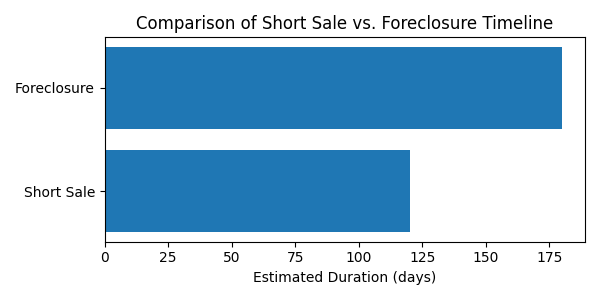
Short Sale vs. Foreclosure Timeline: What Homeowners Don’t Realize Until It’s Too Late
A breakdown of short sale vs. foreclosure timelines explaining how early short sale assistance helps homeowners maintain control, avoid delays, and minimize credit damage.
When homeowners fall behind on their mortgage, the conversation almost always centers on one question:
Related topic hub: Foreclosure Urgency. It groups timing-sensitive posts for sale dates, foreclosure pressure, lender postponements, and short sale options.
“How much time do I have?”
Unfortunately, that’s the wrong question.
The real difference between a short sale and a foreclosure isn’t just the final outcome—it’s who controls the timeline, the decisions, and the damage along the way. And most homeowners don’t realize how fast control slips away once foreclosure momentum starts.
Let’s break down what actually happens in each scenario, and why early short sale assistance can completely change the outcome.
The Foreclosure Timeline: Faster Than You Think
Foreclosure feels slow—until it isn’t.
Most homeowners assume they’ll receive plenty of warning before anything serious happens. In reality, the foreclosure timeline accelerates quickly once key deadlines pass.
Here’s what typically unfolds:
- Missed payments trigger default notices
- Legal filings begin (often before homeowners fully understand their options)
- Fees, legal costs, and interest stack up
- Decision-making shifts from homeowner to lender
- Sale dates get scheduled—even while homeowners are still “figuring things out”
Once foreclosure is in motion, options narrow fast. Loan modifications get denied. Buyers hesitate. And homeowners often discover too late that a short sale is still technically possible—but now much harder to execute cleanly.
This is where many deals fail: not because a short sale wasn’t allowed, but because it was started too late and without structure.
The Short Sale Timeline: Slower, but Strategic
A short sale doesn’t stop time—it replaces panic with process.
When started early and handled correctly, a short sale gives homeowners breathing room while maintaining control over key decisions like:
- Who buys the home
- When the sale closes
- How relocation is handled
- What the final credit impact looks like
Unlike foreclosure, a short sale timeline is driven by documentation, valuation, and lender review—not court schedules.
But here’s the catch: banks don’t wait forever.
Delays, missing documents, or sloppy communication can quietly push a short sale past the point of no return. That’s why experienced short sale processing matters far more than most homeowners realize.
What Homeowners Don’t Realize Until It’s Too Late
This is where timelines collide—and mistakes become permanent.
1. Waiting Does Not Buy Time
Many homeowners delay action because they’re overwhelmed or hopeful something will change. Unfortunately, waiting usually reduces options instead of preserving them.
By the time foreclosure notices feel “real,” lenders may already be less flexible.
2. Short Sales Are Front-Loaded
The most important work in a short sale happens early:
authorizations, hardship review, document accuracy, and valuation strategy.
If those pieces aren’t handled properly from the start, approvals stall—or get denied outright.
This is where a dedicated short sale coordinator or short sale negotiator makes a measurable difference.
3. Foreclosure Narrows Buyer Interest
Buyers get nervous when foreclosure timelines tighten. They worry about auctions, title issues, and approval risk.
That reduces leverage and limits offers—exactly the opposite of what homeowners need.
4. Relocation Help Is Time-Sensitive
Relocation assistance (often called “cash for keys”) is far more likely when a short sale is organized early and presented correctly. Once foreclosure progresses, those opportunities often disappear.
At Crisp, this kind of homeowner support is built directly into how we help distressed sellers navigate the process.
Control Is the Real Difference
A short sale isn’t just about avoiding foreclosure—it’s about preserving agency.
Foreclosure is something that happens to homeowners.
A short sale is something homeowners participate in.
When structured correctly, a short sale allows families to:
- Exit with dignity
- Avoid last-minute chaos
- Minimize long-term credit damage
- Move forward on their own timeline
That’s why we focus on short sale assistance that starts early, stays proactive, and doesn’t rely on hope or guesswork.
Whether we’re helping homeowners directly or supporting agents through the process, our role is to keep files moving, lenders engaged, and deadlines under control. You can see exactly who we work with on our who we serve page.
The Right Question to Ask
Instead of asking, “How much time do I have?” Homeowners should be asking:
“How much control do I want to keep?”
If foreclosure is already on the horizon, the window for a successful short sale hasn’t necessarily closed—but it is narrowing.
Starting the short sale process early, with experienced guidance, is often the difference between an orderly transition and a forced one. If you’re considering next steps, this is the moment to start the short sale process before decisions get made for you.

Why “Approved Price” Doesn’t Mean “Approved Deal” in Short Sales
An approved price doesn’t guarantee a closed short sale. Learn why deals fall apart after approval and how to prevent it.
One of the most common short sale misconceptions I hear from agents, buyers, and even some sellers is this:
> "The bank approved the price, so we’re good to go."
If only it were that simple.
In short sales, an **approved price is not the same thing as an approved deal**. Confusing the two is one of the biggest reasons transactions fall apart weeks or even months after everyone thinks they’re “done.” Understanding the difference is critical—and it’s where experienced short sale processing makes all the difference.
Let’s break down what’s really happening behind the scenes.
### What a Short Sale ‘Price Approval’ Actually Means
When a lender issues a short sale approval letter, the first thing most people look for is the approved purchase price. That number matters—but it’s only one piece of a much larger puzzle.
A price approval simply means the lender agrees that the **gross sale price** is acceptable based on their valuation (BPO, appraisal, or internal review). It does *not* automatically mean:
- The HUD is approved
- All fees are acceptable
- The buyer structure is compliant
- The timeline is locked
- The deal is guaranteed to close
This is why experienced agents rely on a short sale specialist who understands how lenders evaluate the *entire transaction*, not just the headline number.
### Conditional Approvals: The Fine Print That Kills Deals
Almost every short sale approval comes with **conditions**. These are not suggestions — they’re requirements. Miss one, and the approval can be withdrawn.
Common conditions include:
- Approved net to lender (not just price)
- Limits on buyer-paid fees or credits
- Restrictions on commissions
- Deadlines for closing
- Requirements for arms-length affidavits
- Seller contribution rules
- Buyer identity disclosures
A short sale coordinator knows that these conditions must line up perfectly with the final HUD. This is where many “approved” deals quietly die.
### Net Proceeds Matter More Than Price
Lenders don’t approve short sales based on emotion. They approve them based on **net recovery**.
Two offers at the same price can produce very different results for the bank:
- One may include excess credits
- Another may have unapproved buyer fees
- One may violate investor guidelines
- Another may push timelines too far
From the lender’s perspective, the higher-priced offer is irrelevant if the net proceeds are lower. This is why clean HUDs and accurate short sale processing are so important.
If you’ve ever watched a bank reject a “better” offer, this is usually why.
### Buyer Fees and Credits: The Silent Deal Breakers
Buyer-paid fees are one of the most misunderstood aspects of short sales.
Some lenders allow them. Some don’t. Some allow them only if disclosed and capped. Others allow them but adjust the net accordingly. And some investors prohibit them entirely.
If buyer fees are added after approval — or structured incorrectly — the lender can revoke the approval outright.
This is where working with a short sale negotiator who knows what’s allowed *before* submission prevents last-minute chaos and keeps everyone aligned from day one.
### Timeline Conditions Are Real (And Enforced)
Approval letters almost always include a strict closing window. Miss it, and you may need:
- An extension request
- A re-review
- A new valuation
- Or a full resubmission
None of those are guaranteed.
A proper short sale coordinator tracks timelines aggressively, communicates with all parties, and resolves issues *before* the lender’s clock runs out. Waiting until the deadline is how approved deals quietly expire.
### Why Deals Fall Apart After ‘Approval’
When short sales collapse post-approval, it’s usually because:
- The HUD changed without lender consent
- A buyer switched loan programs
- Fees were added late
- A condition was misunderstood
- No one was monitoring compliance
These aren’t dramatic mistakes. They’re small, technical issues that compound quickly without proper oversight.
This is exactly why Crisp Short Sales exists—to manage these details so agents can focus on selling, not firefighting.
### How Crisp Short Sales Keeps Approved Deals Closing
At Crisp Short Sales, we don’t just help get price approvals—we help get deals to the closing table.
Our team handles:
- Full short sale processing and lender coordination
- HUD and net sheet compliance
- Buyer fee review and structuring
- Timeline tracking and extensions
- Investor and insurer guidelines
- Clear communication with agents and buyers
If you’re an agent or investor looking for **short sale assistance**, we step in behind the scenes and manage the lender process end-to-end. You stay in control of your listing. We handle the heavy lifting.
Learn more about how we help agents protect their deals, or see who we serve.
If you're ready to start the short sale process the right way, visit /start-short-sale.
An approved price is just the beginning.
Short sales close when **every condition, dollar, and deadline** is handled correctly. That’s not luck—that’s experience, structure, and disciplined short sale processing.
If you want fewer surprises and more closings, make sure someone is watching the details the bank actually cares about.

What Lenders Actually Look for Before Assigning a Short Sale Negotiator
Most agents assume that once a short sale package is submitted, the lender automatically assigns a negotiator and the clock starts ticking. In reality, there’s a quiet but critical evaluation phase that happens before a short sale negotiator is ever assigned. And if a file fails this initial review, it can sit untouched for weeks or even months.
Understanding what lenders look for at this stage is one of the biggest advantages a seasoned short sale processor or short sale coordinator brings to the table. It’s also where many well‑intentioned DIY short sales start to unravel.
Let’s pull back the curtain.
Step One: Is This File “Assignable” at All?
Before a lender assigns a negotiator, the file must pass an internal intake screen. This is not a negotiation phase. It’s a compliance and completeness check.
Lenders are asking very basic but very strict questions:
- Is the hardship clearly documented and credible?
- Are all required borrower authorizations signed correctly?
- Is the package internally consistent?
- Does this file meet investor and insurer rules on its face?
If the answer to any of those is no or unclear, the file doesn’t move forward. It doesn’t get denied either. It just stalls.
This is why experienced short sale processing matters so much. The goal isn’t just to submit documents. The goal is to submit a file that clears intake cleanly the first time.
Hardship Is About Logic, Not Emotion
One of the biggest misconceptions is that hardship letters need to be emotional. From a lender’s perspective, emotion is irrelevant. What they care about is logic.
A strong hardship explanation answers three questions:
1. Why can’t the borrower afford the home now?
2. Why is this situation unlikely to improve?
3. Why is foreclosure not a better financial outcome for the lender?
When these points aren’t clearly connected, lenders hesitate to assign a negotiator because the file looks weak. A skilled short sale specialist knows how to frame hardship in a way that aligns with lender review standards, not sympathy.
Financials Must Match the Story
Lenders cross‑check everything. If the hardship claims loss of income, the financials must show it. If the borrower claims increased expenses, the numbers need to support that.
Common red flags that delay negotiator assignment include:
- Bank statements that contradict stated income
- Expense totals that don’t match monthly cash flow
- Missing explanations for large deposits or withdrawals
- Incomplete or outdated financial forms
These issues don’t always trigger a denial. Instead, they trigger silence. The file stays unassigned until someone fixes it, often without the agent even realizing there’s a problem.
This is where dedicated short sale assistance makes a measurable difference.
Net Sheet Accuracy Is Non‑Negotiable
Even before there’s an offer to evaluate, lenders want to know that the deal can make sense financially. That means the estimated net sheet needs to be realistic, compliant, and internally accurate.
Lenders look for:
- Correct commission structures
- Allowable fees only
- No prohibited credits or incentives
- Consistency with investor guidelines
A sloppy or overly optimistic net sheet signals risk. Lenders are far more likely to delay assigning a short sale negotiator than to reject the file outright. Clean numbers move files forward.
This is one reason many agents partner with professionals who focus exclusively on short sale processing rather than trying to juggle it alongside active listings.
Title and Property Basics Still Matter
Even early in the process, lenders want to know whether the property itself presents complications.
They quietly assess things like:
- Obvious title issues
- Multiple liens without a clear path forward
- HOA balances with no documentation
- Red flags suggesting litigation or probate delays
None of these automatically kill a deal, but they do affect whether a negotiator is assigned quickly. A short sale coordinator who spots these issues early can address them proactively instead of letting the file stall.
Why Some Files Get Negotiators in Days (and Others Don’t)
When lenders assign negotiators quickly, it’s rarely luck. It’s usually because the file:
- Is complete and consistent
- Tells a clear financial story
- Meets investor rules at first glance
- Signals a realistic chance of closing
Files that don’t meet those standards aren’t rejected. They’re deprioritized.
That’s why agents who rely on experienced short sale help often see faster movement and fewer unexplained delays. The work done before submission determines how the lender treats the file afterward.
The Strategic Advantage for Agents
Agents don’t need to become short sale experts themselves. But understanding this intake phase helps explain why partnering with the right team matters.
If your goal is to:
- Reduce time to negotiator assignment
- Avoid silent delays
- Increase approval odds
- Protect your listing time
Then working with a dedicated short sale negotiator and processing team isn’t an extra step. It’s a strategic one.
At Crisp Short Sales, this is exactly where we focus our energy—making sure files are intake‑ready, investor‑compliant, and positioned to move quickly through lender review. That’s part of how we help agents close more short sales with less frustration through our approach to short sale processing and coordination. You can see how we support agents and homeowners throughout the process on our site, including how we help structure files correctly from day one and who we serve across different short sale scenarios.

Multiple Offers on a Short Sale: What Lenders Expect From the Submitted Offer
Have you ever had multiple offers on a short sale listing and watched the strongest-looking deal fall apart? The uncomfortable truth is that the highest offer does not always lead to approval.
Related topic hub: BPO and Short Sale Pricing. It covers high BPOs, counteroffers, valuation disputes, offer strategy, and pricing problems.
In a short sale, the listing agent reviews the offers and selects the strongest one to submit to the lender. The bank does not compare multiple offers side by side. Instead, the lender evaluates the submitted offer to determine whether it meets valuation requirements, investor guidelines, and approval criteria. Understanding how that evaluation works is critical to getting deals approved and closed.
Price is only step one, and often not the most important one. Yes, lenders care about price, but they care even more about net proceeds and certainty of closing. When a lender reviews a submitted short sale offer, they typically focus on factors such as:
Net to lender after commissions, fees, and credits
Buyer strength and financing reliability
Timeline to close
Risk of retrades or fallout
Compliance with investor and insurer guidelines
A clean, well-structured offer that nets more to the lender often beats a higher purchase price loaded with credits, repair requests, or shaky financing. Small errors on the HUD or net sheet can quietly derail an otherwise solid deal.
Why the highest price offer often loses
Credits kill deals
A higher offer that requests closing cost credits, repairs, or concessions frequently nets less to the bank than a cleaner offer.Financing risk matters
Conventional financing with strong down payment terms often beats FHA or VA, even at a slightly lower price. Cash offers are strong, but only when proof of funds is realistic and verifiable.Unrealistic timelines raise red flags
Extended escrows or layered contingencies increase the odds of cancellation. Lenders want fewer moving parts, not more.Early fallout is remembered
Buyers who submit aggressively and retrade during inspections create friction. That history can influence how future offers from that buyer are viewed.
How lenders evaluate a submitted short sale offer
Once the agent submits an offer, lenders typically evaluate it internally based on:
Offer price
Estimated net proceeds
Buyer type and financing
Closing timeline
Notes on risk factors
They are not emotionally attached to any buyer. The goal is the highest likelihood of closing with the least friction. That’s why clean documentation, accurate net sheets, and realistic terms matter more than headline numbers.
The role of a short sale negotiator when multiple offers exist
When multiple offers are involved at the listing level, lenders often request:
Revised HUDs or net sheets
Updated buyer documentation
Clarification on credits or fees
Confirmation of financing terms
A seasoned short sale negotiator knows how to respond quickly and accurately without triggering unnecessary delays or denials. At Crisp Short Sales, this is where we support agents by handling lender communication, submitting clean packages, and keeping the selected offer strong through approval.
Learn more about how we help throughout the process:
short sale support and lender coordination
https://www.crispshortsales.com/how-we-help
What agents should do when multiple offers come in
Don’t chase the highest number blindly. Focus on net proceeds and clean terms.
Pre-screen buyers carefully. Financing strength and expectations matter.
Structure the offer cleanly from day one. Avoid unnecessary credits or vague terms.
Get short sale assistance early. Waiting until after submission often costs weeks.
Agents who work with a short sale coordinator from the start tend to see faster approvals and fewer surprises. This is who we serve every day:
helping real estate agents close short sales faster
https://www.crispshortsales.com/who-we-serve
What buyers need to understand
Buyers lose short sales not because their price is too low, but because their offer introduces risk. To win in a multiple-offer short sale situation, buyers should:
Keep terms simple
Avoid aggressive credits
Show strong financials
Commit to realistic closing timelines
When buyers understand the lender’s perspective, approvals move faster and deals actually close.
The bottom line
In short sales, the winning offer is the one the lender trusts most, not the one with the biggest headline number. When agents submit a clean, well-structured offer and understand how lenders evaluate it, approvals come faster and deals close with fewer headaches.
If you’re facing a short sale with multiple offers and want help structuring it correctly from the start, you can begin here:
start the short sale process
https://www.crispshortsales.com/start-short-sale

Why "As-Is" Matters More in Short Sales Than Any Other Deal Type
Learn why "as-is" matters more in short sales, how repairs derail approvals, and how to set expectations that actually get deals closed.
If there’s one phrase that causes more confusion in short sales than any other, it’s "as-is."\nEveryone thinks they know what it means. Very few people actually treat it correctly.\n\nIn a traditional sale, “as-is” is often negotiable. In a short sale, it’s not just a preference — it’s a deal survival requirement. And when agents, buyers, or sellers misunderstand that, short sales stall, reopen, or quietly die somewhere inside a lender’s loss mitigation department.\n\nLet’s break down why “as-is” matters more in short sales than in any other transaction type, and how setting expectations early protects everyone involved.\n\n### “As-Is” in a Short Sale Is Not a Suggestion\n\nIn a short sale, the lender is already agreeing to take a loss. That means one thing above all else: they want certainty.\n\nThe bank is approving a net number based on:\n- Current condition\n- Market comps\n- Repair assumptions\n- Risk of delay or fallout\n\nOnce that approval is issued, the lender is not budgeting for surprises.\n\nWhen a buyer submits repair requests, credits, or price reductions after approval, the lender doesn’t see it as negotiation — they see it as deal instability. That’s when approvals get reopened, escalated, or revoked entirely.\n\nThis is why “as-is” in a short sale must be treated as:\n- No repair credits\n- No post-approval renegotiation\n- No expectations of seller contributions beyond what’s already approved\n\nAnything else puts the approval at risk.\n\n### Why Repairs Are Especially Dangerous in Short Sales\n\nIn a normal deal, repairs are a buyer-seller issue. \nIn a short sale, repairs become a bank issue, whether you want them to or not.\n\nHere’s why:\n- The seller has no money\n- The lender is not funding repairs\n- Any change to net proceeds requires lender re-approval\n\nEven small repair requests can trigger:\n- New BPOs or valuations\n- Updated HUD reviews\n- Additional internal sign-offs\n- Weeks of lost momentum\n\nThis is why experienced short sale teams focus on pricing the condition upfront, not fixing it later.\n\nIf a buyer wants perfection, a short sale is usually the wrong deal.\n\n### Inspections Still Matter — Just for Different Reasons\n\nThere’s a common misconception that “as-is” means no inspection. That’s not true.\n\nInspections are still critical in short sales, but for information, not negotiation.\n\nBuyers should use inspections to:\n- Understand the property’s condition\n- Confirm they’re comfortable with the risk\n- Decide whether to move forward or walk away\n\nWhat inspections should not be used for:\n- Asking the seller to repair items\n- Requesting credits\n- Attempting post-approval price reductions\n\nWhen inspections are framed correctly, they actually strengthen short sales by reducing fallout later in the process.\n\n### How “As-Is” Protects the Seller\n\nFor sellers, “as-is” is often misunderstood as unfair. In reality, it’s one of their strongest protections.\n\nMost short sale sellers are dealing with:\n- Financial hardship\n- Limited or no cash\n- Emotional stress tied to the property\n\n“As-is” ensures:\n- No surprise repair demands\n- No last-minute financial obligations\n- A clean, predictable path to closing\n\nThis clarity allows sellers to focus on the outcome — avoiding foreclosure — instead of worrying about issues they can’t afford to fix.\n\nThis is also where services like relocation assistance and closing support, which we explain on our [How We Help](/how-we-help) page, can make a meaningful difference for sellers who need a clean exit without added pressure.\n\n### Why Buyers Benefit From Strict “As-Is” Rules\n\nBuyers who understand short sales often prefer strong “as-is” language because it:\n- Reduces approval risk\n- Prevents re-negotiations\n- Speeds up lender review timelines\n\nClear expectations upfront mean fewer moving parts later.\n\nBuyers who want certainty should work with agents and teams experienced in structuring clean short sale offers, not ones who plan to renegotiate after approval.\n\nThis is especially important for agents and investors we work with through our [Who We Serve](/who-we-serve) partnerships, where repeat closings depend on consistency and lender trust.\n\n### Where Most Short Sales Go Wrong\n\nThe most common mistake we see is not pricing “as-is” properly at the start.\n\nProblems happen when:\n- Listings are priced as if repairs will be negotiated later\n- Buyers assume credits are coming\n- Agents treat the deal like a traditional sale\n\nShort sales succeed when:\n- Condition is reflected in the offer\n- Buyers accept the risk knowingly\n- Everyone agrees the approval is final once issued\n\nWhen those boxes are checked, lenders are far more likely to move efficiently — and closings actually happen.\n\n### Setting Expectations Early Is Everything\n\nThe strongest short sale files we handle are the ones where:\n- “As-is” is explained clearly on day one\n- Buyers are educated before offers are written\n- Sellers know exactly what to expect at closing\n\nThat upfront clarity prevents 90% of the issues that derail short sales later.\n\nIf you’re unsure how to structure an offer, explain condition, or manage expectations with buyers and sellers, starting the process correctly through our [Start Your Short Sale](/start-short-sale) intake is the fastest way to avoid costly mistakes.\n\n### Final Thought\n\n“As-is” isn’t about being rigid — it’s about being realistic.\n\nShort sales are already complex. When everyone respects what “as-is” truly means, these deals become far more predictable, far less stressful, and far more likely to close.\n\nAnd in short sales, closing is the only thing that matters.

Why Some Short Sales Close in 90 Days—and Others Never Close at All
If you’ve worked even one short sale, you’ve seen both extremes.
One file gets approved quickly, closes cleanly, and everyone walks away relieved. Another drags on for months, buyers get frustrated, extensions pile up, and eventually the deal dies quietly.
The difference usually isn’t the property, the seller, or even the lender.
It’s the process behind the scenes.
After handling short sales for more than 15 years, I can tell you with confidence: short sales that close fast all have a few things in common. And the ones that never close almost always break down in the same predictable ways.
Let’s walk through what separates the 90-day success stories from the deals that never make it to the closing table.
1. Complete Files Get Reviewed Faster. Incomplete Files Get Ignored.
Lenders don’t deny most short sales outright. They stall them.
When a file is missing documents, improperly labeled, or submitted out of order, it doesn’t get flagged as urgent. It gets pushed to the bottom of the queue.
Fast-closing short sales usually have:
- A complete seller financial package
- Clear hardship documentation
- Clean third-party authorizations
- Accurate HUD or net sheets submitted early
Deals that fail often involve repeated “please resend” requests, outdated documents, or mismatched numbers that cause lenders to re-review the file over and over again.
This is exactly why many agents choose to partner with a dedicated short sale processor instead of trying to juggle lender requirements themselves. When files are packaged correctly the first time, approvals move faster.
2. The Lender Is Actually Being Followed Up With*
Here’s an uncomfortable truth: Most short sales don’t stall because the bank said no. They stall because no one followed up properly.
Successful short sales involve:
- Weekly lender check-ins
- Escalations when timelines slip
- Confirmation that documents were received and logged correctly
Failed short sales often rely on portal uploads alone and hope for the best.
Short sale departments are understaffed, overworked, and constantly rotating personnel. If no one is actively managing communication, files sit untouched for weeks.
This is where professional short sale coordination makes a measurable difference. Consistent follow-up keeps files alive and moving, instead of disappearing into a lender black hole.
3. Buyer Expectations Are Set Early (and Managed Often)
Buyers don’t usually walk away because of the price. They walk away because of silence and uncertainty.
Short sales that close quickly typically involve:
- Buyers who understand realistic timelines
- Regular status updates
- Honest communication when delays occur
Deals that fall apart often leave buyers in the dark. When weeks go by without updates, confidence erodes and buyers move on to easier deals.
Agents who succeed with short sales tend to rely on backend support that keeps all parties informed. That transparency is a huge reason agents trust services like ours to help them close short sales faster and with fewer surprises.
4. Negotiation Happens Before the Approval Letter, Not After
One of the biggest myths in short sales is that negotiation starts when the bank sends an approval.
In reality, strong files:
- Anticipate lender objections early
- Address valuation issues proactively
- Resolve contribution requests before final approval
Weak files wait until the approval letter arrives, then scramble to renegotiate terms. By that point, buyers are frustrated, contracts are expiring, and leverage is gone.
Experienced short sale negotiators work these issues upfront so approvals come back clean and executable, not loaded with deal-killing conditions.
5. Roles Are Clear—And No One Is Overextended
The fastest short sales usually have a clean division of labor:
- The agent focuses on marketing, buyers, and contracts
- A specialist handles lender communication and document flow
- The seller knows exactly what’s expected and when
Deals that die often involve one person trying to do everything—or worse, assuming someone else is handling it.
That’s why many agents rely on third-party short sale help that works quietly behind the scenes. If you’ve ever wondered whether outsourcing makes sense, take a look at how we help agents and sellers navigate the process on our short sale assistance page.
Why Crisp Short Sales Files Close Fast
At Crisp Short Sales, we don’t dabble in short sales. This is all we do.
We focus on:
- Clean file packaging
- Persistent lender follow-up
- Clear communication with agents and sellers
- Problem-solving before issues derail deals
Whether you’re an agent with one short sale or several, our role is to remove friction so deals move forward instead of stalling out. If you’re curious about who we work with, you can learn more on our Who We Serve page.
And if you have a short sale that’s already slowing down, you don’t have to wait for it to fall apart. You can get started anytime through our short sale intake.
Final Thought
Short sales don’t fail randomly.
They fail because of missed details, slow follow-up, poor communication, and unrealistic expectations. When those issues are addressed early, 90-day approvals are not the exception — they’re achievable.
If you want your next short sale to be one that actually closes, focus on the process, not just the listing.