


Not Every Homeowner Qualifies for a Short Sale — Here’s How to Tell in 5 Minutes
Not every homeowner qualifies for a short sale. Learn how to quickly assess your situation and find out if a short sale is right for you.
You don’t want to waste time chasing a solution that won’t work.
If you’re behind on payments—or even just starting to feel the pressure—you’ve probably heard that a short sale can help you avoid foreclosure and move on cleanly. But here’s the reality: not every homeowner qualifies for a short sale, and going down the wrong path can cost you valuable time.
The good news? You can usually tell within a few minutes whether you’re a strong candidate.
Let’s break it down.
First, What Does a Lender Actually Look For?
Banks don’t approve short sales just because someone asks. They’re making a financial decision—and they need a reason to take a loss.
In most cases, they’re looking for three key things:
1. Financial Hardship
Something has changed in your life that makes it difficult—or impossible—to keep up with your mortgage.
Common examples include:
- Job loss or reduced income
- Divorce or separation
- Medical issues
- Death of a spouse
- Increased expenses or unexpected financial strain
If you can clearly explain why you can’t continue making payments, you’re already on the right track.
2. Little to No Equity in the Property
This is the big one.
If your home is worth less than what you owe (or close to it after closing costs), a short sale becomes a realistic option.
If you do have equity, the lender will usually expect you to sell traditionally instead.
3. A Willingness to Sell
It sounds obvious, but it matters.
A short sale isn’t something that happens passively—you have to actively list the property, accept an offer, and work through the process with the lender.
If you’re not ready to sell, it’s not the right time.
Quick 5-Minute Self-Check
Here’s a simple way to determine if you’re likely a good candidate:
- Are you struggling financially or expect to soon?
- Do you owe about the same or more than your home is worth?
- Are you open to selling the property?
If you answered yes to all three, there’s a very strong chance a short sale could work for you.
What If You’re Still Current on Payments?
This is one of the biggest misconceptions.
You do not have to be in foreclosure to qualify for a short sale.
In fact, starting earlier often gives you:
- More control over the process
- Better chances of approval
- Less stress overall
Lenders care more about your situation than your payment status.
Who Typically Makes the Best Short Sale Candidate?
Over the years, we’ve seen certain situations come up again and again:
Homeowners Facing Future Financial Strain
Maybe you’re still current—but you know it’s not sustainable. Acting early puts you in a much stronger position.
Owners of Rental Properties That No Longer Make Sense
If the numbers don’t work anymore and the property is underwater, a short sale can help you exit cleanly.
Homeowners Going Through Life Transitions
Divorce, relocation, or major life changes often create urgency—and lenders understand that.
Properties That Need Work
If the home needs repairs you can’t afford, and selling traditionally isn’t realistic, a short sale can bridge that gap.
Who Is NOT a Good Candidate?
Just as important—some homeowners aren’t a fit:
- You have significant equity in the home
- You’re financially stable and able to continue payments
- You’re not willing to sell
- You’re expecting the lender to “just forgive” the loan without a process
In these cases, other options usually make more sense.
Why Getting the Right Help Matters
Even if you check all the boxes, short sales are not simple.
There’s a lot that happens behind the scenes:
- Negotiating with the lender
- Submitting the full short sale package
- Managing timelines and follow-ups
- Keeping the deal from falling apart before closing
That’s where working with an experienced short sale processor or short sale negotiator can make a huge difference.
If you want to understand exactly how that process works, take a look at how we guide sellers step-by-step here:
👉 https://crispshortsales.com/how-we-help
And if you’re working with an agent, here’s how we support them to keep deals moving and closing:
👉 https://crispshortsales.com/who-we-serve
The Bottom Line
A short sale isn’t for everyone—but for the right homeowner, it can be a powerful way to avoid foreclosure and move forward.
If you’re dealing with:
- Financial hardship
- Little to no equity
- A willingness to sell
You’re likely a strong candidate.
And the sooner you find out, the more options you’ll have.
If you want to quickly see where you stand, you can start the process here:
👉 https://crispshortsales.com/start-short-sale
No pressure—just clarity.

You Don’t Need Experience to List a Short Sale—Here’s What to Do Instead
Never handled a short sale? Learn how agents can take the listing, get help, and close successfully—without risking the deal.
You just got the call.
A homeowner is behind on payments, the loan balance is higher than the home’s value, and they’re asking if you can help them sell before foreclosure hits.
There’s just one problem… you’ve never handled a short sale before.
Most agents hit pause right here. They either pass on the listing or refer it out entirely—leaving money, experience, and future referrals on the table.
But here’s the truth: you don’t need prior short sale experience to take the listing and close the deal successfully. You just need the right structure in place.
Let’s break down exactly how to do it.
---
## Step 1: Focus on What You Already Do Well
You already know how to:
- Price a home
- Market a listing
- Negotiate with buyers
- Manage contracts
That’s 70% of the job.
Where most agents get tripped up isn’t the real estate side—it’s the lender side. That’s where timelines drag, deals fall apart, and frustration builds.
Instead of trying to learn everything from scratch, the smarter move is to separate roles.
You handle the listing and client relationship.
Let a short sale processor or negotiator handle the bank.
---
## Step 2: Bring in a Short Sale Specialist Early
One of the biggest mistakes new agents make is waiting too long to get help.
Short sales are heavily documentation-driven and time-sensitive. Missing even one step early can delay approval by weeks—or kill the deal entirely.
By partnering with a short sale specialist, you can:
- Submit a complete and accurate package to the lender
- Communicate effectively with loss mitigation departments
- Track lender timelines and follow-ups
- Negotiate approvals and deficiencies
If you want to see exactly how that support works in practice, take a look at how we [handle short sale processing and negotiations](/how-we-help) behind the scenes.
This isn’t about handing off your deal—it’s about protecting it.
---
## Step 3: Set the Right Expectations with Your Seller
You don’t need to sound like a short sale expert—you just need to sound confident and clear.
Here’s a simple way to position it:
> “I’ll handle the listing, marketing, and getting your home sold. I also work with a team that specializes in negotiating with your lender to get the short sale approved and closed.”
That does two things:
1. Builds confidence
2. Shows you have a system
Sellers don’t expect you to do everything yourself—you just need to solve the problem.
If you’re unsure how to position your services or who this process is best suited for, here’s a helpful breakdown of [who benefits most from short sale assistance](/who-we-serve).
---
## Step 4: Let the Negotiation Process Run in the Background
Once you have an offer, the real work begins—but it doesn’t have to be your burden.
A professional short sale negotiator will:
- Submit the offer and full package to the lender
- Order BPOs or appraisals
- Handle back-and-forth negotiations
- Push for approval within realistic timelines
While that’s happening, you stay focused on:
- Keeping the buyer engaged
- Managing timelines and communication
- Preventing the deal from falling apart
This division of responsibility is what allows newer agents to succeed without getting overwhelmed.
---
## Step 5: Stay in Control of the Deal (Without Doing Everything Yourself)
There’s a common fear among agents:
“If I bring someone in, am I losing control of my deal?”
The answer is no—if anything, you’re gaining leverage.
You remain:
- The listing agent
- The client’s main point of contact
- The deal manager
The short sale coordinator or processor simply handles the backend complexity that most agents don’t have time to learn.
Think of it like bringing in a transaction coordinator—but for the hardest part of the deal.
---
## Step 6: Use This as a Growth Opportunity
Your first short sale isn’t just a deal—it’s a door opener.
Once you successfully close one:
- You gain confidence
- You understand the process
- You become the go-to agent for distressed sellers
And here’s the key: short sales are increasing again in many markets.
Agents who know how to handle them—even with support—are going to have a serious advantage.
If you’re ready to take that next step, you can [start the short sale process here](/start-short-sale) and get guidance from day one.
---
## Final Thoughts
You don’t need years of experience to take on a short sale.
You just need:
- The confidence to say yes
- The right support system
- A clear plan for handling the lender side
Most agents avoid short sales because they think it’s too complicated.
The ones who lean in—with the right help—are the ones closing deals others walk away from.

Short Sale Tax Consequences Homeowners Must Know
Understand the potential tax implications of a short sale for homeowners, including how forgiven debt may be treated as taxable income and when exclusions like the primary residence rule, insolvency or bankruptcy can apply. Learn key steps to prepare before closing and avoid unexpected tax surprises.
When the Sale Closes… the Tax Bill Shows Up
You made it to the closing table. The short sale is approved, the deal is done, and the foreclosure is avoided. Then a few weeks later, a tax form shows up in the mail. For many homeowners, this is the part no one fully explained – the potential tax consequences of a short sale. And if you don’t understand what’s coming, it can feel like you just traded one financial problem for another.
Let’s break this down so you know what to expect – and more importantly, how to protect yourself.
What Actually Gets Taxed in a Short Sale?
Here’s the key concept: when a lender agrees to a short sale, they are often forgiving part of your debt.
Example:
- Mortgage balance: $300,000
- Short sale price: $250,000
- Debt forgiven: $50,000
That $50,000 can be considered taxable income by the IRS. This is called cancellation of debt (COD) income. And yes – that means the IRS may treat it like you earned an extra $50,000 that year… even though you never actually saw that money.
The 1099-C Form (Don’t Ignore This)
After a short sale, the lender may issue a 1099-C form. This document reports the amount of debt forgiven, the date of cancellation, and the loan details. If you receive this form, the IRS receives it too. Ignoring it is not an option. This is where a lot of homeowners get caught off guard – they assume the short sale is “done,” but from a tax standpoint, it’s just getting started.
When You May NOT Owe Taxes
The good news is that many homeowners do not end up paying taxes on forgiven debt – if they qualify for certain exclusions.
Primary Residence Exclusion
Under federal law, homeowners may exclude forgiven debt if:
- The property was your primary residence
- The debt was used to buy, build or improve the home
Insolvency Rule
Even if the primary residence rule doesn’t apply, you may still qualify if you were insolvent. Insolvent means your total debts were greater than your total assets at the time of the short sale. If that’s the case, you may exclude some or all of the forgiven debt from taxation.
Bankruptcy Exception
If the short sale is tied to a bankruptcy, the forgiven debt is generally not taxable.
Where Things Get Risky
Not every situation is protected. You may face tax consequences if:
- The property was an investment property
- You took out cash-out refinances not used for home improvements
- You don’t qualify for insolvency
- You fail to properly file the correct IRS forms (like Form 982)
This is why having guidance during the process matters – not just after.
State Taxes: Don’t Forget These
Federal taxes are only part of the picture. Some states follow federal exclusions, some partially follow them, and others may tax forgiven debt differently. If you're working through a short sale in Georgia, Florida, or elsewhere, this becomes a key detail to review.
How to Prepare BEFORE the Short Sale Closes
This is where homeowners (and even agents) make mistakes – waiting until after closing. Here’s what you should do before the deal is finalized:
- Talk to a CPA early – not after; before.
- Understand your likely exclusion status – primary residence? Insolvent? Investment?
- Keep documentation – mortgage statements, financials, hardship details
- Work with an experienced short sale team – one that understands the full picture, not just the lender side
If you’re unsure where to begin, we guide homeowners through the process step-by-step, help structure files to minimize surprises, and coordinate with agents and professionals throughout.
The Biggest Misconception About Short Sale Taxes
Most people think: “I’ll get hit with a massive tax bill.” Reality: many homeowners qualify for exclusions and owe little to nothing – but only if things are handled correctly. The real risk isn’t the tax itself. The real risk is:
- Not knowing your options
- Not filing correctly
- Not preparing ahead of time
Bottom Line
A short sale can absolutely help you avoid foreclosure and move forward. But you need to understand the full financial picture – including taxes.
Handled correctly:
- You avoid foreclosure
- You may avoid taxes
- You get a clean financial reset
Handled poorly:
- You close the deal
- Then face a surprise tax issue months later
If you’re considering a short sale and want clarity upfront, you can take the first step here: /start-short-sale.

Texas Short Sale Timeline: What Delays Approval
Texas short sale deadlines move fast. See what must be ready before foreclosure, approval-letter expiration, or buyer fallout slows closing.
A Texas short sale can move quickly, but only when the right pieces are ready before the lender asks for them. If your seller is watching a deadline, the real question is not just how long it takes, but how to close faster without creating lender pushback. You’ve got a short sale listing in Texas. The seller is behind on payments, the foreclosure date is looming, and your buyer is asking the one question you don’t want to answer… “How long is this actually going to take?”
Fast Answer: Texas Short Sale Timeline
A Texas short sale often takes several weeks to a few months, depending on the lender, investor, offer strength, title issues, and seller documentation. The fastest files usually have a complete hardship package, clean title review, realistic buyer expectations, and a short sale negotiator pushing conditions before deadlines get tight.
What To Do Next To Speed It Up
Order title early so HOA, tax, judgment, or second-lien issues do not appear late.
Collect seller financials and hardship documents before the lender opens review.
Set buyer expectations around valuation, approval conditions, and possible extension needs.
Texas short sale next reads
If a Texas short sale timeline is tight, the next issue is usually one of three things: foreclosure timing, lender approval delays, or valuation. These related guides help agents and homeowners move from timing questions into the next practical step.
Start the short sale process before deadlines tighten
And the honest answer most agents give? “Depends.” That’s exactly why so many short sales fall apart.
Because in Texas, timelines matter more than almost anywhere else. Foreclosure timelines move fast. Buyers lose patience. Sellers panic. And if the short sale process isn’t handled correctly from day one, the deal drags… and dies.
Let’s break down what a realistic Texas short sale timeline looks like—and how to actually keep it on track.
Why Texas Short Sales Move Faster (or Fail Faster)
Texas is a non-judicial foreclosure state. That means lenders can move from missed payments to foreclosure sale very quickly—sometimes in as little as 30–45 days once the process starts. There’s no long court process slowing things down.
That creates two realities: short sales can move quickly, but they also fail quickly if mishandled. This is where working with a professional short sale processor or negotiator becomes critical. Without tight coordination and lender communication, you’re racing a clock you don’t control.
The Typical Texas Short Sale Timeline (Step-by-Step)
Week 1–2: File Setup & Submission
• Seller documents collected
• Authorization forms signed
• Listing agreement finalized
• Hardship letter completed
• Short sale package submitted to the lender
If you’re unsure what needs to be submitted, here’s how we streamline the process when helping agents close deals faster.
Week 2–4: Lender Review Begins
• File is assigned to a negotiator
• Initial review starts
• BPO (Broker Price Opinion) or appraisal is ordered
This stage is all about follow-up and pressure. Lenders don’t move fast unless someone is pushing the file forward consistently.
Week 4–8: Valuation & Negotiation
• BPO/appraisal completed
• Lender determines value
• Negotiation begins based on buyer’s offer
If the offer is structured properly and supported with comps, approvals can come quickly. If not, expect counteroffers, delays, or outright rejection.
Week 6–10: Approval Issued
• Approval letter is issued
• Terms and closing timeline are set (often 30 days)
At this point, the deal is almost done—but not guaranteed. Clean coordination between title, buyer, and lender is still critical.
Week 8–12: Closing
• Final HUD/CD approved
• Title clears
• Closing scheduled
• Seller moves out
What Slows Down Texas Short Sales
• Incomplete initial package
• No consistent lender follow-up
• Poorly structured offers
• Inexperienced handling
How to Speed Up a Texas Short Sale
• Submit a complete package upfront
• Price the property correctly
• Maintain weekly lender contact
• Work with a short sale expert
Learn more about how we support real estate professionals behind the scenes.
The Real Answer: How Fast Can You Close?
• Best Case: 45–60 days
• Typical: 60–90 days
• Poorly Managed: 120+ days
In Texas, speed isn’t just about efficiency—it’s about survival.
Final Thought: Control the Timeline or Lose the Deal
Most agents don’t lose short sales because they’re impossible. They lose them because they underestimate the timeline—and don’t control the process early enough.
If you want to consistently close short sales in Texas, you need:
• Tight file setup
• Aggressive follow-up
• Strategic negotiation
• Clear communication across all parties
Or… you need someone who does this every day.
Here’s where to start the short sale process and get it moving quickly.

What Homeowners Must Have Ready Before Starting a Short Sale
You’re behind on payments. The lender is calling more often. Maybe you’ve already seen a foreclosure notice—or you know it’s coming soon.
At this point, most homeowners aren’t asking if they need help… they’re asking how fast they can start the short sale process and what they need to do to avoid things getting worse.
Here’s the good news: starting a short sale doesn’t have to be complicated—but it does require having the right pieces in place from day one.
If you want faster approval, fewer delays, and a real shot at closing, here’s exactly what you need ready before you begin.
1. A Hardship Story That Makes Sense to the Lender
Lenders don’t approve short sales just because a homeowner wants out—they approve them because there’s a legitimate financial hardship.
This is your “why,” and it matters more than most people realize.
Common hardships include:
- Loss of income or job
- Divorce or separation
- Medical issues
- Increased expenses
- Death in the family
- Adjustable-rate mortgage increases
The key isn’t just having a hardship—it’s being able to clearly explain it.
A strong hardship letter should:
- Be honest and straightforward
- Explain what changed financially
- Show that the situation isn’t temporary
- Make it clear you can’t continue making payments
This is one of the first things a short sale negotiator or short sale specialist will help you refine.
2. Proof of Income (Or Lack of It)
Once you explain the hardship, the lender will want proof.
This typically includes:
- Recent pay stubs
- Bank statements (last 2–3 months)
- Tax returns (last 1–2 years)
- Profit & loss statements (if self-employed)
If your income has dropped significantly—or disappeared altogether—this documentation is critical.
Lenders are trying to answer one question:
“Can this homeowner realistically keep the property?”
If the answer is no (and you can prove it), your short sale has a much higher chance of approval.
3. A Complete List of Monthly Expenses
Many homeowners overlook this, but it’s a key part of short sale processing.
You’ll need to outline your monthly expenses, including:
- Mortgage payments
- Utilities
- Insurance
- Car payments
- Credit cards
- Food and basic living expenses
This helps paint the full financial picture.
A good short sale coordinator uses this to show the lender that even if income exists, there’s no realistic way to sustain the mortgage long-term.
4. Authorization to Speak with Your Lender
This is where most homeowners hit their first delay.
Before anyone can help you—whether it’s a real estate agent or a short sale processor—you’ll need to sign a third-party authorization form.
This allows your short sale team to:
- Contact the lender directly
- Request payoff information
- Negotiate on your behalf
- Submit and follow up on your file
Without this, everything slows down.
This is why when homeowners are ready to start the short sale process, one of the very first steps is getting this authorization signed and submitted immediately.
5. A Property That Can Be Sold
This might sound obvious, but it’s critical.
A short sale only works if:
- The home is listed (or about to be listed)
- There’s a real buyer at market value
- The offer makes sense based on condition and comps
If the property is overpriced or not being marketed properly, the lender won’t take it seriously.
This is why many homeowners benefit from working with a team focused on helping real estate agents close short sales faster—it ensures the listing, offer, and negotiation strategy all align.
6. A Realistic Timeline (And Urgency)
Short sales are time-sensitive.
If foreclosure is approaching, every day matters.
You should know:
- Your foreclosure sale date (if scheduled)
- How far behind you are on payments
- Whether legal proceedings have started
The earlier you act, the more options you have.
Waiting too long can limit what a short sale negotiator can do—even if everything else is in place.
7. The Right Short Sale Team in Place
This is the piece that ties everything together.
You can have all the documents ready, but without the right team:
- Files get submitted incorrectly
- Lenders delay responses
- Deals fall apart before approval
That’s where experienced short sale processing makes a huge difference.
Instead of guessing your way through it, working with a team that specializes in this ensures:
- Documents are submitted correctly the first time
- Lender communication is handled consistently
- Deadlines are met
- The deal actually makes it to closing
If you’re unsure where to begin, the best step is to learn exactly how we help homeowners through short sales and what support looks like from start to finish.
The Bottom Line
Most short sale delays don’t happen because lenders are slow—they happen because files aren’t fully prepared upfront.
Homeowners who:
- Have their documents ready
- Clearly explain their hardship
- Act early
- Work with experienced professionals
…consistently see faster approvals and smoother closings.
If you’re already feeling the pressure of missed payments or an upcoming foreclosure, the worst move is waiting.
The best move is getting everything in place and taking action now.
When you’re ready, you can start the short sale process today and begin moving toward a real solution.
Learn more about how we help homeowners through short sales.

How Listing Agents Can Find New Short Sale Listings Before the Competition
The hardest part about short sales isn’t negotiating with the bank—it’s finding the deal in the first place. Learn how listing agents can proactively uncover short sale opportunities before anyone else sees them.
The hardest part about short sales isn’t negotiating with the bank… it’s finding the deal in the first place.
Most agents wait until a property is already labeled a “short sale” in the MLS. By then, the seller is overwhelmed, the timeline is tight, and you’re competing with other agents who saw the same opportunity.
But the agents who consistently close short sales? They’re not waiting. They’re finding these sellers before anyone else even realizes it’s a short sale situation.
If you want more listings—and fewer bidding wars for them—this is where the game changes.
Step 1: Stop Looking for “Short Sale” Listings
Here’s the mistake most agents make: They search the MLS for the words “short sale.” That’s already too late.
Most distressed sellers don’t know they need a short sale yet. They just know they’re behind on payments, they can’t sell for what they owe, and they’re running out of time. That’s your opportunity.
Instead of searching for short sales, start looking for:
- Pre-foreclosure notices
- Properties with long days on market and price drops
- Listings that went under contract and fell out
- Vacant or poorly maintained homes
These are often hidden short sale opportunities waiting to be uncovered.
Step 2: Target Distressed Homeowners Before They Raise Their Hand
The best short sale listings don’t come from inbound leads. They come from proactive outreach.
Agents who consistently find deals are targeting:
- Pre-foreclosures (public records, Zillow, PropStream)
- Absentee owners with problem properties
- Sellers with multiple failed listings
- Homeowners with recent financial hardship
When you reach out early, you position yourself as the solution—not just another agent competing for a listing. And when that seller realizes they need to negotiate a short sale, you’re already their first call.
If you’re looking to consistently generate and close these types of deals, take a look at how we’re already helping real estate agents close short sales faster here: [Who We Serve](https://www.crispshortsales.com/who-we-serve).
Step 3: Use the Right Conversation (Not a Sales Pitch)
If you open with: “Hey, I can list your house,” you’ll get ignored.
But if you open with: “Hey, I work with homeowners who are behind on payments or owe more than their home is worth—have you looked into your options yet?”
Now you’re solving a problem.
This is where positioning matters. You’re not just an agent—you’re offering short sale help and guidance during a stressful situation. And if you can confidently explain the process—or better yet, partner with a short sale specialist—you instantly stand out.
Step 4: Know When a Listing Should Be a Short Sale
Not every distressed property is obvious.
Some sellers will try to list traditionally… and fail.
Watch for these red flags:
- The home is priced below market but still not selling
- The seller keeps reducing the price with no traction
- The agent mentions “motivated seller” or “bring all offers”
- The mortgage payoff is close to or above market value
These are listings that often should be short sales—but haven’t been identified yet.
This is your opening.
If you can step in and reposition the deal correctly, you’re not just getting a listing—you’re saving a deal that would otherwise fall apart.
Step 5: Build a System for Consistent Deal Flow
Finding one short sale is luck.
Finding them consistently is a system.
The top agents build repeatable pipelines using:
- Weekly searches for pre-foreclosures
- Follow-up sequences (calls, texts, emails)
- Relationships with investors and wholesalers
- Networking with agents who don’t handle short sales
And most importantly—they don’t try to do everything themselves.
They partner with a short sale negotiator or short sale coordinator who can handle the backend, lender communication, and approval process.
That’s how you scale.
Step 6: Move Fast When You Find the Opportunity
Timing matters more than anything in short sales.
Once a seller is:
- 30–60 days behind
- Facing a foreclosure timeline
- Or realizing they can’t sell traditionally
They need a clear plan—and fast.
This is where having a process in place makes all the difference.
Instead of figuring it out on the fly, you can confidently guide them through the next step and start the short sale process right away: [Start a Short Sale](https://www.crispshortsales.com/start-short-sale).
Why Most Agents Miss These Deals
It’s not because they’re bad agents.
It’s because:
- They don’t recognize the signs early
- They’re uncomfortable explaining short sales
- They don’t have the backend support to handle them
So they avoid them.
And that leaves a massive opportunity for the agents who lean in.
The Bottom Line
Short sale listings aren’t rare.
They’re just hidden.
If you know where to look—and how to position yourself—you can consistently find opportunities before they ever hit the MLS.
And when you combine that with the right short sale processing support, you’re not just getting more listings…
You’re closing deals other agents never even see.
If you want help structuring these deals, managing lender communication, or getting approvals across the finish line, here’s exactly how we can help: [How We Help](https://www.crispshortsales.com/how-we-help)

What Listing Agents Should Do Before Submitting a Short Sale Package
The biggest mistake most agents make with short sales isn’t pricing. It’s not marketing either. It’s submitting a “complete” package… that isn’t actually complete.
Related topic hub: Short Sale Help for Agents. It pulls together the practical workflow posts agents need before submitting, negotiating, and closing a short sale.
And that’s exactly how deals sit untouched for weeks, buyers get frustrated, and lenders go silent.
If you’ve ever had a short sale stall out after submission, there’s a good chance the issue started before the file ever hit the lender’s desk.
The good news? This is one of the easiest problems to fix—once you know what to look for.
Step 1: Make Sure the Hardship Story Actually Makes Sense
Before anything gets uploaded, take a hard look at the seller’s hardship letter and financials.
Lenders aren’t just checking boxes — they’re asking one core question: Does this seller actually qualify for a short sale?
If the hardship is vague, inconsistent, or unsupported by the financials, the file is already in trouble. Common issues include:
- Income doesn’t match bank statements
- Expenses seem inflated or unrealistic
- Hardship letter feels generic or copied
This is where having experienced short sale assistance can make a huge difference. A strong, well-documented hardship upfront can shave weeks off the process.
Step 2: Verify the Numbers Before the Lender Does
One of the fastest ways to lose credibility with a lender is submitting numbers that don’t hold up. Before submitting:
- Double-check the estimated HUD or net sheet
- Confirm payoff amounts (including junior liens)
- Review taxes, HOA balances, and closing costs
If the lender has to come back and correct basic math or missing liens, your file gets pushed to the side—fast. A seasoned short sale coordinator or short sale processor will usually catch these issues before they ever become a problem.
Step 3: Pre-Screen the Buyer (This Is Bigger Than You Think)
Lenders are not just approving a seller — they’re approving a transaction. If the buyer looks weak, the file becomes risky. Before submitting:
- Confirm proof of funds or pre-approval is solid
- Make sure the buyer understands the timeline
- Set expectations about delays and communication
Deals fall apart every day because buyers weren’t properly prepared for the short sale process. If your goal is to close a short sale fast, this step is non-negotiable.
Step 4: Organize the Package Like a Lender Would
The easier your file is to review, the faster it moves. Submitting a disorganized package is one of the biggest hidden delays in short sale processing. Best practices include:
- Clearly label every document
- Submit in logical order (not random uploads)
- Avoid duplicates and outdated forms
- Include a clean summary of the deal
If a negotiator opens your file and instantly understands it, you’re already ahead of 90% of submissions.
Step 5: Set the Right Expectations With Your Seller
This is where deals quietly fall apart. If the seller doesn’t understand:
- Timeline expectations
- Required documents
- Communication delays
They become unresponsive… and that kills momentum. Before submission, make sure your seller is aligned and ready to participate. This is also where having a dedicated team helping real estate agents close short sales faster through our who we serve approach can keep communication tight and consistent from day one.
Step 6: Know What the Lender Will Ask for Next
Submitting the package is not the finish line — it’s the starting point. Most lenders will immediately request:
- Updated financials
- Additional documentation
- Clarifications on hardship or income
If you’re reacting instead of anticipating, you’re already behind. Working with a professional who specializes in short sale negotiation means you’re staying one step ahead of the lender instead of constantly catching up.
Step 7: Decide Early — Are You Handling This Alone or Not?
Short sales are not just paperwork — they’re negotiation, follow-up, escalation, and timing. If you’re juggling listings, buyers, and closings, it’s easy for a short sale to slip through the cracks. That’s why many agents choose to bring in short sale help early in the process — before submission — so the file is set up correctly from the start. If you’re unsure whether your file is truly ready, or just want a second set of eyes, you can always start the short sale process with support before submitting anything to the lender.
The Bottom Line
Most short sale delays don’t happen because lenders are slow. They happen because the file wasn’t truly ready. When everything is tight — financials, buyer, documentation, and expectations — short sales move faster, approvals come cleaner, and deals actually close.
And if you’ve ever had a file sit longer than it should, chances are the fix starts before submission.

How to Get a Short Sale Approved Faster Without Cutting Price
You’ve got a buyer. The offer is strong. The seller is motivated.
And yet… the file just sits there.
Weeks go by. Then months. The bank asks for “one more document.” Then another. Meanwhile, your buyer starts getting nervous, the seller is stressed, and the deal that should have closed is now hanging by a thread.
Here’s the truth most agents don’t realize: Short sale delays are rarely about price.
If you want to get a short sale approved faster, the focus shouldn’t be on lowering the offer—it should be on how the file is structured, presented, and managed behind the scenes.
Let’s break down exactly how to speed things up—without giving away value.
1. Submit a Complete Package the First Time
This is the single biggest factor in how fast a short sale moves.
Banks don’t “work through” incomplete files. They stall them.
Every missing document triggers a pause:
- File gets kicked back
- Assigned negotiator moves on
- Your deal goes to the bottom of the queue
A strong short sale processor or short sale coordinator knows how to:
- Anticipate what the lender will ask for
- Organize documents exactly how the bank wants them
- Submit everything upfront—not piece by piece
When the file is complete from day one, it signals to the bank: This deal is real, organized, and ready to close. That alone can shave weeks off the timeline.
2. Control the Narrative Early
Banks aren’t just reviewing numbers— they’re evaluating a story.
If your file doesn’t clearly explain:
- Why the seller qualifies
- Why the offer makes sense
- Why this deal should be approved
…you’re leaving room for delays, questions, and pushback.
A strong short sale negotiator frames the deal upfront:
- Hardship is clearly documented
- Financials support the situation
- The offer is positioned as the best possible outcome
When the story is clear, the bank spends less time questioning—and more time approving.
3. Stop the “Document Drip” Problem
One of the biggest hidden killers of short sale timelines is what I call the document drip:
- Submit 3 documents
- Bank asks for 2 more
- Submit those
- Bank asks for 4 more
This cycle can repeat for 30–60 days if you’re not proactive.
Instead, a strong short sale assistance strategy includes:
- Submitting a fully anticipated document set
- Including backup documentation before it’s requested
- Updating time-sensitive docs proactively (bank statements, pay stubs)
This prevents the file from constantly restarting.
4. Stay in Front of the Negotiator (Without Annoying Them)
Most agents either don’t follow up enough or follow up in a way that slows things down. There’s a balance.
An experienced short sale specialist knows:
- When to follow up
- What to ask
- How to move the file forward without triggering delays
Consistent, strategic communication keeps your file active and prioritized. This is one of the biggest reasons agents rely on Crisp Short Sales for ongoing file management and communication.
5. Eliminate Internal Bottlenecks
Not all delays come from the bank. Some come from inside the deal:
- Seller takes too long to send documents
- Buyer’s agent isn’t responsive
- Title or HOA info is missing
Every delay compounds. That’s why having a system—and someone driving the process—is critical.
If you’ve ever felt like you’re chasing people nonstop, that’s exactly where professional support comes in. Learn more about how we streamline every step of the process
6. Pre-Resolve Common Approval Issues
Experienced short sale negotiators don’t just react— they prepare. Before the file even hits the lender, they’re thinking:
- Are there junior liens?
- Is there MI (mortgage insurance)?
- Are there valuation risks?
Addressing these early prevents:
- Last-minute surprises
- Re-negotiations
- Deal-killing delays
This is where experience matters most— because these issues don’t show up until it’s too late… unless you know what to look for.
7. Make the File Easy to Approve
Here’s something most people miss: Banks want to approve deals that are easy to approve.
That means:
- Clean, organized file
- Clear numbers
- No missing pieces
- Minimal back-and-forth
When everything lines up, approvals happen faster—not because the price is lower, but because the decision is easier.
8. Use the Right Support at the Right Time
Trying to handle everything yourself is where most timelines fall apart.
Short sales aren’t just another transaction— they’re a process.
And without the right support:
- Things get missed
- Communication breaks down
- Timelines stretch
That’s why many agents choose to work with a dedicated short sale processor or short sale negotiator— so they can focus on selling while the backend is handled correctly.
If you’re currently working a deal and want to speed things up: Start a Short Sale
The Bottom Line
If a short sale is moving slowly, it’s almost never because the price is too high. It’s because:
- The file isn’t complete
- The story isn’t clear
- The process isn’t being managed tightly
Speed comes from structure, preparation, and execution—not discounts.
And when everything is done right from the beginning, approvals don’t just happen… they happen faster, smoother, and with fewer surprises.

Why Buyers Are Willing to Pay for a Short Sale Negotiator (And How to Position It)
You finally have a buyer ready to move forward on a short sale… and then the question comes up:
Related topic hub: Short Sale Help for Agents. It pulls together the practical workflow posts agents need before submitting, negotiating, and closing a short sale.
"Wait — why am I paying this fee?"
If you’ve ever had a deal stall right at this moment, you’re not alone. This is one of the most misunderstood parts of the short sale process — and it’s also one of the biggest opportunities to actually strengthen your deal instead of losing it.
Because when positioned correctly, buyers aren’t just willing to pay for a short sale negotiator… they actually prefer it.
Let’s break down why.
The Real Risk Buyers Are Taking in a Short Sale
From a buyer’s perspective, a short sale isn’t just another transaction — it’s a gamble.
They’re committing time, inspections, and emotional energy into a deal that:
- Might take 60–120+ days
- Might get rejected by the lender
- Might fall apart due to missing documents or delays
- Might get outbid or countered unexpectedly
That uncertainty is what makes buyers hesitate.
And here’s the key:
👉 Buyers aren’t afraid of paying a fee.
👉 Buyers are afraid of wasting time and losing the deal.
What a Short Sale Negotiator Actually Solves
This is where positioning matters.
When you explain the role of a short sale negotiator, you’re not selling a “fee” — you’re selling certainty and execution.
A strong short sale processor or negotiator handles:
- Direct lender communication
- Complete document submission and tracking
- Negotiation of payoff and terms
- Weekly follow-ups to keep the file moving
- Problem-solving when issues come up (and they always do)
Instead of a passive, unpredictable process, the buyer now sees a structured path to closing.
That shift changes everything.
Why Buyers Are Willing to Pay
When buyers understand what’s at stake, the fee becomes logical.
Here’s how they typically view it:
1. They’re Protecting Their Time – waiting 2–3 months on a deal that never closes is far more expensive than a negotiation fee.
2. They’re Increasing Their Odds of Winning – a professionally handled short sale is far more likely to get approved than a DIY submission.
3. They’re Avoiding Chaos – without a dedicated short sale coordinator, files often stall, get denied, or require resubmission.
4. They Want the Deal to Actually Close – at the end of the day, buyers care about one thing: getting the house.
And if paying a fee significantly increases that outcome, it’s an easy decision.
How to Position This to Buyers (Without Resistance)
The mistake most agents make is bringing up the fee too early — or worse, without context.
Instead, you want to frame it like this:
- Step 1: Set Expectations About Short Sales First – explain the timeline, lender involvement, and potential delays.
- Step 2: Introduce the Solution – position the negotiator as the person ensuring everything gets done correctly and efficiently.
- Step 3: Tie It to Outcome – make it clear the goal is simple: get this deal approved and closed.
- Step 4: Then Mention the Fee – now the fee feels like part of the solution — not a surprise cost.
A Simple Script That Works
Here’s a clean way to explain it:
“Short sales can take time and require a lot of back-and-forth with the lender. We work with a short sale specialist who handles the entire process — from submitting the file to negotiating with the bank — to make sure this actually gets approved and closed. The buyer covers that cost at closing, but it significantly increases the chances of success.”
That’s it.
No over-explaining. No defensiveness. Just clarity.
Why This Model Actually Protects Everyone
One of the biggest misconceptions is that this fee creates friction.
In reality, it does the opposite.
- Agents stay focused on selling and managing the client
- Sellers get a smoother path to avoiding foreclosure
- Buyers get a higher likelihood of closing
- Lenders receive complete, organized files
When the process is handled correctly, everyone benefits.
If you’ve ever had a deal fall apart due to delays, missing documents, or lack of follow-up, you already know how valuable that is.
The Hidden Advantage Most Agents Miss
Here’s the part most people don’t realize:
When buyers see that a professional is handling the short sale, it actually builds confidence in the deal.
Instead of thinking:
“This might drag on forever…”
They think:
“This is being handled properly.”
That perception alone can be the difference between a hesitant buyer and a committed one.
Where Crisp Short Sales Fits In
At Crisp Short Sales, we specialize in exactly this — helping agents and buyers navigate the process from start to finish.
If you’re working on a deal and want to ensure it’s handled the right way, take a look at how we approach short sale processing and negotiation.
We work directly with agents, investors, and buyers to keep deals moving and eliminate the common breakdown points that cause delays.
You can also see how we support agents specifically on our short sale assistance for realtors page.
And if you already have a deal in motion, the best step is to start the short sale process early so everything is positioned correctly from day one.
Final Thought
The conversation about fees doesn’t have to be uncomfortable.
When you shift the focus from cost to outcome, everything changes.
Buyers don’t mind paying for results.
They mind uncertainty.
Position it the right way, and you’ll not onl
For more information, read about our short sale processing and negotiation.
For agents, explore our short sale assistance for realtors.
If you're ready, start the short sale process today — you'll close more of them.

Can You Start a Short Sale Before Missing Payments?
Learn when lenders allow short sales before missed payments and how starting early helps homeowners avoid foreclosure.
Most homeowners think they have to be months behind on their mortgage before they can even talk about a short sale.
That assumption causes a lot of unnecessary damage.
By the time many people start exploring their options, the late payments have already crushed their credit, foreclosure notices have started arriving, and the stress level in the household is through the roof.
But here’s the truth most people don’t realize:
In many cases, you can start a short sale before missing payments at all.
The key is understanding how lenders evaluate hardship and how the short sale process works behind the scenes.
Why Homeowners Think They Must Be Behind
The confusion usually comes from something lenders call “demonstrated hardship.”
Banks typically approve short sales when they believe the homeowner:
- Cannot afford the mortgage long term
- Has experienced a financial hardship
- Has no realistic way to sell the property for enough to pay the loan off
Many homeowners assume this means they must already be delinquent.
That’s not always true.
Lenders care less about whether you are late today and more about whether the situation is sustainable going forward.
If the numbers clearly show the mortgage is no longer affordable, the bank may approve a short sale even if payments are still current.
Situations Where You Can Start a Short Sale Early
Several common situations allow homeowners to begin the short sale process before foreclosure risk escalates.
- Income Reduction: Job loss, reduced hours, or a drop in business income often qualifies as hardship even if savings are temporarily covering payments.
- Divorce or Separation: When a household goes from two incomes to one, the mortgage may no longer be manageable.
- Relocation: If a homeowner must move for work and the home’s value has dropped, selling traditionally may not be possible.
- Adjustable Mortgage Increases: Payment increases after rate adjustments can create future hardship even if the borrower is still current.
- Major Life Events: Medical issues, family emergencies, or other financial shocks can justify starting the process early.
In each of these scenarios, starting sooner can prevent the situation from spiraling toward foreclosure.
Why Starting Early Actually Helps
One of the biggest advantages of beginning the process early is time.
Short sales require coordination between several parties:
- The homeowner
- The listing agent
- The buyer
- The lender
- Sometimes mortgage insurers or investors
When everything starts before the foreclosure clock begins ticking, the process tends to move much more smoothly.
It also gives professionals like a short sale processor or short sale negotiator time to assemble a complete package and work through lender requirements without last-minute pressure.
What the Lender Needs to See
To approve a short sale, lenders generally review a package that explains both the hardship and the financial situation.
This often includes:
- A hardship letter explaining the situation
- Recent bank statements
- Pay stubs or income documentation
- Tax returns
- A financial worksheet showing income and expenses
- Listing agreement and purchase offer
When this information is organized correctly and submitted properly, lenders can move much faster toward review.
That’s why many real estate agents rely on a professional short sale coordinator or short sale specialist to manage the process.
The Risk of Waiting Too Long
Ironically, homeowners who wait until they are already in foreclosure often make the process harder.
Once foreclosure proceedings start, strict timelines and additional lender departments become involved.
This can create challenges like:
- Foreclosure sale dates
- More aggressive lender timelines
- Less flexibility in negotiations
- Higher stress for everyone involved
Starting earlier keeps the file in the lender’s loss mitigation review rather than the foreclosure pipeline.
How Professional Short Sale Assistance Helps
Short sales involve far more than simply submitting paperwork.
Every lender has different requirements, systems, and investor guidelines. Missing documents or incorrect submission can delay the file for weeks.
Professional short sale processing and negotiation services help ensure:
- The lender receives a complete package
- Documents are submitted correctly the first time
- Follow-ups with the bank happen regularly
- Buyer offers are structured to meet lender approval standards
If you’re unsure how the process works or want help preparing a file, you can see exactly how we guide homeowners and agents through the process here.
For real estate agents managing distressed listings, we also explain who typically benefits from short sale support services here.
The First Step If You’re Considering a Short Sale
If your mortgage balance is higher than the home’s value and keeping up with payments is becoming difficult, the best move is to explore options early.
Waiting until payments are severely behind removes many of the advantages homeowners have when addressing the situation proactively.
Starting early gives everyone involved more flexibility to work toward a solution that avoids foreclosure.
If you’d like to review your situation and determine whether a short sale could work, you can start the short sale process here.

Why Some Lenders Are Easier for Short Sales Than Others
Not all lenders handle short sales the same way. Learn why some banks approve deals faster—and how proper short sale processing keeps deals moving.
You finally get an offer on your short sale listing. The seller is relieved, the buyer is excited, and the numbers look reasonable. Then the file goes to the lender… and everything slows down.
Weeks pass. Requests for additional documents appear. The negotiator changes. A valuation comes in lower than expected. The buyer starts getting nervous.
Sound familiar?
One of the biggest realities in short sales is that not all lenders handle them the same way. Some banks move efficiently and approve deals quickly. Others have complicated review processes that can stretch negotiations for months.
Understanding how different lenders operate is one of the biggest advantages a short sale processor or short sale negotiator can bring to the table. The process is rarely about whether the deal makes sense—it’s about navigating the system correctly.
Why Some Lenders Approve Short Sales Faster
Several factors influence how easy (or difficult) a lender is to work with on a short sale.
1. Investor Guidelines
Most mortgages today are owned by investors like:
• Fannie Mae
• Freddie Mac
• FHA
• VA
• Private investors or hedge funds
Each investor has its own short sale rules. Some have clear approval guidelines and streamlined systems, while others require multiple levels of review.
For example:
• FHA and VA loans often have structured short sale programs.
• Fannie Mae and Freddie Mac have standardized review procedures.
• Some private investors require additional internal approval layers.
A skilled short sale specialist understands these differences and prepares the package accordingly before it ever reaches the lender.
2. Internal Bank Processes
Even when two loans are owned by the same investor, the servicer handling the loan can dramatically affect the timeline.
Some banks have:
• Dedicated short sale departments
• Experienced negotiators
• Streamlined submission portals
Others may route files through general loss mitigation teams, where short sales are only one of many options being reviewed.
When the process is not streamlined, files can get stuck waiting for:
• supervisor approvals
• investor sign-off
• valuation reviews
This is where proper short sale coordination and processing becomes critical.
The Importance of Submitting a Complete Short Sale Package
One of the biggest reasons lenders delay files is simple: incomplete submissions.
Missing or poorly prepared documentation can trigger repeated lender requests for items like:
• hardship letters
• financial statements
• tax returns
• listing agreements
• purchase contracts
Every missing document resets the review timeline.
Experienced teams providing short sale processing and assistance make sure the file is fully prepared before submission so the lender can move directly into evaluation rather than requesting more paperwork.
If you're an agent handling a short sale listing, having a system for preparing these packages can make the difference between a 30-day review and a 6-month nightmare.
Agents who want help structuring and submitting their files can see how we support transactions here:
/how--helpwe
Valuations: The Biggest Approval Variable
Even when a file is complete, lender valuations often determine whether the deal moves forward.
Most lenders will order one of the following:
• Broker Price Opinion (BPO)
• Appraisal
• Automated valuation model (AVM)
If the valuation comes in higher than the purchase price, negotiations often follow.
A knowledgeable short sale negotiator understands how to:
• challenge inaccurate valuations
• submit comparable sales
• explain property condition issues
Without proper negotiation, many short sales stall at this stage.
Why Some Lenders Feel “Easy”
Agents often say certain banks are easier to work with. Usually what they are really noticing is that those lenders have:
• Clear approval guidelines
• Dedicated short sale negotiators
• Consistent communication channels
• Structured document requirements
When the rules are predictable, deals move faster.
But even with easier lenders, the process still requires organization, follow-up, and lender communication to keep things moving.
That’s why many agents choose to work with a short sale coordinator or processor who can focus on the negotiation while they focus on marketing and selling the property.
You can learn more about how we help agents manage these transactions here:
/who-we-serve
The Real Secret to Faster Short Sale Approvals
The biggest difference between a short sale that closes and one that falls apart usually isn’t the lender.
It’s the structure of the file.
When a short sale package is submitted correctly, with all documentation organized and a realistic purchase offer, most lenders are willing to review the deal seriously.
But when files arrive incomplete or poorly presented, the lender has no choice but to slow the process down.
That’s why many agents and investors choose to bring in professional short sale assistance early in the process.
Instead of learning lender guidelines the hard way, they rely on specialists who already understand how these approvals work.
If you currently have a short sale listing—or expect to soon—you can begin the process here:
/start-short-sale
Final Thoughts
Short sales can feel unpredictable if you’ve only handled a few of them. But when you understand the differences between lenders, investors, and servicing processes, the system becomes much easier to navigate.
Some lenders truly are easier to work with than others—but even the toughest ones can approve deals when the file is prepared correctly and negotiations are handled professionally.
And in the world of short sales, preparation and persistence are what ultimately get deals to the closing table.

What Listing Agents Should Do Immediately After Getting a Short Sale Offer
Got a short sale offer? Here are the first steps agents must take to avoid lender delays and get short sale approval faster.
The moment a short sale offer hits your inbox, it feels like progress. The seller is relieved, the buyer is excited, and the deal finally seems to be moving forward.
Related topic hub: Short Sale Help for Agents. It pulls together the practical workflow posts agents need before submitting, negotiating, and closing a short sale.
But here’s the truth many agents discover the hard way: getting the offer is the easy part.
The real challenge is everything that happens in the next few days. If the short sale file isn’t prepared correctly right away, lenders can delay review for weeks or even months. In some cases, files get rejected or pushed to the back of the queue entirely.
That’s why the first steps after accepting a short sale offer are so important. A properly packaged file can move quickly through lender review, while a messy submission can stall the entire transaction.
Here’s what listing agents should do immediately after receiving a short sale offer.
Step 1 — Confirm the Offer Is Complete
Before anything is sent to the lender, make sure the buyer’s offer package is complete.
At minimum, this usually includes:
- Fully executed purchase contract
- Proof of funds or lender pre-approval
- Buyer addenda and disclosures
- Earnest money confirmation
- Estimated closing timeline
Missing documents are one of the biggest reasons lenders delay opening a short sale review.
A short sale coordinator or short sale processor typically verifies the offer package before submission to ensure the file meets lender requirements from day one.
When the lender receives a clean file, it dramatically increases the odds of faster approval.
Step 2 — Assemble the Seller’s Hardship Package
The seller’s financial package is the backbone of any short sale submission.
Most lenders require a hardship package that includes:
- Hardship letter explaining the situation
- Financial statement
- Recent bank statements
- Pay stubs or income documentation
- Tax returns
- Authorization to release information
If even one of these documents is missing or outdated, lenders often pause the file until corrections are made.
This is where experienced short sale processing becomes critical. A professional processor ensures the hardship package is complete and formatted exactly how each lender requires.
Step 3 — Submit the File to the Lender Immediately
Timing matters.
Many lenders review short sale submissions in the order they are received. Waiting a week or two to send the file can put your deal at the back of the line.
The goal should be submitting the short sale package within 24–48 hours of receiving the offer.
A dedicated short sale negotiator or processor can often prepare and submit the file much faster than an agent juggling multiple listings and showings.
This early momentum often determines whether a deal moves quickly or drags out for months.
Step 4 — Order the Lender’s Valuation
Once the lender receives the file, they typically order a valuation to determine whether the offer is acceptable.
This can include:
- Broker Price Opinion (BPO)
- Appraisal
- Automated valuation review
If the property isn’t positioned properly before this valuation happens, the lender may determine the offer is too low.
Experienced short sale professionals often help agents prepare for the valuation by reviewing comparable sales and advising on pricing strategy.
If you want to see how this type of support works in practice, our team explains the process in detail on our short sale assistance page.
Step 5 — Maintain Weekly Communication With the Lender
One of the biggest mistakes agents make after submitting a short sale file is assuming the lender will simply process the request.
Unfortunately, that’s rarely how it works.
Most files require constant follow-up to:
- Confirm documents were received
- Ensure the file is assigned to a negotiator
- Track valuation orders
- Resolve missing document requests
- Push the file through underwriting
Without consistent communication, short sale files can sit untouched for weeks.
A short sale negotiator typically handles this ongoing communication, allowing the listing agent to focus on marketing and closing the transaction.
Agents who want to learn more about how third-party processing works often review the services offered to agents here.
Step 6 — Prepare the Buyer for a Longer Timeline
Short sales rarely close as quickly as traditional transactions.
Setting expectations early helps prevent buyer frustration later.
Buyers should understand that:
- Lender approval is required before closing
- Additional documents may be requested
- Valuation results can impact negotiations
- Approval timelines vary by lender
Having a knowledgeable short sale specialist involved can make a huge difference in keeping buyers confident and committed during this process.
Step 7 — Start the Negotiation Process
Once the lender receives the package and valuation, negotiations begin.
This is where experience matters most.
Lenders may counter the offer, request additional documentation, or ask for revised terms. A skilled short sale negotiator works directly with the lender to move the file toward approval.
For many agents, outsourcing this part of the transaction is the most efficient option.
If you're ready to start the short sale process or get help negotiating lender approvals, you can begin here.
Final Thoughts
Getting a short sale offer is exciting—but it’s only the beginning.
The actions taken in the first 48 hours after receiving that offer often determine whether the deal closes smoothly or turns into a long, frustrating process.
Listing agents who move quickly, submit complete files, and maintain consistent lender communication dramatically increase their success rate.
And when the workload becomes overwhelming, working with an experienced short sale processor, coordinator, or negotiator can keep the transaction on track while freeing the agent to focus on selling.
Because in the world of short sales, speed and organization often make the difference between closing the deal—or losing it.
Why Short Sale Listings Sit on the Market (And How a Short Sale Negotiator Fixes It)
A short sale listing hits the MLS. The price looks attractive. The home gets plenty of showings. Maybe an offer even comes in within the first few weeks.
Then everything stalls.
Weeks pass. Buyers lose patience. The listing goes quiet. Eventually, agents start hearing the same question over and over:
“Is the bank ever going to approve this?”
If you’ve worked on a short sale before, you already know the uncomfortable truth: many short sale listings sit on the market not because buyers aren’t interested—but because the process behind the scenes isn’t moving forward.
The good news? Most of these problems are completely avoidable when the file is handled correctly from the beginning.
Let’s break down why short sales stall and how working with a short sale negotiator or short sale coordinator can keep the deal moving toward approval.
The Hidden Reason Short Sale Listings Stall
From the outside, a short sale looks like any other listing. But behind the scenes, there’s an entirely different process happening.
Unlike traditional sales, the lender must approve the transaction before closing can occur.
That means the seller, listing agent, buyer, and lender must all align on:
- The property value
- The buyer’s offer
- The seller’s financial hardship
- The net proceeds to the lender
- Any additional lien holders
If even one piece of this puzzle is missing, the file may never even reach the lender’s review desk. This is where many listings get stuck. Often, the bank hasn’t even received a complete short sale package, meaning the approval process hasn’t actually started.
Problem #1: The File Was Never Properly Submitted
One of the most common issues with stalled short sales is that the lender never received a fully complete submission package.
Banks typically require:
- Hardship letter
- Financial worksheet
- Pay stubs or proof of income
- Bank statements
- Tax returns
- Listing agreement
- Purchase contract
- Estimated settlement statement
If even one document is missing or outdated, lenders will place the file into a “pending documentation” status. And here’s the catch: most lenders do not proactively notify agents about missing items. The file simply sits there.
A professional short sale processor or short sale coordinator ensures the file is submitted correctly the first time and continuously follows up with the lender to confirm the review process has started.
Problem #2: The Lender Has Not Ordered Valuation
Even after a file is submitted, the lender will not evaluate the offer until they determine the property’s market value. They usually do this through one of three methods:
- Broker Price Opinion (BPO)
- Desktop valuation
- Full appraisal
Until that valuation occurs, the lender will not make a decision on the offer. Unfortunately, these valuation orders often get delayed if the file isn’t actively monitored. A short sale negotiator tracks this step closely and pushes the lender to order the valuation as soon as possible. Without that oversight, weeks can easily pass before the lender even begins evaluating the offer.
Problem #3: Multiple Lien Holders
Another reason short sales stall is when the property has more than one loan attached. Second mortgages, HELOCs, HOA liens, and judgment liens all need to agree to the payoff terms before closing. Each lender has its own internal process, timelines, and approval requirements. Without someone coordinating the negotiation between all parties, these files often become gridlocked. Experienced short sale negotiators work with all lien holders simultaneously to reach an agreement that allows the transaction to move forward.
Problem #4: Buyers Lose Patience
Even when a short sale eventually gets approved, many deals fail because the buyer walks away before the process finishes. Buyers often expect the same timeline as a traditional sale. When weeks go by without updates, they assume the deal is falling apart. This is why communication is critical. When the process is managed properly, buyers and agents receive regular updates explaining where the file stands and what step comes next. That transparency keeps buyers engaged and dramatically improves the odds of reaching closing.
How a Short Sale Negotiator Keeps Deals Moving
Short sale approvals rarely happen by accident. Behind every successful approval is someone actively managing the file and pushing the lender through each stage of the process.
A professional short sale negotiator or short sale processor typically handles:
- Preparing and submitting the complete short sale package
- Confirming the lender receives all required documents
- Requesting valuation orders
- Communicating with loss mitigation departments
- Negotiating with secondary lien holders
- Keeping agents and buyers informed throughout the process
In short, they ensure the deal never falls through the cracks.
At Crisp Short Sales, we focus on helping real estate agents close short sales faster by managing the entire lender negotiation process from start to finish. You can see exactly how our team supports agents and sellers on our how we help page.
We also regularly assist agents across the country whnce for realtors who need short sale assistaen listings begin to stall. Our services are designed specifically for professionals who want expert support while staying in control of the transaction. Learn more about who we work with on our who we serve page.
When a Short Sale Needs Immediate Help
If a short sale listing has been sitting on the market for months with no progress, it usually means the lender approval process hasn’t started properly. The sooner the file is corrected and submitted correctly, the better the chances of saving the deal.
Whether you’re a real estate agent with a stalled listing or a homeowner trying to avoid foreclosure with a short sale, the first step is getting the lender review process moving.
If you’re ready erocstart the short sale pss pros, outo the short cessalestart r team can help ensure the file is submitted correctly and pushed through the lender’s system as quickly as possible.

Home Prices Are Falling in These 5 U.S. Cities — Is Your Market Next?
Home values are falling in several U.S. markets. See the 5 cities with the biggest price drops and why more short sales may follow.
For the past few years, homeowners have grown used to one thing: rising property values.
But real estate markets don’t move in a straight line forever. When prices begin to soften, some homeowners quickly find themselves in a difficult position — especially those who purchased at the top of the market or have limited equity.
Recent data shows that several U.S. metro areas are now experiencing measurable year-over-year declines in property values. While these shifts may not impact every homeowner immediately, they often mark the early stages of rising short sale activity.
Let’s look at the five metro areas currently experiencing the largest year-over-year drops in home prices and what these trends could mean moving forward.
## The 5 U.S. Metros With the Biggest Price Declines
According to the latest data comparing 2025 Q4 to 2024 Q4, these markets experienced the largest drops in property values:
1. Punta Gorda, FL – -9.30%
2. Victoria, TX – -6.49%
3. Sherman-Denison, TX – -5.24%
4. Cape Coral–Fort Myers, FL – -4.67%
5. Naples–Marco Island, FL – -3.90%
A year-over-year decline of nearly 10% in Punta Gorda is particularly notable. That kind of shift can wipe out a significant amount of homeowner equity in a short period of time.
For many homeowners, the concern isn’t just declining prices — it’s what happens if they suddenly need to sell.
## Why Falling Home Prices Matter for Homeowners
A small price dip might not seem like a big deal at first. But for homeowners who purchased recently, even a modest drop can create real challenges.
Here’s why:
- Sellers may owe **more on their mortgage than the property is worth**
- Refinancing becomes difficult or impossible
- Selling the home through a traditional listing may not cover the loan balance
- Financial hardship can quickly lead to **foreclosure risk**
This is where **short sale assistance** often becomes necessary.
A short sale allows the lender to approve a sale for less than the mortgage balance, helping the homeowner avoid foreclosure and resolve the debt in a structured way.
## Why Some Markets Are Correcting Faster Than Others
Every housing market behaves differently. In many cases, price declines happen in areas that previously experienced rapid appreciation.
Several factors may contribute to these corrections:
1. **Rapid pandemic-era appreciation** — Many Florida and Texas markets saw massive price spikes between 2020 and 2022. When markets cool after rapid growth, some pullback is normal.
2. **Rising interest rates** — Higher mortgage rates reduce buyer affordability, shrinking the pool of qualified buyers.
3. **Investor-heavy markets** — Markets with high investor activity tend to react faster to market shifts, often accelerating price corrections.
4. **Inventory increases** — When more homes hit the market than buyers are ready to purchase, prices naturally soften.
These shifts do not necessarily mean a market crash — but they can create situations where homeowners unexpectedly lose equity.
## How Falling Prices Lead to More Short Sales
Historically, short sale activity increases when three things happen at the same time:
1. **Home prices decline**
2. **Mortgage balances remain high**
3. **Homeowners experience financial pressure**
When these factors combine, selling a home traditionally may no longer be possible.
This is where experienced **short sale processors** and **short sale negotiators** become essential.
A properly managed short sale can:
- Prevent foreclosure
- Eliminate remaining mortgage debt
- Protect the homeowner’s financial future
- Allow the property to sell and move forward
But the process can be complex. Banks require detailed documentation, strict timelines, and careful negotiation to approve the transaction. That’s why many agents and investors rely on professional **short sale processing** support.
## Why Many Agents Outsource Short Sales
Real estate agents are experts at marketing and selling homes. But negotiating with lenders, submitting loss mitigation packages, and managing investor guidelines requires specialized experience.
That’s why many agents choose to partner with professionals who focus exclusively on short sales. Through services like helping real estate agents close short sales faster, agents can keep their deals moving forward while an experienced specialist handles lender negotiations behind the scenes.
This collaboration allows agents to focus on selling while ensuring the short sale approval process runs smoothly.
## Early Warning Signs Homeowners Should Watch For
Homeowners in markets with declining prices should pay attention to several warning signs:
- Property values falling below mortgage balance
- Difficulty selling the home at the current loan payoff
- Mortgage payments becoming unaffordable
- Lenders refusing loan modifications
- Pending foreclosure timelines
When these issues appear, exploring short sale assistance and negotiation support early can dramatically improve the outcome. Waiting until foreclosure is imminent often reduces available options.
## The Best Time to Start a Short Sale
Many homeowners assume they must be months behind on their mortgage before pursuing a short sale. That isn’t necessarily true.
In many cases, the best time to start the process is before foreclosure proceedings accelerate. Starting early allows time to:
- Gather financial documents
- Prepare the lender package
- Market the property
- Negotiate approval with the lender
If a homeowner believes they may need to sell but the mortgage balance exceeds the property value, the smartest next step is often to start the short sale process and explore available options.
## Market Corrections Create Opportunities — and Challenges
Housing markets are cyclical. Periods of rapid appreciation are often followed by stabilization or modest declines. While these shifts can create opportunities for buyers, they can also create difficult situations for homeowners who purchased recently or face financial hardship.
The key is understanding the available options early. When handled correctly, a short sale can help homeowners resolve difficult situations while avoiding foreclosure and protecting their financial future. And as markets shift across different regions of the country, experienced short sale specialists continue to play an important role in helping both homeowners and agents successfully navigate these transactions.

The Hidden “Second Approval” That Delays Thousands of Short Sales
You finally get the call every listing agent hopes for.
Related topic hub: Short Sale Approval Delays. It breaks down lender delays, document loops, valuation problems, mortgage insurance review, and next steps.
The bank has approved the short sale.
Relief washes over everyone. The seller is ready to move forward, the buyer is excited, and the closing seems like it’s finally within reach.
Then suddenly… everything stalls.
Days pass. Then weeks.
No one understands why the deal isn’t moving. The negotiator already issued the approval letter, so what’s the holdup?
What many agents and sellers don’t realize is that a large percentage of short sales actually require a second layer of approval behind the scenes. And when that step appears late in the process, it can delay — or even derail — the entire transaction.
Understanding this hidden step is one of the reasons experienced professionals rely on a dedicated short sale processor or short sale negotiator to guide the file all the way to closing.
The First Approval: The Servicer
When a short sale is submitted, the first decision usually comes from the loan servicer.
The servicer is the company collecting the monthly payments and managing the loan on behalf of the investor. Examples include companies like Mr. Cooper, LoanCare, Shellpoint, and many others.
This is the department most agents interact with during short sale processing. They review the seller’s hardship package, evaluate the offer, order the valuation, and assign a negotiator.
Once they agree to the terms of the deal, they issue the approval letter.
At this point, most people assume the short sale is finished.
But often, it’s not.
The Hidden Second Approval
In many cases, the servicer does not actually own the loan.
Instead, the loan may be owned or insured by a larger investor such as:
- Fannie Mae
- Freddie Mac
- FHA / HUD
- VA
- Private mortgage investors
- Mortgage insurance companies
Even though the servicer manages the process, the investor still has final authority over the loss.
That means the servicer may need to submit the file for another internal approval before the deal can close.
This second review is rarely explained clearly to agents or sellers.
From their perspective, everything looks approved.
But behind the scenes, the file may still be waiting on the investor’s decision.
Why This Step Causes Delays
The second approval stage often introduces delays for a few reasons.
1. Different Departments
The investor review is frequently handled by a completely different department than the negotiator you’ve been speaking with.
This means the file has to move internally before another person even begins reviewing it.
2. Different Guidelines
The investor may have different rules than the servicer.
For example, they may require:
- A higher net to the lender
- Additional documentation
- Revised closing costs
- Specific approval timelines
If something doesn’t meet those requirements, the file may be kicked back for revisions.
3. Mortgage Insurance Approval
If the loan has mortgage insurance, the MI company often has to approve the loss as well.
This creates yet another layer of review.
Mortgage insurers frequently re-evaluate valuations and may request updated financial documents before agreeing to the short payoff.
Why Many Agents Never See This Coming
Many listing agents only encounter short sales occasionally.
Because of this, they often assume the approval letter means the deal is finished.
But experienced professionals know that approval letters sometimes contain language like:
- "Subject to investor approval"
- "Subject to mortgage insurance approval"
- "Final review pending"
These clauses signal that the deal may still be undergoing internal review.
An experienced short sale specialist will catch these details early and proactively follow up before delays become a problem.
How Professional Short Sale Processing Helps
This is one of the biggest reasons agents and investors work with experienced short sale processing teams.
A professional processor understands how lenders and investors handle approvals and can monitor the file closely during this stage.
At Crisp Short Sales, we regularly help agents navigate these situations through our dedicated support systems and lender communication process.
We focus on identifying potential approval layers early and keeping the file moving so agents can focus on selling homes instead of chasing lender updates.
If you want to see how that process works in detail, you can review our approach to helping real estate agents close short sales faster on the /who-we-serve page.
The Key Takeaway for Agents and Sellers
Short sales rarely move in a straight line.
Even after the negotiator approves the deal, there may still be another decision maker involved behind the scenes.
Knowing this ahead of time helps set expectations for everyone involved and prevents unnecessary panic when timelines stretch.
More importantly, it highlights why having experienced short sale assistance can make the difference between a deal that closes and one that quietly falls apart.
If you’re currently working on a short sale and want expert guidance navigating the approval process, you can learn more about how to start the short sale process here:
/start-short-sale
Because when every lender, investor, and insurer has their own rules… having someone who understands the system can save weeks — or even months — of frustration.

Why Investors Love Short Sales: Price, Risk, and Timing
Related topic hub: BPO and Short Sale Pricing. It covers high BPOs, counteroffers, valuation disputes, offer strategy, and pricing problems.
Fast Answer: Why Investors Love Short Sales
Investors love short sales because they can create pricing opportunities before a property reaches foreclosure or auction. The tradeoff is uncertainty. Lender approval, valuation disputes, title issues, repairs, and timing can all affect whether the investor's offer becomes a real closing instead of a long wait.
What To Check Before Chasing the Deal
- Verify that the offer is supported by condition, comps, repair needs, and market time.
- Confirm whether the lender will require arms-length terms or resale restrictions.
- Set timeline expectations before the investor assumes a discount means a fast closing.
Investors love short sales because the numbers can look attractive, but the deal only works when price, approval risk, and timing are understood from the start. The best opportunities still need a lender-approved path, not just a low offer and wishful thinking. A property hits the market as a short sale.
The listing agent adds a note in the remarks: “Third-party approval required.”
And suddenly… many buyers and agents disappear.
Short sales have a reputation for being complicated, slow, and unpredictable. Agents worry the deal might fall apart after months of waiting. Sellers worry the bank will never approve the offer. Buyers worry about uncertainty.
But here’s the interesting twist: investors often love short sales.
While many traditional agents avoid them, experienced investors actively search for these opportunities. Understanding why reveals something important about how short sales actually work—and why having the right short sale negotiator or short sale processor can make the difference between a deal that collapses and one that closes smoothly.
Let’s break it down.
Why Investors Target Short Sale Opportunities
Investors are always looking for one thing: properties they can buy below market value.
Short sales often create exactly that opportunity.
A homeowner in financial distress may owe more than the property is worth. Instead of going through foreclosure, the lender agrees to accept a lower payoff so the home can sell.
This creates a situation where the bank is motivated to move the property, even if the price is lower than the mortgage balance.
For investors, that means:
• Less competition from traditional buyers
• Potentially discounted purchase prices
• Opportunities to renovate or reposition the property
Because of these dynamics, many investors actively search for short sales in markets across the country.
But that doesn’t mean the process is easy.
Why Many Agents Still Avoid Short Sales
Most real estate agents are trained to handle traditional transactions. A typical deal involves:
1. Listing the property
2. Negotiating an offer
3. Completing inspections and financing
4. Closing within 30–45 days
Short sales are very different.
Instead of just negotiating with a buyer and seller, a short sale introduces a third party: the lender.
The lender must review the transaction and approve accepting less than the amount owed on the mortgage.
That process can involve:
• Financial hardship documentation
• Property valuations ordered by the lender
• Investor approval (Fannie Mae, FHA, VA, or private investors)
• Multiple rounds of negotiation
Without experience in short sale processing and negotiation, this can feel overwhelming for agents who primarily focus on standard sales.
This is why many agents choose to avoid short sales altogether.
The Role of a Short Sale Processor or Negotiator
The reality is that short sales are much more manageable when handled by someone who specializes in them.
A professional short sale processor or short sale negotiator manages the communication with the lender and coordinates the approval process.
That includes:
• Preparing and submitting the short sale package
• Communicating with the lender’s negotiator
• Responding to document requests
• Managing valuations and approvals
• Negotiating final payoff terms
This type of support allows the listing agent to focus on what they do best: marketing the property and working with buyers.
If you want to see how the process typically works behind the scenes, our page explaining how Crisp helps agents close complex short sales walks through how experienced negotiators support agents throughout the transaction.
Why Investors Appreciate Experienced Short Sale Teams
Investors understand that execution matters in a short sale.
If the approval process drags on too long, buyers may walk away. If documentation is missing, the lender may delay the review. If negotiations are handled poorly, the deal may be rejected entirely.
That’s why many investors prefer working with teams that specialize in short sale assistance and negotiation.
When the process is managed properly:
• Lenders receive complete documentation
• Negotiations move faster
• Approval timelines improve
• Closings become more predictable
Investors know that a well-managed short sale can still be a profitable deal—and a smoother experience for everyone involved.
Short Sales Help Sellers Avoid Foreclosure
Another reason investors participate in short sales is that these transactions can help homeowners avoid foreclosure.
Instead of the lender repossessing the home, the property is sold and the mortgage is settled through negotiation.
This can provide significant benefits for the seller:
• Avoiding foreclosure on their record
• Potential relocation assistance in some programs
• A more controlled timeline for moving
For homeowners considering their options, starting the process early can make a major difference. If someone is exploring alternatives to foreclosure, they can start the short sale process here.
The Real Reason Short Sales Succeed
Despite the complexity, successful short sales usually come down to one simple factor: experience.
The lenders reviewing these files handle thousands of transactions every year. They expect the documentation to be complete, organized, and professionally presented.
When a deal is managed by someone experienced in short sale processing and negotiation, approvals tend to happen faster and with fewer surprises.
That’s why many agents partner with specialists who handle the technical side of the transaction.
Our page explaining helping real estate agents close short sales faster outlines how agents and investors can collaborate with experienced teams to get deals approved and closed.
Why Short Sales Are Becoming Relevant Again
Market conditions are shifting.
Higher interest rates, economic uncertainty, and rising debt levels are increasing financial pressure on some homeowners. As a result, more short sales are beginning to appear in many markets.
For agents and investors who understand the process, that creates opportunities.
Short sales can:
• Help homeowners resolve difficult financial situations
• Allow agents to close deals others might avoid
• Provide investors with properties they can improve and resell
The key is having the right expertise guiding the transaction.
The Bottom Line
Short sales may look intimidating at first glance, but they don’t have to be.
Investors pursue them because they understand the opportunity. Agents succeed with them when they have the right support.
And homeowners benefit when the process is handled professionally and efficiently.
With the right short sale processor, negotiator, or coordinator, these deals can move from complicated to completely manageable.

The #1 Document That Gets Short Sales Approved Faster
A short sale file can look perfect on the surface. The offer is solid. The buyer is ready. The seller clearly can’t afford the mortgage anymore.
And yet… the lender keeps asking for more information.
Weeks pass. Emails go unanswered. The buyer starts getting nervous.
If you’ve been around short sales long enough, you know the truth: most short sale delays have nothing to do with the offer price.
They happen because the lender isn’t convinced the homeowner truly qualifies for a short sale.
And that’s where one document quietly becomes the most important piece of the entire file.
The Document That Determines Everything
The document that most often determines whether a short sale moves forward or stalls is the seller’s hardship letter.
It sounds simple, but this short explanation from the homeowner can make or break the approval process.
Lenders reviewing a short sale package are asking one fundamental question:
Why can’t this homeowner continue making their mortgage payments?
If the hardship explanation is vague, inconsistent, or missing key details, the file often gets pushed to the side while the lender requests more documentation.
A strong hardship letter answers that question clearly and convincingly.
What Lenders Are Actually Looking For
When a lender’s loss mitigation department reviews a short sale submission, they are not just evaluating numbers. They are also evaluating circumstances.
Typical hardships lenders accept include:
Loss of income
- Job relocation
Divorce or separation
- Medical expenses
-Death of a spouse
- Rising adjustable-rate mortgage payments
But simply stating one of these situations isn’t enough.
A lender needs to understand how the hardship directly impacts the homeowner’s ability to pay the mortgage.
That connection is what many short sale submissions are missing.
Why Weak Hardship Letters Delay Short Sales
Many short sale files are assembled quickly by agents who are trying to move the deal forward. Unfortunately, the hardship letter is often treated like an afterthought.
Common problems include:
- Letters that are only one or two sentences long
- Explanations that don’t match the financial documents
- Missing timelines or details
- Statements that accidentally suggest the seller could still make payments
When this happens, the lender may:
- Request clarification
- Ask for additional documentation
- Reassign the file for further review
Every one of these steps adds weeks to the timeline.
This is why experienced agents often rely on professional short sale processing support to make sure the hardship explanation aligns with the entire package.
How a Strong Hardship Letter Accelerates Approval
A well-written hardship letter accomplishes three important goals:
1. Explains the financial situation clearly
The lender should immediately understand what changed and why the seller can’t keep the property.
2. Matches the financial documentation
Bank statements, pay stubs, and tax returns should support the explanation.
3. Creates urgency for the lender to act
When the hardship shows the situation will not improve, the lender has a strong incentive to approve the short sale rather than risk foreclosure.
When the hardship narrative and financial documents line up correctly, the file is far more likely to move quickly through loss mitigation.
Why Many Agents Use a Short Sale Coordinator
Short sales involve dozens of documents and constant communication with lenders.
That’s why many real estate professionals choose to work with a short sale coordinator or short sale negotiator who handles the submission process.
Instead of guessing what lenders want, the file is structured correctly from the start.
This includes:
- Reviewing financial documents
- Preparing the hardship explanation
- Organizing the submission package
- Communicating with the lender’s negotiator
- Tracking the approval timeline
If you want to see how this process works in detail, you can explore How We Help, where we break down how short sale files are prepared and negotiated.
The Bigger Picture Behind Short Sale Approval
The hardship letter may be the most important document, but it’s only one part of a properly structured short sale file.
A strong package also includes:
- Complete financial documentation
- Accurate property valuation
- Clear communication with the lender
- Proper negotiation with the investor
When all of these pieces work together, short sales move significantly faster.
Many agents discover that having experienced short sale assistance behind the scenes allows them to focus on what they do best: marketing the property and securing buyers.
That’s why many professionals rely on specialists who handle the negotiation side of the transaction.
You can see exactly who typically benefits from this type of support on Who We Serve, where we explain how investors, agents, and homeowners use short sale services to close difficult transactions.
Getting the Short Sale Process Started
If you’re working with a homeowner who may need a short sale, the most important step is preparing the file correctly from the beginning.
A strong hardship explanation, paired with organized financial documents, dramatically increases the chances of lender approval.
For agents and homeowners who want guidance through the process, the easiest step is simply to start the short sale process early before the situation worsens.
You can learn how to begin by visiting Start Short Sale, where we outline the initial steps needed to submit a short sale to the lender.
Because in many cases, the difference between a stalled short sale and a successful closing isn’t the offer.
It’s whether the lender clearly understands why the seller truly needs the short sale in the first place.
Short Sale Approval Timeline: Why Some Move Faster
Related topic hub: Short Sale Approval Delays. It breaks down lender delays, document loops, valuation problems, mortgage insurance review, and next steps.
Fast Answer: Short Sale Approval Timeline
A short sale approval timeline can range from several weeks to several months. Faster approvals usually involve complete documents, a realistic offer, clean title, responsive parties, and fewer investor or mortgage insurance layers. Slow approvals usually come from missing paperwork, valuation disputes, liens, or conditions that reset review.
What To Do Next To Keep It Moving
- Confirm the lender's current review stage and the exact documents still needed.
- Resolve valuation, title, HOA, and lien issues before the approval letter is expected.
- Keep buyer extensions and closing expectations updated so the deal does not collapse.
Two short sales can look similar on the surface and still move at completely different speeds. The short sale approval timeline depends on lender review, investor rules, document quality, valuation, liens, and how quickly each condition gets answered. A homeowner accepts an offer. The buyer is ready. The listing agent submits the short sale package.
Then the waiting begins.
Sometimes the approval comes surprisingly fast—just a few weeks. Other times the file drags on for months, leaving everyone wondering if the deal will ever close.
If you’ve worked on short sales before, you’ve probably seen both scenarios. One file moves smoothly and gets approved in about 30 days. Another seems stuck in lender review for half a year.
So what actually determines the timeline?
The truth is that the speed of a short sale depends on a handful of specific factors behind the scenes—many of which agents and homeowners never see.
Let’s break down the biggest ones.
1. The Investor Behind the Loan
One of the biggest drivers of short sale timelines is the investor that owns the mortgage.
Most loans are serviced by companies like Wells Fargo, Bank of America, or Mr. Cooper—but those companies often don’t actually own the loan. They just manage it.
The real decision maker might be:
- Fannie Mae
- Freddie Mac
- FHA / HUD
- VA
- A private investor or mortgage-backed security trust
Each investor has its own approval rules, valuation standards, and review process.
For example:
- Fannie Mae short sales can move relatively quickly when submitted correctly.
- FHA short sales follow strict HUD guidelines and sometimes require additional documentation.
- Private investors may require multiple layers of approval.
When a short sale negotiator understands these investor rules, the file can often move much faster.
2. The Quality of the Initial Submission
Another major factor is whether the short sale package is complete when it’s first submitted.
A lender typically requires documents such as:
- Hardship letter
- Financial worksheet
- Bank statements
- Tax returns
- Listing agreement
- Purchase contract
- Preliminary settlement statement
If anything is missing or outdated, the lender will usually place the file into a “pending documents” status.
That can easily add 2–4 weeks of delay.
This is one reason many agents rely on a short sale coordinator or short sale processor to assemble and submit the package properly the first time.
A clean submission often moves through review dramatically faster.
3. The Property Valuation Process
Before approving a short sale, the lender must determine the true market value of the property.
This is usually done through one of the following:
- Broker Price Opinion (BPO)
- Desktop valuation
- Full appraisal
Scheduling the valuation alone can take time. Then the report must be reviewed internally by the lender.
If the value comes in higher than the accepted offer, the bank may:
- Counter the buyer
- Request additional comps
- Order a second valuation
Each step adds more time.
Experienced short sale specialists often work with the agent to prepare comparable sales in advance to help support the contract price and reduce delays.
4. Internal Lender Workflows
Many people assume a short sale file is handled by one person at the bank.
In reality, it often passes through several departments.
Typical review steps include:
1. Document intake
2. Loss mitigation review
3. Valuation review
4. Investor approval
5. Final approval letter issuance
If any department has a backlog, the file can sit in queue for weeks.
This is where consistent follow-up becomes critical.
Professional short sale processing services track the file status, communicate with the lender, and push the file forward so it doesn’t get buried.
Without that follow-up, delays can easily snowball.
5. Negotiation of Deficiency or Terms
Another reason timelines vary is that the lender may negotiate additional terms before approving the sale.
This can include:
- Cash contributions from the seller
- Promissory notes
- Commission adjustments
- Closing cost limits
Negotiating these terms takes time and sometimes requires multiple rounds of communication.
A skilled short sale negotiator can often resolve these issues faster because they understand what lenders will accept and how to structure the approval.
6. Communication Between Parties
Short sales involve multiple parties:
- Seller
- Listing agent
- Buyer
- Buyer’s agent
- Title company
- Lender
- Investor
If communication breaks down at any point, the timeline can stretch significantly.
Common delays include:
- Missing signatures
- Expired financial documents
- Buyer contract revisions
- Title issues
When a dedicated short sale coordinator manages the file, they help ensure every party stays aligned and documents are updated quickly when needed.
7. Experience Matters
Perhaps the biggest difference between a fast short sale and a slow one is experience.
Agents who only handle a short sale occasionally may not know:
- How to structure the package
- How to escalate lender delays
- How to respond to investor conditions
- How to navigate lender portals
That’s why many agents choose to partner with a professional team focused on short sale processing.
At Crisp Short Sales, we specialize in helping real estate agents close short sales faster by managing the lender communication, negotiations, and documentation from start to finish.
You can see exactly how the process works on our How We Help page.
Who We Serve
Start a Short Sale
.
The Bottom Line
Some short sales really do close quickly.
When the right investor guidelines apply, the package is submitted properly, and the lender stays responsive, approvals can happen in as little as 30 days.
But when documentation is incomplete, valuations are disputed, or files sit idle without follow-up, the process can stretch into six months or longer.
The difference is rarely luck.
More often, it comes down to how the short sale is managed behind the scenes.

What Does a Short Sale Coordinator Actually Do? (Most Agents Don’t Realize This)
Your short sale listing just went live.
Related topic hub: Short Sale Help for Agents. It pulls together the practical workflow posts agents need before submitting, negotiating, and closing a short sale.
You’ve got a motivated seller. An offer comes in. The buyer’s agent sounds serious. Everyone’s optimistic.
And then… the lender asks for 17 documents, the hardship letter needs revisions, the BPO agent calls your seller directly, and underwriting wants updated paystubs within 48 hours.
This is the exact moment most agents realize: this is not a normal transaction.
That’s where a professional short sale coordinator becomes the difference between a closed deal and a withdrawn listing.
Let’s break down what a short sale coordinator actually does — and why most agents underestimate the role.
A Short Sale Coordinator Is Not Just a Paper Pusher
Many agents assume short sale coordination is “uploading documents to a portal.”
That’s about 10% of the job.
A true short sale coordinator functions as a transaction manager, negotiator, document strategist, and lender liaison all rolled into one.
Here’s what actually happens behind the scenes:
1. Full Short Sale Processing From Day One
Before anything goes to the bank, a strong coordinator handles complete short sale processing:
- Seller financial package review
- Hardship letter guidance and edits
- Tax returns, paystubs, bank statements verification
- Authorization forms
- Preliminary HUD / net sheet review
- Investor identification (FHA, VA, Fannie, private, etc.)
Incomplete packages are the #1 reason files stall.
Submitting a sloppy package is like walking into court without evidence.
When we handle files through our short sale processing system, nothing goes to the lender until it’s clean, accurate, and strategically positioned for approval.
That alone saves weeks.
2. Managing Lender Portals & Communication
Every lender is different.
Some use Equator.
Some use proprietary portals.
Some still operate via email and fax.
A short sale coordinator:
- Uploads and tracks documents
- Monitors status updates
- Follows up consistently
- Logs every communication
- Responds before deadlines hit
And most importantly — we know who to escalate to when a file stalls.
This isn’t just administrative work. This is proactive lender management.
That’s why agents who outsource to a professional short sale specialist often see faster movement and fewer surprise denials.
3. Negotiating the Short Sale Approval
Here’s the part many agents don’t realize:
A short sale coordinator often functions as the short sale negotiator.
When the bank counters:
- Price
- Commission
- Closing costs
- Junior lien payoff
- Seller contribution
Someone has to push back strategically.
Negotiating a short sale isn’t emotional. It’s mathematical and procedural.
We analyze:
- BPO values
- Appraisal discrepancies
- Repair estimates
- Net sheet impact
- Investor guidelines
Then we craft responses that give the lender justification to approve.
This is very different from “asking nicely.”
If you’re trying to negotiate a short sale while juggling 12 other listings, things slip through the cracks. That’s normal. But the bank doesn’t care.
4. Protecting the Agent’s Commission
Here’s the honest truth:
Short sales fail most often because the agent is overwhelmed.
When that happens:
- Buyer walks.
- Seller gives up.
- Bank forecloses.
- No one gets paid.
A professional short sale coordinator protects the deal.
We keep buyers engaged.
We manage seller expectations.
We anticipate lender objections.
That’s exactly why so many agents we work with come from referrals through our of real networkestate professionals.
They don’t want to “hope” the file closes.
They want a structure that gets them to the closing table.
5. Keeping Sellers Calm (Which Is Half the Battle)
Short sale sellers are stressed.
They’re often:
- Behind on payments
- Facing foreclosure timelines
- Emotionally overwhelmed
- Embarrassed about financial hardship
A short sale coordinator acts as the buffer.
Instead of the agent constantly fielding lender requests, document updates, and emotional calls, we centralize communication.
That creates stability.
And stability keeps the file alive.
If a seller feels ignored or confused, they stop responding. When they stop responding, the bank closes the file.
This is where real short sale assistance matters.
6. Tracking Deadlines So Nothing Explodes at the End
Here’s a common scenario:
Approval letter comes in.
Everyone celebrates.
Then someone realizes:
- HOA estoppel wasn’t ordered.
- Junior lien wasn’t settled.
- Approval expires in 21 days.
- Buyer’s lender needs more time.
Now you’re scrambling.
A structured short sale closing service tracks:
- Approval expiration dates
- Buyer financing timelines
- Title clearance
- Final HUD adjustments
- Seller relocation incentives (when applicable)
That’s how you close a short sale fast — not by rushing, but by anticipating.
If you’re ready to start the short sale process correctly, the structure matters from day one.
So Do You Need a Short Sale Coordinator?
Technically? No.
You can handle it yourself.
But ask yourself:
- How many short sales are you running right now?
- How often do you escalate files?
- Do you know investor-specific guidelines?
- Can you respond to lender requests within hours?
- Do you enjoy chasing banks?
Most agents don’t.
That’s why outsourcing short sale coordination isn’t about giving up control. It’s about protecting your time and your paycheck.
After 15+ years in this niche, I can tell you this:
The difference between a failed short sale and a closed short sale is rarely the offer price.
It’s the management.
And management is exactly what a professional short sale coordinator delivers.
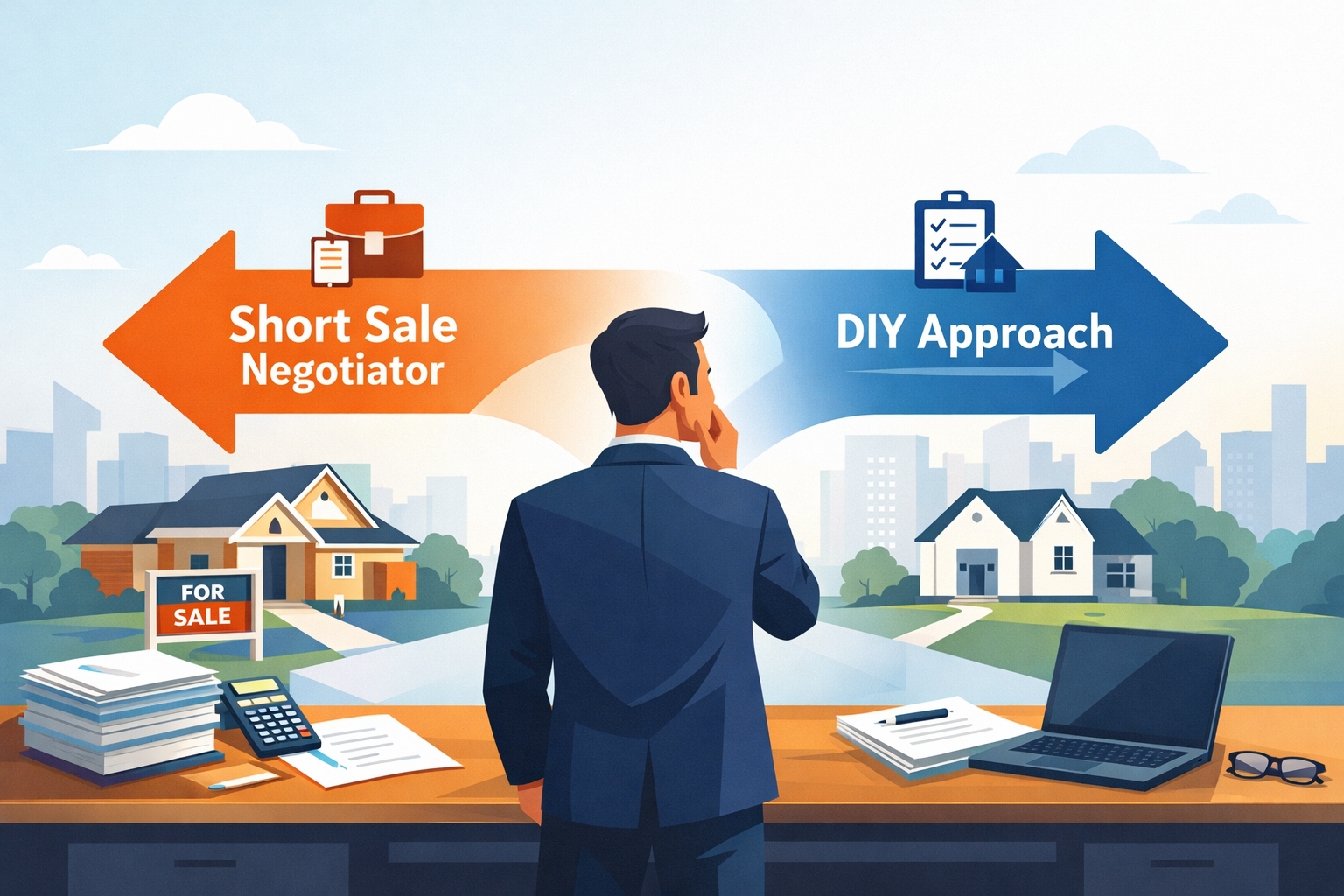
Should Investors Use a Short Sale Negotiator or Handle It Themselves?
Handling your own short sale? See the hidden risks investors miss and when a short sale negotiator actually increases profit.
You found the deal. The numbers look strong. The seller is motivated. You’ve got a buyer lined up or you’re ready to take it down yourself.
Related topic hub: Short Sale Help for Agents. It pulls together the practical workflow posts agents need before submitting, negotiating, and closing a short sale.
Then the lender file hits your inbox.
Now it’s bank statements, hardship letters, valuation disputes, BPO challenges, investor guidelines, junior lien negotiations, mortgage insurance approvals… and a timeline that starts stretching from weeks into months.
This is the moment most investors ask the real question:
**Should I handle this short sale myself — or bring in a short sale negotiator?**
Let’s break it down honestly.
### The “I’ll Just Do It Myself” Approach
On paper, handling your own short sale negotiation seems logical.
You save money.
You stay in control.
You avoid bringing in a third party.
And if you’ve closed a few before, you might feel comfortable navigating the lender process.
But here’s what most investors underestimate:
Short sales are not just paperwork.
They are **process management + escalation strategy + valuation defense + constant follow‑up**.
Banks do not approve short sales because the file is complete.
They approve them when someone pushes the right buttons at the right time.
That’s where deals quietly die.
### What a Short Sale Negotiator Actually Does
A true **short sale negotiator** isn’t just submitting documents. They are:
• Managing lender communication weekly (sometimes daily)
• Escalating files when they stall
• Defending value when the BPO comes in too high
• Negotiating second liens and mortgage insurance
• Preventing last‑minute approval reversals
• Keeping agents, sellers, and buyers aligned
This is structured **short sale processing**, not random follow‑ups.
At Crisp, we’ve built our system specifically around predictable approval timelines and escalation paths. You can see exactly how we structure that process here:
👉 [how we manage short sale approvals from start to finish](/how-we-help)
### The Hidden Cost of DIY Short Sale Negotiation
Investors usually focus on the negotiator’s fee.
They rarely calculate:
• 60–120 days of capital tied up
• Buyer fallout from delays
• Missed escalation windows
• Rejected values that could have been contested
• Foreclosure dates creeping closer
One stalled short sale can wipe out the savings of handling five on your own.
Time is leverage in short sales.
And lenders move slowly unless someone makes them move.
### When It Makes Sense to Handle It Yourself
Let’s be fair. There are scenarios where DIY can work:
• Small local credit unions
• Clean files with no junior liens
• Experienced investor with lender relationships
• Non‑time‑sensitive property
If you’re managing 1‑2 short sales per year and have the bandwidth, it can be reasonable.
But if you’re scaling…
That’s where it breaks.
### Scaling Investors Almost Always Outsource
Investors closing multiple deals per year understand something important:
Their highest ROI activity is **finding deals**, not chasing lenders.
When you outsource to a professional **short sale specialist**, you’re buying:
• Speed
• Predictability
• Lender expertise
• Risk reduction
It becomes operational leverage.
Many of the investors and agents we work with simply want the file handled while they focus on acquisitions. That’s exactly who we serve — you can see the breakdown here:
👉 [who we typically partner with on short sales](/who-we-serve)
### The Risk Most Investors Don’t See Coming
Here’s the part that stings:
Lenders track patterns.
If files are consistently incomplete or improperly structured, negotiators on the bank side remember. That affects tone, cooperation, and flexibility.
Professional **short sale coordination** isn’t just about this deal.
It protects your reputation for the next one.
Banks are more willing to work with organized, consistent submissions than chaotic ones.
### Profit Comparison: DIY vs Professional Negotiation
Let’s simplify it:
**Scenario A – DIY**
• 120 days to approval
• Buyer backs out once
• Second lien demands more
• Approval expires once
• You lose leverage
**Scenario B – Professional Short Sale Negotiation**
• Structured document prep
• Early valuation strategy
• Timely escalation
• Clear timeline communication
• Reduced fallout risk
Even if your net is slightly lower on paper due to a negotiation fee, your actual annual profit is often higher because more deals close.
Closing velocity matters more than squeezing every dollar out of a single file.
### What About Control?
This is a common concern.
Investors worry they’ll lose control if they outsource.
The truth? A good **short sale processor** works transparently. You stay updated. You approve negotiation decisions. You remain the deal owner.
The negotiator just removes friction.
If you’re evaluating whether to bring in support, here’s the smartest move:
👉 [Start the short sale process with a structured intake](/start-short-sale)
You’ll quickly see whether it makes sense to move forward or handle it yourself.
No pressure. Just clarity.
### The Bottom Line
Short sales are not difficult because they’re complicated.
They’re difficult because they require relentless follow‑up, lender familiarity, and strategic timing.
If you’re doing one per year, DIY might be fine.
If you’re building a business around distressed acquisitions, professional short sale assistance becomes a multiplier — not an expense.
The real question isn’t “Can I do it myself?”
It’s “Is this the highest and best use of my time?”
Investors who answer that honestly tend to scale faster.
And they close more short sales.