


Texas Short Sale Contract Deadlines After Offer
Texas short sale approval can outlast contract dates. See what agents should track after the offer so bank delays do not cost the buyer.
When a Texas short sale offer is signed, the file can look like it is finally moving.
The buyer is in place. The seller wants the deal to work. The listing agent has a contract. The lender package can be submitted. Everyone wants to know one thing:
How long will the bank take to approve the short sale?
That question matters, but it is not the only clock in the deal. A Texas short sale can have several deadlines running at the same time: buyer deadlines, contract dates, lender review dates, foreclosure pressure, title requirements, payoff updates, and the final approval-letter closing window.
If those dates are not tracked together, the agent can end up with a buyer who is technically under contract but practically out of patience.
The Buyer Contract And Bank Review Are Different Clocks
The biggest mistake is assuming the contract timeline and bank timeline are the same thing.
They are not.
The buyer and seller may sign a purchase contract with a target closing date. The lender still has to review the seller's hardship, financial documents, purchase terms, buyer proof, property value, investor rules, title issues, payoffs, junior liens, allowed costs, and any foreclosure pressure.
That review can take longer than the original contract dates.
In a normal sale, the signed contract usually drives the closing path. In a short sale, the contract starts the lender approval process, but the lender's written approval is what makes the short payoff possible.
That is why Texas agents should not only ask, "When will the bank approve?"
They should also ask, "Which contract deadlines might expire before the bank answers?"
Start With The Buyer's Real Deadline
Not every buyer can wait the same amount of time.
Some buyers have financing timelines. Some have rate-lock concerns. Some have lease deadlines. Some have another property available. Some will wait if they understand the process. Others will walk if the lender goes quiet for too long.
The listing agent should identify the buyer's real pressure points early.
Ask:
- Does the buyer have a financing or rate-lock deadline?
- Is there an inspection, option, or due-diligence concern?
- Is the buyer flexible if bank approval takes longer than expected?
- Does the buyer understand that the seller's acceptance is not the same as lender approval?
- What update schedule will keep the buyer confident?
This is not about promising a bank approval date the agent cannot control. It is about knowing whether the buyer's patience will last long enough for the bank review to finish.
Make The Short Sale Approval Condition Clear
A short sale offer needs clear expectations around lender approval.
The seller may accept the buyer's offer, but the seller's lender still has to approve receiving less than the full payoff. If that condition is not understood, the buyer may think the deal is farther along than it is.
Agents should make sure the contract file, amendments, and communications make the short sale condition clear according to the forms and guidance they are required to use. If there is any uncertainty, the broker, title company, or attorney should be involved before the file gets messy.
The practical point is simple:
The buyer should know that the offer can be submitted to the lender, but the short sale is not truly approved until the lender issues written approval.
That written approval letter should then be checked against the contract, closing date, allowed costs, seller terms, lien treatment, payoff numbers, and title requirements.
Watch The Closing Date Before It Becomes Fiction
Many short sale contracts include a target closing date that was reasonable when the offer was written.
Then lender review takes longer.
The buyer still wants updates. The seller still needs relief. The title company may still be working. But the original closing date may no longer fit the approval timeline.
That is where files start to drift.
If the closing date passes without a clean extension or amendment, the parties may disagree about whether the buyer is still committed. If the bank later approves the short sale with a tight closing window, the team may have to rush because the contract side was not kept current.
Agents should track:
- Original closing date.
- Any amended closing date.
- Expected lender review date.
- Approval-letter expiration date once issued.
- Title and payoff readiness.
- Buyer financing status.
The goal is to avoid getting a lender approval letter only to discover that the buyer timeline, contract documents, or title work no longer support the closing.
Keep Title Moving While The Bank Reviews
Short sale approval time is not only about the lender.
Title can create its own deadline problems. Junior liens, HOA balances, judgments, tax issues, probate issues, payoff changes, and closing-cost disputes can all affect whether the lender will approve the final numbers.
If title work waits until the bank is close to approval, the file can lose days or weeks at the worst possible time.
That is why Texas agents should not wait for lender approval before checking whether the closing side is clean.
Ask early:
- Has title been opened?
- Are there junior liens or judgment issues?
- Are payoff figures current enough for review?
- Are HOA, tax, or municipal balances affecting the net?
- Will the settlement statement match the lender's approval conditions?
Short sale processing is not just sending documents to the bank. It is keeping the lender file, contract deadlines, and closing requirements aligned.
Foreclosure Pressure Changes The Risk
If a foreclosure sale date is active or approaching, every date in the file matters more.
A buyer deadline that might be manageable in a normal short sale can become a serious risk when foreclosure pressure is already present. The agent may need proof of package submission, proof the file is complete, proof of buyer commitment, title status, and a documented reason for the lender to keep reviewing the file.
That does not guarantee postponement or approval. But it gives the file a cleaner chance than vague updates and scattered documents.
When foreclosure pressure is involved, ask:
- Has the complete short sale package been submitted?
- Is the lender review active?
- Is there an assigned negotiator or review department?
- Is the buyer still committed in writing?
- Are any contract dates already expired or about to expire?
- Is title ready enough to support a fast closing if approval arrives?
This is where a short sale coordinator or negotiator can help keep the file from losing control.
What A Short Sale Coordinator Should Track After The Offer
Once the offer is accepted by the seller, the short sale coordinator should track more than the date of the last bank call.
A strong checklist includes:
- Date the seller accepted the offer.
- Date the package was submitted to the lender.
- Whether the lender marked the package complete.
- Active review stage.
- Buyer inspection, financing, and closing concerns.
- Contract amendments or extension needs.
- Title status.
- Payoff status.
- Junior lien or HOA issues.
- Foreclosure or sale-date pressure.
- Expected lender review date.
- Written approval-letter deadline once issued.
Without that tracking, the agent may only realize there is a problem when the buyer gets impatient or the approval letter arrives with a closing deadline that the team is not ready to meet.
How To Keep The Buyer From Walking
The buyer does not need a long explanation every day.
The buyer needs useful proof that the file is being managed.
Instead of saying, "The bank is still reviewing it," say something more specific when possible:
"The short sale package was submitted on Tuesday. The servicer has not marked it complete yet, so we are confirming the missing item. Title is already open, and we are watching the contract dates because the bank approval timeline may run past the original closing date."
That kind of update gives the buyer a reason to stay engaged. It shows that the file has an active plan, not just a waiting problem.
Final Takeaway
Texas short sale approval time matters, but it is only one part of the deal.
After the offer is accepted, the agent has to manage two clocks at once: the buyer's contract deadlines and the lender's short sale review timeline.
If the contract dates expire quietly, the buyer may walk. If title waits too long, approval can turn into a closing scramble. If foreclosure pressure is present, vague follow-up can cost valuable time.
The best move is to build the timeline before the file drifts:
Know the buyer's deadlines. Confirm the lender's review stage. Keep title moving. Track amendments and closing dates. Then check the written approval letter against the deal before anyone assumes the short sale is ready to close.
That is how short sale help protects a Texas file after the offer is signed.
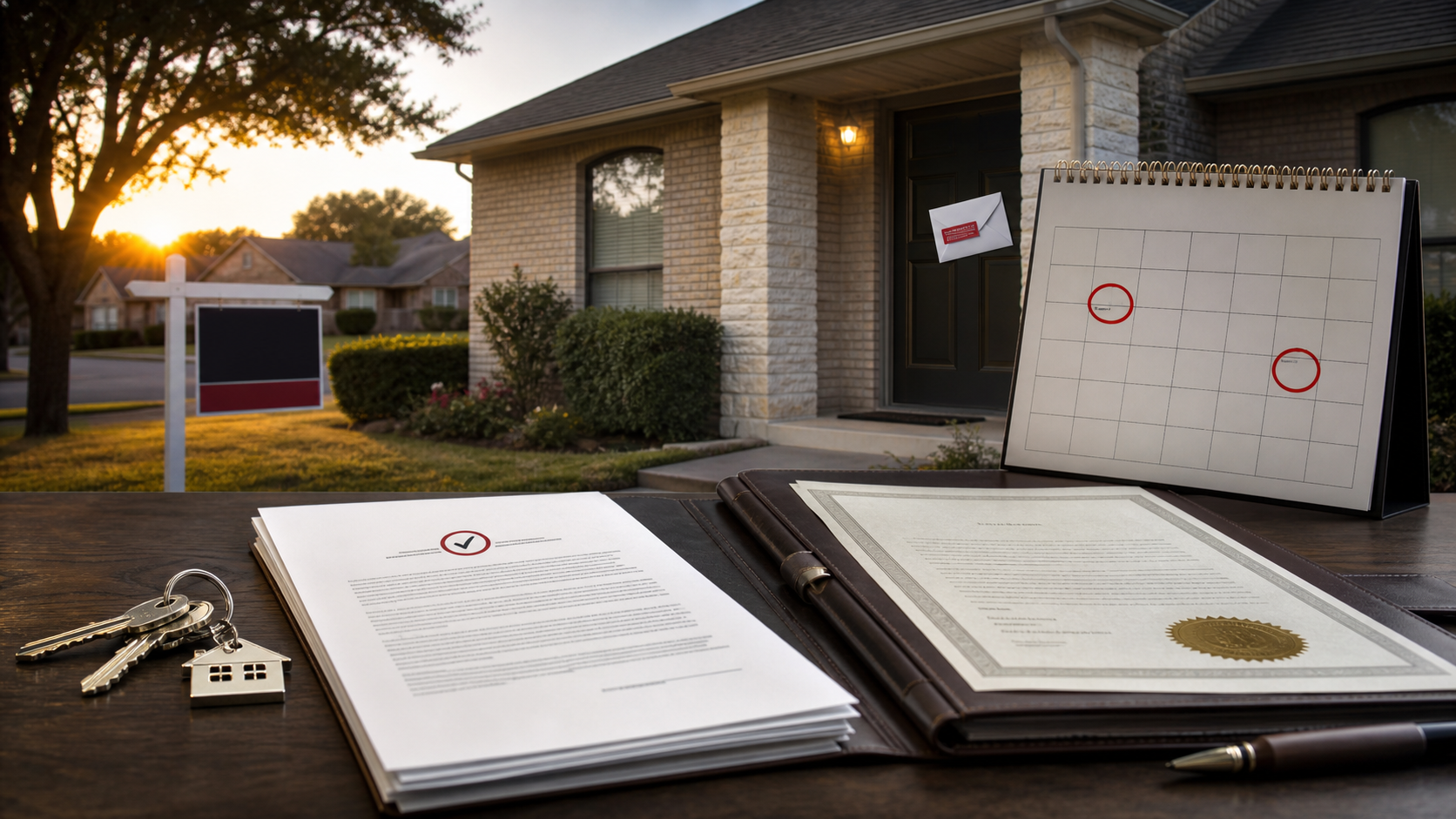
Texas Short Sale Approval vs. Closing Timeline: Two Clocks to Protect
A Texas short sale can have two deadlines: lender approval and final closing. Learn what to verify before a sale date or approval letter expires.
Why Approval Is Only One Clock
A Texas short sale can feel approved before it is actually safe. The lender may issue an approval letter, but the file still has to close before the approval expires and before any foreclosure sale date or Texas-specific deadline creates a second problem.
That is why agents, sellers, and investors should track two separate clocks: the approval clock and the closing clock. When those clocks are treated as the same thing, the file can lose time at the exact moment everyone thinks the hard part is over.
A short sale approval letter usually answers one major question: will the lender accept less than the full loan payoff under the terms submitted? That is a huge milestone, but it is not the finish line.
The approval letter may include a closing deadline, required net proceeds, buyer name, approved purchase price, approved commissions, seller contribution language, deficiency terms, and document conditions. If any of those pieces do not match the contract or closing file, the deal can stall even after approval.
In Texas, the timeline matters even more because foreclosure-sale pressure can keep moving while the short sale is being reviewed. A seller may need short sale help quickly, but the real protection comes from matching the lender approval timeline to the closing timeline.
The Closing Clock Starts After Approval
Once approval arrives, the closing team still needs clear title, final settlement numbers, buyer readiness, lender payoff alignment, and any required signatures. If the approval letter expires before those items are complete, the file may need an extension or updated approval.
That is where a short sale processor, short sale negotiator, or short sale coordinator can prevent avoidable delays. Someone has to compare the approval letter against the contract, closing disclosure or settlement statement, payoff figures, and expected funding date.
The biggest mistake is assuming the lender approval means everyone can relax. In reality, approval should trigger a tighter checklist.
What To Verify Immediately
As soon as the approval letter comes in, confirm the expiration date and closing deadline. Then verify the buyer, price, credits, commissions, net proceeds, seller contribution, occupancy or relocation language, and any deficiency or release terms.
Next, confirm that the title company can close inside the approved window. If title, payoff, HOA, lien, probate, bankruptcy, buyer financing, or investor-signature issues are still open, the short sale team should request an extension before the clock gets too tight.
For Texas files, also confirm whether a foreclosure sale date, posting deadline, or attorney timeline is still active. The short sale approval clock does not automatically erase every foreclosure-process deadline, so experienced short sale assistance can matter most after approval.
How The Two Clocks Should Work Together
The lender approval clock tells you how long the lender's short sale terms remain valid. The closing clock tells you whether the transaction can actually fund and record before those terms expire.
A clean short sale workflow keeps both visible. The short sale negotiator watches lender terms and extensions. The coordinator watches title, signatures, payoff, buyer readiness, and closing logistics. The agent keeps the seller and buyer moving so no one loses days to assumptions.
When those roles are clear, a Texas short sale has a better chance of moving from approval to closing without a last-minute scramble.
Bottom Line
A Texas short sale is not fully protected just because the lender says yes. The safer question is whether the approval deadline, foreclosure pressure, and final closing timeline all line up.
If those clocks do not match, ask for short sale processing support before the approval window gets too close. A focused short sale specialist can help identify the deadline risk, communicate with the lender, and keep the file moving toward a real closing.
This article is general information, not legal advice. Texas foreclosure timelines and deficiency rights can be serious, so sellers should speak with a qualified attorney about legal consequences before relying on any short sale decision.
Frequently Asked Questions
Is a Texas short sale safe once the lender approves it?
Not automatically. The file still has to close before the approval expires and before any foreclosure-sale pressure or closing condition creates a new delay.
What should agents check first after short sale approval?
Check the expiration date, required net, buyer name, approved price, credits, commissions, payoff alignment, title status, and whether closing can happen inside the approval window.
When should a short sale extension be requested?
Request an extension as soon as it is clear title, buyer financing, payoff figures, signatures, or closing logistics may not be ready before the approval deadline.
Does short sale approval stop a Texas foreclosure sale date?
Do not assume it does. Texas files should be checked for active sale dates, posting deadlines, and attorney timelines even after a lender approval letter arrives.